

Why Choose Us
Professional Design Experiences
For Standard model, we can provide coolers according part number; For custom design, Different design for different needs, we can provide the best solutions for you.
Perfect after-sale service
Whole heartedly provides the consummation for the general customers the after-sale service.
Professional Team
We are a team, we are a family, we are in good faith in exchange for your trust.
Enjoy providing customer-oriented services
Provide customer first service, your satisfaction is our service goal.
What is Shell Heat Exchanger
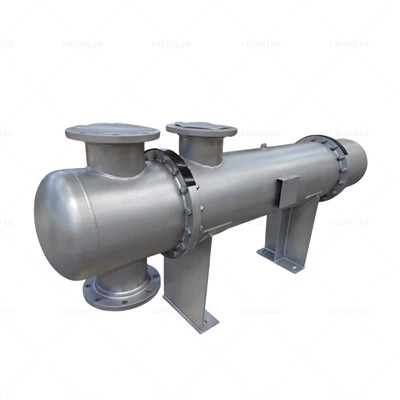
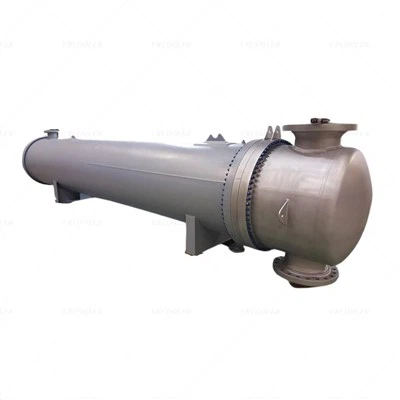
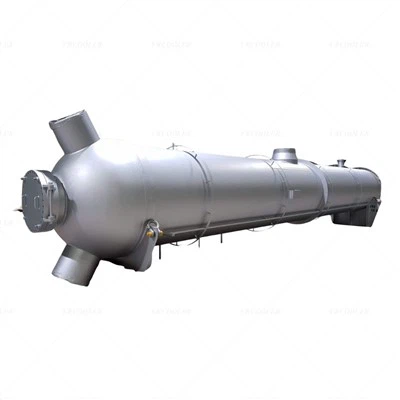
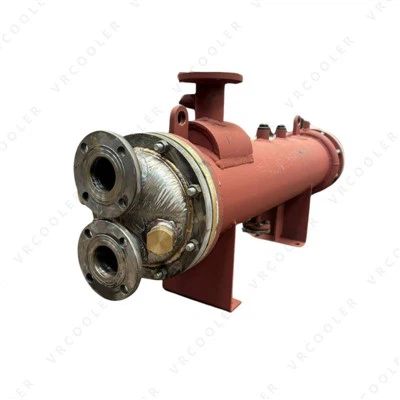
Shell heat exchanger are the most widely used and are among the most effective means of heat exchange. A shell and tube heat exchanger is a device where two working fluids exchange heat by thermal contact using tubes housed within a cylindrical shell. The fluid temperature inside the shell and tube are different and this temperature difference is the driving force for temperature exchange. Used for wide temperature and pressure range, Shell Heat Exchanger are compact in design, simple in construction and maintenance and provide excellent heat exchange.



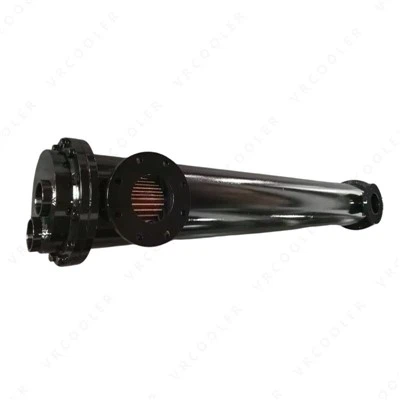


Advantages of Shell Heat Exchanger
Cost
An important benefit of shell and tube heat exchangers is their cost. They are much less expensive than plate type coolers.
Heat capacity
Heat exchangers have to be able to handle a wide range of temperatures, varying by application. Their ability to deal with extreme temperatures helps maintain production and keep operations moving. Shell Heat Exchanger have a high temperature working capacity and can be adapted to fit any conditions.
Pressure
The high pressure of a shell and tube heat exchanger requires the use of thick materials that makes the exchanger very heavy or too expensive if nickel alloys are used. High pressure creates major problems and leads to a loss of production. The shell and tubes of shell and tube heat exchangers are tested and designed to withstand the extremes caused by pressure variances and adhere to the Codes of the ASME and PED.
Pressure loss
Pressure loss is a loss of energy and causes downstream pressure loss that slows the velocity of flow. Shell Heat Exchanger are designed to deal with pressure loss and keep it to a minimum within the design criteria. There are several variables that are affected by pressure loss, one of them being a fouling of the shell and tubes. With the minimal pressure loss allowed by shell and tube heat exchangers, this problem is eliminated.
Adjustments
The design of shell and tube heat exchangers can be adjusted for adaptation to any production process. Changes in pipe diameter, number of pipes, length of pipes, pipe pitch, and pipe arrangement can be altered to specifically fit the needs of an application.
Thermal expansion
The multi-tube design of shell and tube heat exchangers allows for thermal expansion between the tubes and shell. This configuration gives the heat exchanger the ability to handle flammable and toxic fluids.
How Do Shell Heat Exchanger Work
The concept and operation of a shell and tube heat exchanger are rather simple and are based on the flow and thermal contact of two liquids. The name of a shell and tube heat exchanger serves as an explanation of the process, which is the exchanging of temperature between two fluids. In a heat exchanger, a heated or hot fluid will flow around a cold fluid and transfer heat in the direction of the flow of the cold fluid.
In any situation where two pieces of material make contact, there will be an exchange or transfer of heat through a conductive surface. The process of a shell and tube heat exchanger provides a place for two fluids to exchange or transfer heat through conductive metals.
In the shell and tube heat exchanger process, one fluid flows through the tubes while the other fluid flows through the shell. In the diagram below, which is of a straight tube shell and tube heat exchanger, the shell inlet for the shell fluid to enter is at the top with the inlet for the tube fluid at the bottom right.
A shell and tube heat exchanger has two compartments or sections: the shell side and the tube side. When working with a shell and tube heat exchanger, it is important to decide on which side the hot fluid will enter and on which the cold fluid will enter; this decision is referred to as fluid allocation.
When there is a difference in pressure between the fluids, the lower pressure fluid enters through the shell inlet since the tubes are designed to handle high pressure.
Shell Heat Exchanger Parts
Partition plate
The partition plate separates the lower and upper halves of the heat exchanger. The partition diverts the flowing medium through the tubes. Inlet / Discharge Inlet or discharge of the fluid medium that flows through the tubes or shell of the heat exchanger.
Housing/Shell
The housing/shell is used to contain the flowing medium and house internal parts. It also serves as a strong structural piece upon which other pieces can be attached. Cover Plate The cover plate is used to seal one end of the shell and prevent leakage.
Gasket
A gasket is placed between two metal surfaces. The gasket is usually constructed of paper or rubber and is ‘squeezed’ between the metals to create a seal. The seal prevents leakage.
The shape of the gasket also prevents leakage around the partition plate.
Stationary tubesheet
The tubesheet sits within the shell and supports the ends of the tubes. The weight of the tubes is then further supported by the baffles (depending upon the design).
Baffles
Baffles are used to change the directional flow of the fluid medium. Changing the direction ensures an even heat distribution throughout the heat exchanger. Efficiency decreases when flow through the heat exchanger is not evenly distributed.
Bolt
Nuts and bolts are used for securing parts of the heat exchanger. Chosen bolts should have suitable tensile strength and corrosion resistance characteristics. Bolts are the ‘male’ part of a nut and bolt assembly.
Nut
Nuts and bolts are used for securing parts of the heat exchanger. Chosen nuts should have suitable tensile strength and corrosion resistance characteristics.
Nuts are the ‘female’ part of a nut and bolt assembly.
Tie bars
Tie bars are used as guides for the baffles to ensure no rotational or axial movement of the baffles occurs.
Tubes
One of the fluid mediums flows directly through the tubes whilst the other flows turbulently on the outside. Heat is exchanged between the two mediums due to proximity (heat is exchanged via conduction to the tube walls and then further to the outside medium).
Shell
The tubes, baffles and tie bars are all housed within the shell (housing). It is the shell and tube construct which gives this type of heat exchanger its name.

Shell heat exchanger are extensively used in a number of industries, particularly in refineries, owing to the various advantages they offer over other heat exchangers:
• Shell Heat Exchanger have more heat transfer efficiency.
• These heat exchangers are an optimal solution for swimming pool heating, mining machinery, hydraulic power packs, etc.
• These heat exchangers can be easily dismantled. Thus, cleaning and repairing is easy.
• The heat exchangers are compact in size.
• The capacity of these heat exchangers can be increased by adding plates in pairs.
• These exchangers are affordable compared to the plate type coolers.
• As the pressure test is relatively simple, one can easily locate tube leaks and fix them.
• These heat exchanger can be used in systems, which have higher operating temperatures and pressures.
The industrial use of shell and tube heat exchangers, used in the chemical, food, oil and gas and other fields, is widespread. They are commonly employed in various industries for transferring heat between two fluids without direct contact. Some of the key industrial of shell and tube heat exchangers applications include:
• Heating and cooling processes in chemical plants.
• Condensing and evaporating duties in refineries.
• Heat recovery systems in power generation facilities.
• HVAC systems in commercial and residential buildings.
• Refrigeration systems in food processing plants.
• Thermal management in oil and gas production facilities.

How Many Types of Shell Heat Exchanger?
Essentially, there are three main types of shell and tube heat exchangers that are commonly used:
In this design, the tube sheet is welded to the shell, resulting in a simple and economical construction. While the tube bores can be cleaned mechanically or chemically, the outside surfaces of the tubes are generally inaccessible except for chemical cleaning. Expansion bellows may be necessary to accommodate large temperature differences between the shell and tube materials, but they can be a source of weakness and failure.
In a U-Tube exchanger, the front header types may vary, and the rear header is typically an M-Type. U-tubes allow for unlimited thermal expansion, and the tube bundle can be removed for cleaning. However, internal cleaning of the tubes by mechanical means is difficult, making this type suitable only for applications where the tube side fluids are clean.
In this type of exchanger, the tubesheet at the rear header end is not welded to the shell but allowed to move or float. The tubesheet at the front header end is of a larger diameter than the shell and is sealed similarly to the fixed tubesheet design.
Thermal expansion can be accommodated, and the tube bundle can be removed for cleaning. The S-Type Rear Head is the most popular choice for the rear header. Floating head exchangers are suitable for high temperatures and pressures but are generally more expensive compared to fixed tubesheet exchangers.
Shell Heat Exchanger Safety Regulations
Design specifications
The design and manufacture of shell heat exchanger should comply with the relevant national norms and standards, and must meet the technical requirements and safety performance. In the process of use, the user should pay attention to check the equipment manufacturing standards and construction qualifications and other information to ensure that the equipment meets the safety requirements, and avoid the use of substandard equipment.
Environmental inspection
Before installing and using the shell heat exchanger, the installation environment should be comprehensively inspected, including: ground state, installation foundation, workplace environment, power supply equipment. Must ensure that the equipment installation environment is good, in line with the relevant safety requirements, to avoid the use of equipment in the setting of imperfect abnormal environment.
Preparation before work
When using shell heat exchanger, the equipment must be fully inspected to eliminate faults and defects and ensure that the equipment works properly. For the preparation, including filling substances, storage substances, etc., must ensure that the correct installation, the nature of the injected material meets the requirements, to avoid unnecessary losses.
Safe operation
In the use of shell heat exchanger, should be strictly in accordance with the relevant safety regulations for operation. Such as: good maintenance equipment, timely replacement of damaged parts, do not let the working pressure is higher than the tolerance range. During use, special attention should be paid to monitoring the operation of the equipment, temperature, pressure, material flow rate, etc., to ensure that all indicators are in the safe range.
Status record
In order to facilitate maintenance and upgrading, users should pay attention to record the status of the equipment, such as: operating time, operating parameters, maintenance, equipment changes or upgrades. For the daily use of the process of encountering difficulties or precautions, should also ensure that the record.
Shell Heat Exchanger Maintenance Process
Cleaning and replacement
In the process of using shell-type heat exchanger, it is difficult to avoid producing deposits, dirt and lead to the inner wall of the equipment such as calcification, scale buildup and so on. Regular cleaning of the equipment to ensure that the internal operation of the equipment is clean. In the event that the scale cannot be removed after repeated cleaning, it is recommended that spare parts be replaced to avoid damage to the equipment.
Maintenance lubrication
In the course of daily use, it is necessary to maintain the equipment components and parts. For example, lubricate seals and fasteners, maintain transmission devices, clean filters, etc. to avoid oxidation and corrosion. Regularly test the degree of wear and leakage of each part of the equipment, eliminate failures in time to ensure the safe and efficient operation of the equipment.
Replacement of spare parts
With the use of equipment time and wear and tear, some parts will inevitably have a small failure or loss. Non-normal material exists in the case of damage, it is recommended to replace the damaged parts. When removing various parts of the equipment, care should be taken to record the parameters before and after dismantling as well as information about the replaced parts.
Regular maintenance
In addition to daily cleaning, maintenance and repair, should also be regular maintenance. Such as: regular replacement of cooling water and boiler water, delete the naked eye invisible debris, replacement of iron oxide color, seepage wetting, replacement of impermeable parts, operation of light transmission airway, record the operating fluid level and so on. To ensure the safe operation of the equipment and extend the service life of the equipment.
Shell Heat Exchanger Selection Techniques
Determine the heat transfer and temperature difference
Shell heat exchanger selection should first determine the heat transfer and temperature difference, which is the basis for design and selection. Heat transfer is usually calculated in accordance with the heat per unit of time, while the temperature difference depends on the working conditions and process requirements. Selection should ensure that the heat exchange and temperature difference meet the application requirements.
Determine the number of subs
The number of sub-shell heat exchanger and heat transfer, the more the number of sub-shell heat exchanger, the higher the efficiency of heat transfer. But too many subs will increase the manufacturing cost, so the number of subs should be determined according to the actual needs.
Selection of sub-materials
Sub-material is one of the key factors affecting the performance of shell heat exchanger. Common sub-materials are carbon steel, stainless steel, copper, aluminum and so on. The scope of application of different materials is different, should be based on the actual need to select the appropriate sub-materials.
Determine the nature of the fluid
The physical properties of the fluid also have an important impact on the selection of heat exchangers. For example, different fluids have different flow resistance and different thermal conductivity, the nature of the fluid should be determined according to the actual need to ensure that the selection meets the application requirements.
According to the application scenarios to choose the right shell heat exchanger
Different application scenarios require different shell heat exchanger. For example, high-temperature and high-pressure environment requires high-temperature and high-pressure shell heat exchanger, while the corrosive medium requires corrosion-resistant heat exchanger. According to the actual application scenarios should choose the appropriate shell heat exchanger.
Shell Heat Exchanger Precautions
Keep the bundle clean
Dirt and slag in the bundle will affect the heat transfer capacity and hydraulic performance of the heat exchanger, so the bundle should be cleaned regularly to keep it clean.
Avoid high flow rate
Excessive flow rate will cause vibration, damage to the equipment, but also affect the heat transfer effect, so the flow rate should be controlled within a reasonable range.
control the flow rate
The flow rate is too large, which may cause blockage and deformation, so the flow rate should be controlled to ensure that the flow rate is within the design range of the equipment.
Regular inspection of the bundle
Regularly check the leakage of the bundle and the corrosion of the sub-materials to ensure the normal operation of the equipment.
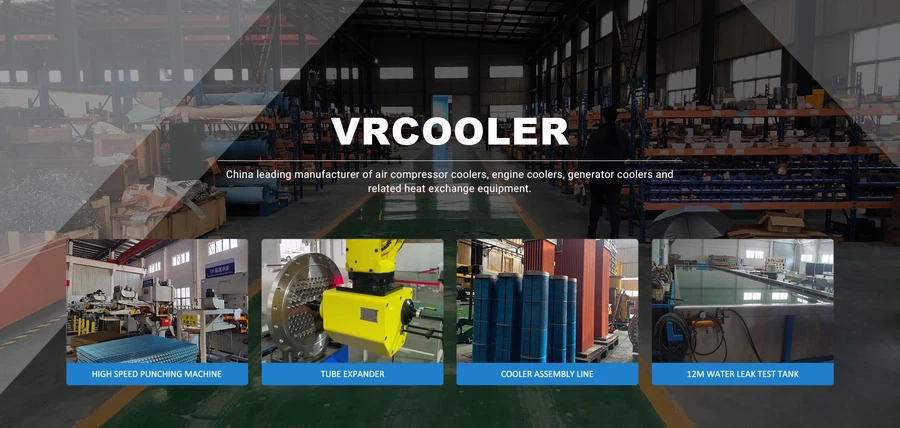
Our factory
Our factory has complete production equipment, advanced production technology, perfect testing methods,and guaranteed quality.
We have passed the IS09001 international quality system certification.
In the design, development, and production of air compressor cooler / engine cooler / generator cooler, we in nsist on quality as the center and customer satisfaction as the concept.
Our factory has professional engineers who can design and manufacture various products and various non-statandard equipment for customers.
FAQ
Changzhou Vrcooler Refrigeration Co., Ltd. is one of the most professional shell heat exchanger manufacturers and suppliers in China, specialized in providing high quality aftermarket service. Please rest assured to buy high-grade shell heat exchanger for sale here from our factory. For price consultation, contact us.
