

What is Air Compressor Cooler
Air compressor coolers (compressor intercoolers, air compressor aftercooler, & oil coolers) are mechanical heat exchangers used to remove air-flow heat and moisture to produce cool, dry air suitable for use in air-powered equipment.




Working Principle of Air Compressor Cooler
The working principle of the air compressor cooler is to utilize the thermal conductivity of the heat dissipation core tube to cool the high temperature compressor gas by means of flowing cooling medium. The process is as follows:
The high temperature gas from the compressor flows through the heat sink tube.
The core tube conducts the high temperature gas to the wall of the core tube by means of a heat conduit.
The cooling medium passes through the exterior of the heat sink core tube and exchanges heat with the high temperature gas.
The cooling medium absorbs the heat of the high-temperature gas and reduces the gas temperature.
The cooled low-temperature gas is discharged through the exhaust pipe.
Working Principle Of Air Compressor Cooler
Regular cleaning: The air compressor cooler will accumulate various dirt after long-term use, resulting in reduced cooling effect, should be cleaned regularly.
Pay attention to the installation position: The installation position of the cooler should be far away from the high temperature environment and easily polluted places to ensure the service life and cooling effect of the cooler.
Fan maintenance: Fan in the use of the process should be regularly cleaned and maintained to ensure good cooling effect.
Prevent vibration: The vibration of the compressor will affect the performance of the cooler, you should take appropriate vibration isolation measures.
Maintain stable voltage: If the voltage is not stable, it may affect the operation of the fan and cause the performance of the cooler to decline.

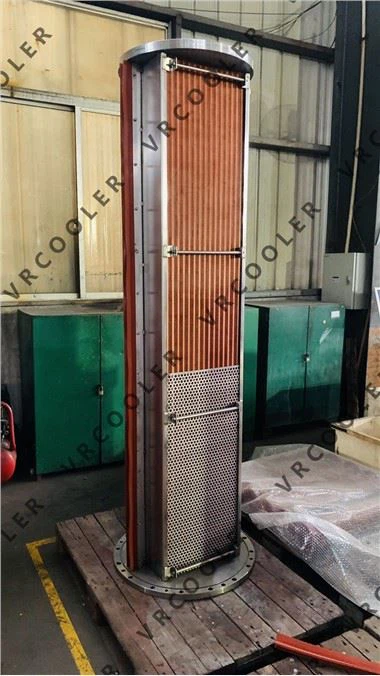
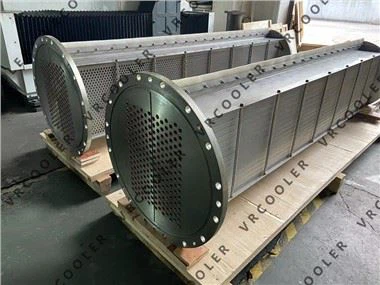
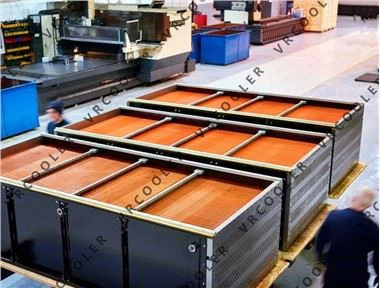
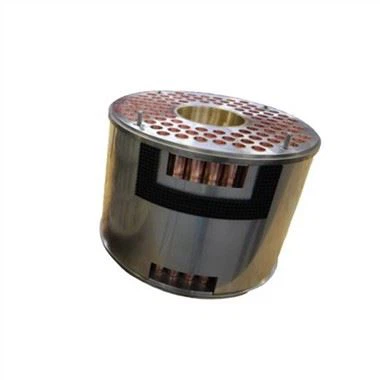
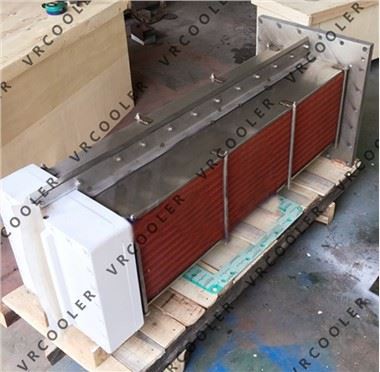
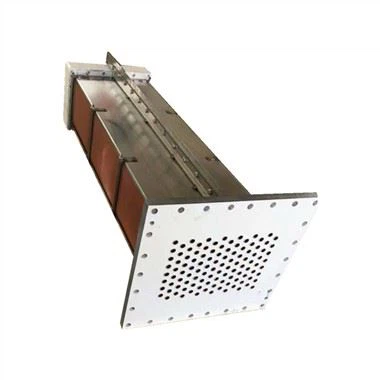
The air compressor cooler is mainly composed of heat dissipation core tube, fan, shell and so on. Among them, the heat dissipation core tube is a pipe that turns and bends inside the shell, cooling the high temperature gas discharged from the compressor through the air. The fan is used to blow external air into the cooler to enhance the cooling effect. Shell is used to protect the internal components of the cooler, while playing the role of fixed cooler.
During the working process of the air compressor, the temperature of air compression will rise and generate a large amount of heat. If not timely cooling treatment, will lead to overheating and overload, affecting the normal work of the compressor. This is where the cooler comes in handy.
The cooler of an air compressor transfers the generated heat through a medium (usually water or air) to reduce the temperature of the compressed air to a suitable range. This reduces energy loss, improves the efficiency of the air compressor, reduces wear and tear, and extends service life. The addition of a cooler also improves safety and prevents accidents caused by overheating.

Requirements for Air Air Compressor Cooler
When installing a new compressor, it’s critical to ensure that installation requirements are met, including ventilation, water availability and other factors. Each of the two types of cooling systems has its own requirements for safe and efficient operation. Failing to meet these could lead to air compressor overheating. Understanding these requirements will help you decide which type of aftercooler is right for you.
Installation requirements for air-cooled air compressors
An air-cooled screw compressor or air-cooled reciprocating compressor requires plenty of space and ventilation to ensure adequate airflow for cooling. Other factors include:
• Ventilation: Ensure that the installation site has proper ventilation and an adequate flow of cool air for effective heat dissipation. The compressor must be located in an area near an outside wall or with access to roof ventilation to vent the excess heat outdoors. This may require installing exhaust fans or ductwork to direct hot air away and prevent overheating.
• Ambient temperature: Air-cooled compressors are more sensitive to the ambient temperature. In extreme temperature environments, additional cooling or heating measures might be necessary to maintain optimal operating conditions.
• Space requirements: Air-cooled compressors generally require more space around the unit to allow for sufficient air circulation.
Installation requirements for water-cooled air compressors
Air compressors with liquid aftercoolers require access to a reliable water supply, water treatment, and appropriate water disposal solutions. These systems often use a combination of heat exchangers and water-cooling loops connected to an external water source, such as a cooling tower or a water chiller.
Key considerations for water-cooled systems include:
• Water supply: Ensure that the installation site has access to a reliable and consistent water supply that meets the compressor's flow and pressure requirements. An open water-cooling system often relies on nearby bodies of water (pond, river, lake, well, or even ocean) rather than relying on a municipal water supply.
• Water quality: Water used for compressor cooling must be high quality. Water treatment, such as filtration or chemical additives, may be required in liquid cooling systems to prevent scale buildup, corrosion, or biological growth in the cooling system. This is especially important if using environmental water.
• Water disposal: Consider the water disposal requirements, as some local regulations may restrict the discharge of used cooling water. In such cases, a closed-loop or recirculating cooling system may be necessary.
Things to Consider When Choosing an Air Compressor Cooler
When choosing between an air-cooled and water-cooled air compressor, several factors need to be considered to determine the most suitable option for your specific application. Here's a breakdown of key considerations.
Cost
• Initial cost: Air-cooled compressors generally have a lower initial cost, while water-cooled compressors may require additional investments in components and infrastructure.
• Operating cost: Consider energy expenditures, including the cost of operating cooling equipment and potential savings from heat recovery or grey water reuse.
Maintenance requirements
• Air-cooled compressors may require more frequent maintenance due to their exposure to dust and debris in the ambient air. Additionally, fan or blower components may need servicing or replacement. However, maintenance is generally simpler.
• A water-cooled compressor is more complex and may require more complex and costly maintenance, such as water treatment, pump servicing, and heat exchanger cleaning.
Space and ventilation requirements
• Air cooling systems require adequate space for air circulation and proper ventilation to dissipate heat. This may involve investing in exhaust fans or ductwork.
• Water cooling systems typically have a smaller footprint, as they do not need as much space for airflow, but they do require access to water supply and disposal infrastructure.
CFM requirements
• Air-cooled compressors are generally suitable for lower CFM requirements, where heat generation is more manageable with ambient air cooling.
• Water-cooled compressors are often more effective for high-volume applications with very high CFM requirements, as they are more efficient in removing heat.
Industry considerations
• Industries that already have infrastructure in place for process water may benefit from a water cooling system. Water-cooled compressors may also benefit industries with high CFM demands and those requiring stable temperature control for compressed air, such as food processing or electronics manufacturing.
• Industries that require ruggedness and simplicity, such as construction or automotive repair, may prefer air-cooled compressors for their lower initial cost, ease of maintenance, and adaptability to various environments. Air cooling systems are also a better choice in facilities where water access is a concern.
Air cooler
Air cooler is to pass the compressed air through the aluminum or copper heat sink, so that the air and the piece of contact between the heat exchange technology, the heat will be taken away, so that the air temperature down. Air cooler is easy to install and does not require a water supply line. However, it requires a relatively large heat dissipation area to accomplish the cooling of compressed air, so its volume is relatively large.
Water cooler
The water cooler directly utilizes the high thermal conductivity of water, and the heat sink and water tubing are directly affixed, and the heat is discharged into the air through the cooling tower. The cooling effect of water cooler is better than air cooler. However, they need to receive cooling water tubing and are relatively complicated to install.
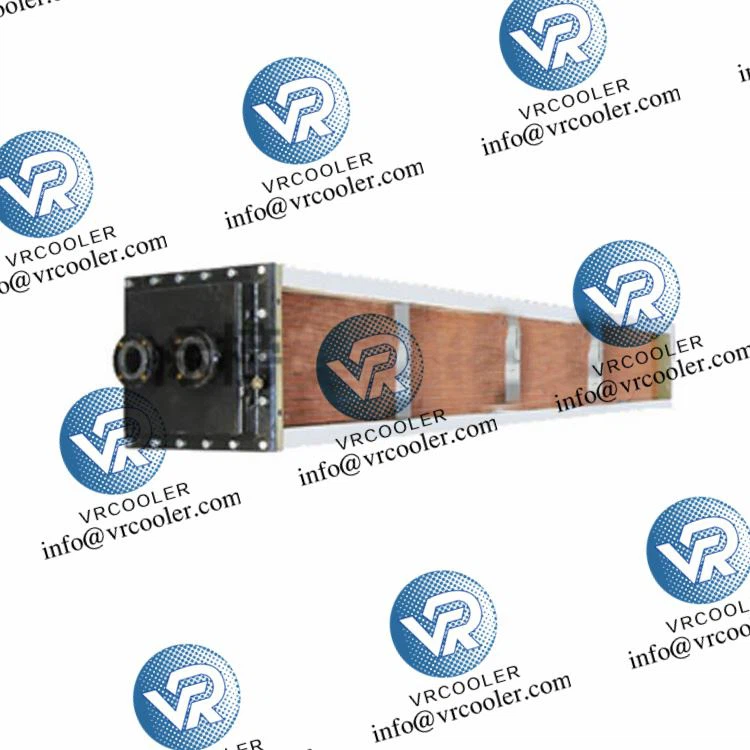
Many air compressors come with an integrated cooler. With this built-in device, up to 70% of the moisture is converted to water before it is discharged. Depending on your application, you may need to add an additional cooler.
Coolers are usually more efficient and ensure that there is no loss of air pressure when connected to the compressor. In addition, they usually do not increase demand or additional energy costs.
If you are working in a hot environment, additional cooling may be required. In this case, it is recommended to add a dryer to the downstream setup. However, with a cooler, you can obtain a smaller sized dryer.
Air compressor coolers require three metrics to determine their size: CFM, PSI, and temperature.CFM and PSI are simple, as they are determined by the output of the air compressor. Meanwhile, the temperature specification requires additional consideration.
Coolers are typically sized for a cold temperature difference (CTD) of 10°F, 15°F, or 20°F. This means that when sized for the specified inlet air temperature and flow rate, the compressed air temperature at the outlet of the cooler will be equal to the cooling medium temperature plus the CTD. the lower the temperature, the larger the cooler needs to be.
The required compressed air temperature is usually determined by other components downstream of the system. The maximum temperature of each component must be determined and considered to discover the true temperature requirements of the cooler - this step is critical.

Why Do Air Compressors Need a Cooling System?
Air compressors generate a lot of heat. One of the main considerations in the design of a compressed air system is how to keep the air compressor cool.
In an oil-injected rotary screw air compressor, most of the heat is removed internally by circulating oil, also known as coolant. The air coming out of the compressor is very hot and must be cooled before it flows downstream; typical outlet temperatures for oil-injected rotary screw compressors can exceed 160° F. Discharge temperatures for oil-free air compressors or two-stage reciprocating compressors can be 300-350° F. These high temperatures can cause problems downstream of the compressed air system-especially for your air dryer.
Most air dryers are rated for inlet temperatures of no more than 100° F. At higher temperatures, the dryer will not work efficiently or at all. Warmer air carries more moisture and stresses the drying system. If the dryer does not remove enough moisture, condensation can occur in other parts of the distribution system as the air cools. Overheating can cause other problems as well:
Excessive heat can damage seals and flush lubricant from downstream tools and equipment, leading to premature failure of system components.
If the heat generated by air compression cannot be controlled, the compressor room and surroundings can become hot and may even cause the air compressor itself to overheat.
If the compressor is running indoors, the excess heat generated by the compressor will burden the air conditioning system during the summer months.
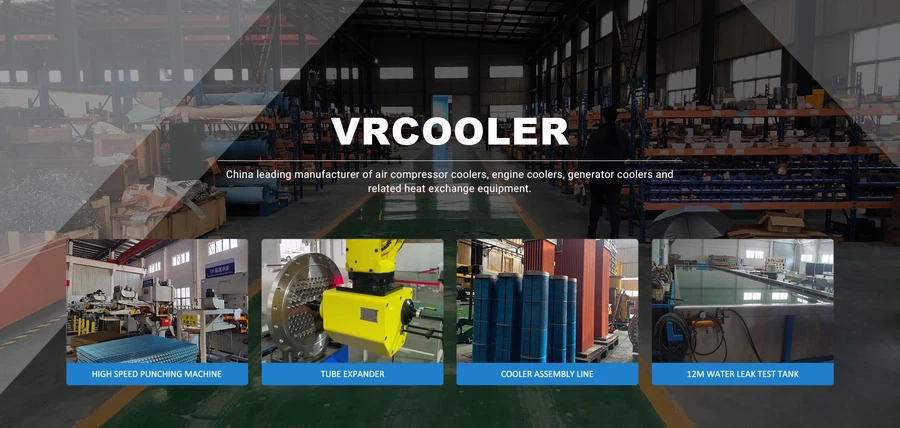
Our factory
Our factory has complete production equipment, advanced production technology, perfect testing methods,and guaranteed quality.
We have passed the IS09001 international quality system certification.
In the design, development, and production of air compressor cooler / engine cooler / generator cooler, we in nsist on quality as the center and customer satisfaction as the concept.
Our factory has professional engineers who can design and manufacture various products and various non-statandard equipment for customers.
FAQ
Changzhou Vrcooler Refrigeration Co., Ltd. is one of the most professional air compressor cooler manufacturers and suppliers in China, specialized in providing high quality aftermarket service. Please rest assured to buy high-grade air compressor cooler for sale here from our factory. For price consultation, contact us.
generator air cooler cost, generator air cooler unit