

Why Choose Us
Professional Design Experiences
For Standard model, we can provide coolers according part number; For custom design, Different design for different needs, we can provide the best solutions for you.
Perfect after-sale service
Whole heartedly provides the consummation for the general customers the after-sale service.
Professional Team
We are a team, we are a family, we are in good faith in exchange for your trust.
Enjoy providing customer-oriented services
Provide customer first service, your satisfaction is our service goal.
What is Generator Cooler
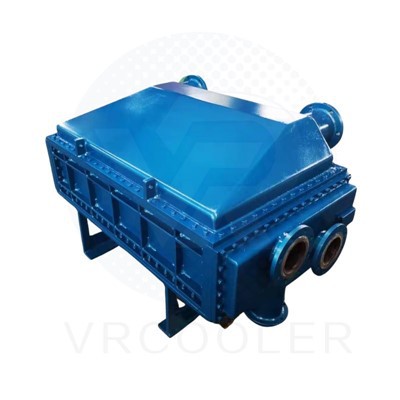
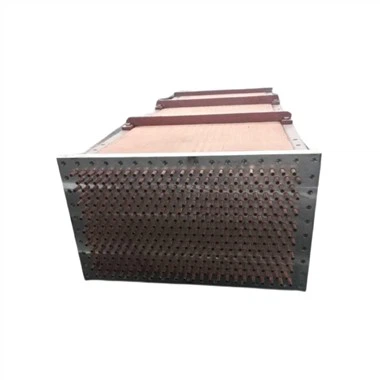
Generator coolers are used for air cooling via circulating water and can be installed for either horizontal or vertical airflow. The cleanable coolers have removable headers and can be designed with single or double tubes, made of different materials depending on the corresponding water conditions.
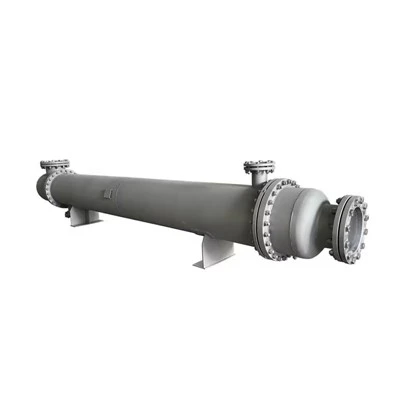
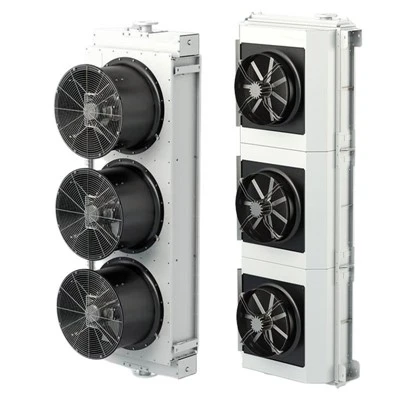
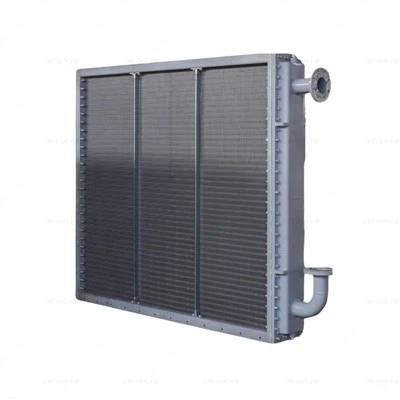


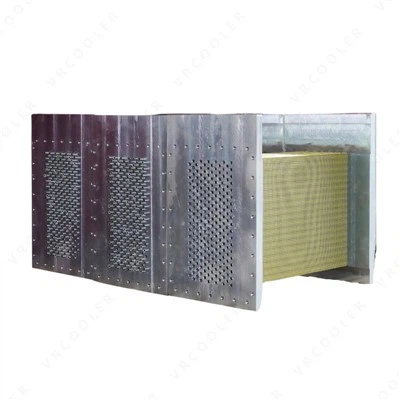



Advantages of Generator Cooler
Better heat dissipation
Generator cooler can circulate the coolant to heat and dissipate heat, making its temperature more stable and better heat dissipation.
Saving water
Traditional heat dissipation requires a large amount of water to circulate, while generator cooler only requires a small amount of water to replenish.
Improve the life of generator
Compared with the traditional heat dissipation method, the generator cooler can better control the temperature of the generator, so as to improve its service life.
Environmental protection and energy saving
Compared with the traditional heat dissipation method, generator cooler can better control the energy consumption, to achieve the effect of energy saving and emission reduction.

The function of generator cooler is to transfer the heat generated inside the generator to the coolant (water or wind), and then take the heat away through the coolant to keep the temperature inside the generator within the normal range. Different types of generator coolers work differently.
How To Deal With Generator Cooler Water Leakage
Water-cooled generator cooler
Water-cooled generator cooler uses water cooling to dissipate heat, and its working principle is: through the water pump to push the cooling water into the generator radiator inside, the water in the internal heat exchange with the generator internal heat, the temperature rises and continues to flow into the engine to re-cool. Because the cooling effect of water is better than air, so water-cooled generators are suitable for high-power generators or long-time high load work.
Air-cooled generator cooler
Compared with water-cooled generator cooler, air-cooled generator cooler adopts air-cooling method to dissipate heat, its principle is: through the fan to draw the outside air into the generator internal heat exchange, unlike water-cooled type, it only relies on the fan to let the heat dissipation gas flow. Because of its simple construction and small space occupation, the air-cooled generator cooler is usually adopted for small power and short time emergency standby power.
How to Deal with Generator Cooler Water Leakage
Aging seals: Aging and cracking of cooler seals will lead to cooling water leakage, and the seals need to be replaced in time.
Cooling tube corrosion: After long-term use, the wall of the cooling tube will corrode, resulting in the formation of small holes, which will cause cooling water leakage.
Cooling tube rupture: If the cooling tube is subjected to severe impact, it will rupture, resulting in cooling water leakage.
Poor quality coolant: The use of poor quality coolant will lead to clogging of the coolant pipes, affecting the normal operation of the cooler, thus increasing the risk of coolant leakage.
Sealant method: Adding sealant at the leakage point can play a certain anti-leakage effect, but the sealant has a greater risk of clogging the pipeline, so it is not suitable for a long period of time.
Welding method: For the cooling pipe rupture or serious damage, you can use the welding method to deal with. It should be noted that after welding, the sealing and corrosion resistance of the welded parts should be checked to see if they meet the requirements.
Replacement method: If the cooler leakage is caused by aging seals or corrosion of cooling tubes, you need to replace the seals or part of the cooling tubes.
Pressurized leakage method: This method is suitable for the situation where the location of the leakage point is not clear. The cooling system will be pressurized test, you can observe whether there is a pressure drop to determine the location of the leak. However, it is necessary to pay special attention to the fact that the pressure should not be increased excessively during the pressurization test, otherwise it will cause secondary damage to the cooling system.
Regular inspection of the cooler: Regular inspection of the cooler can detect the problem and deal with it in time.
Use high quality coolant: Using high quality coolant can reduce the risk of cooler clogging and corrosion, thus reducing the possibility of cooler leakage.
Reasonable use: Avoiding overloaded operation for a long period of time and avoiding use in harsh environments can effectively reduce the risk of water leakage from the cooler.
The Role of Generator Cooler
The main function of a generator cooler is to reduce the temperature of the motor to ensure its normal operation and prolong its service life.
Generator cooler through different cooling methods to achieve this purpose. For large and medium-sized generators, usually use closed ventilation to cool, the use of rotor end of the fan or wind bucket installed to force the cold air through the rotor coil, absorbing the coil and the core and other places of the heat into the hot air. The hot air then passes through the air cooler installed around the generator, transferring the heat to the cooling water, and the cooled air re-enters the generator to reduce the temperature of the generator. In addition, water cooling system is also a common cooling method, in which the cooling water absorbs the heat from the hot parts in the engine, and then radiates the heat to the air through the cooler to keep the engine running at a constant temperature.
The water turbine generator cooler plays a similar role, mainly radiating the heat generated in the turbine unit, avoiding the failure of the turbine unit due to overheating, and ensuring the normal operation of the turbine unit. The cooler cools the turbine unit through circulating water. In the cycle, the circulating water absorbs the heat in the turbine unit, and then radiates it out through the cooler, and at the same time retrieves the cold water, and the cycle repeats itself, constantly circulating and ensuring the stable operation of the turbine unit.
Structure of Generator Cooler
Water tank
The water tank is one of the most important parts of the generator cooler. It is generally made of aluminum alloy or plastic and other materials, with good corrosion protection and thermal conductivity. The water tank contains a certain amount of fresh water, and circulates through the cooling fan or outside air to achieve cooling.
Heat sink
The heat sink is the key component connecting the water pipe and the fan. It is generally made of aluminum with good thermal conductivity and heat dissipation properties, and is used to transfer the heat from the water tank to the fan to accelerate the heat dissipation.
Thermostat
Thermostat is a device that can control the temperature of cooling water. When the water temperature is too high, the thermostat will automatically activate the cooling fan to accelerate heat dissipation. When the water temperature is too low, the thermostat will turn off the cooling fan to prevent excessive cooling.
Water pump
The water pump is one of the core components in the generator cooler. It generally consists of drum, bearing, mechanical seal and impeller, etc. It is used to draw water from the water tank and transfer it to the heat sink and inside the generator to complete the cooling effect.
Cooling fan
Cooling fan is another important part to ensure the efficient operation of the generator. It removes heat by forced convection to ensure that the temperature inside the generator is not too high. Generally speaking, the number and size of the generator cooling fan should be based on the power of the generator.
The generator cooler is an important part of the generator, and in order to ensure the stable operation of the generator, regular maintenance must be carried out. The following are some maintenance considerations:
Check the cooling effect of the coolant regularly to avoid deterioration of the cooling effect caused by aging and pollution of the coolant.
Frequently check whether there are impurities on the heat sink, remove the impurities, and regularly replace the heat sink.
Regularly check whether the water pump is working properly, to avoid water pump failure resulting in the generator can not be cooled properly.
Regularly check whether the chip temperature sensor is normal, and replace the faulty parts in time.

Generator Cooler Selection Criteria
Selection principles
According to the equipment flow and temperature selection of the appropriate area
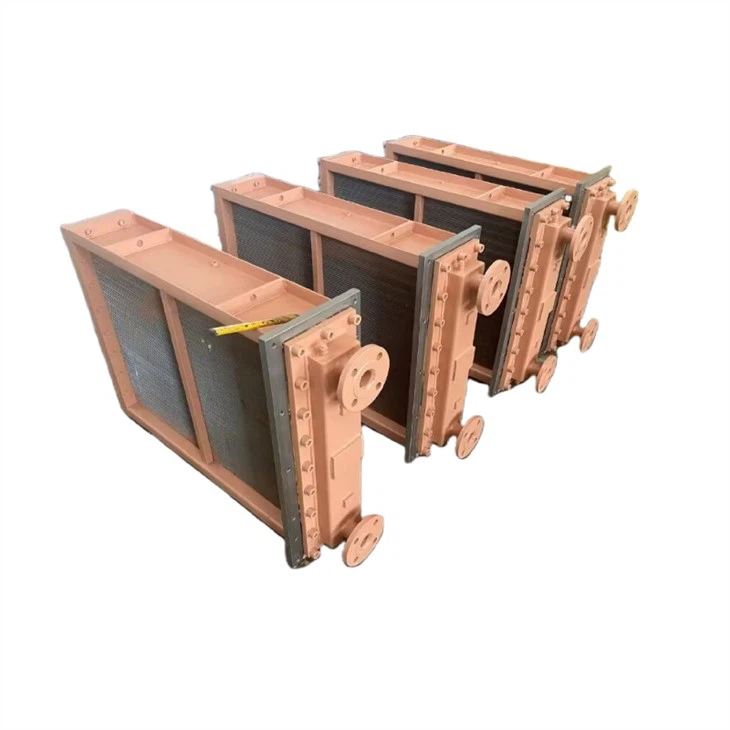
The selection of the cooler needs to take into account the cooling area and the temperature and flow rate of the equipment. According to the flow rate and temperature of the equipment, select a suitable cooler within the appropriate area. Generally speaking, the area of the cooler should be slightly larger than the area required by the process to ensure the cooling effect.
Consider pressure drop
When the cooler is assembled in the equipment, the pressure loss of cooling water through the cooler is called pressure drop. In order to ensure the normal operation of the equipment, the pressure drop should not be too large.
Consider leakage
Leakage of the cooler will not only cause a decrease in cooling effect, but also affect the safety performance of the equipment. Therefore, we must pay attention to the leakage problem of the cooler, and choose reliable quality products in the selection.
Consider the structure of the material
The structure of the cooler is usually used tube, plate, sheet, etc., the material is copper, aluminum, stainless steel and so on. When selecting the type, you need to choose the appropriate structure and material according to the requirements of the equipment.

Attention
Pay attention to changes in flow rate
The cooler needs to ensure that the flow of cooling water is stable during operation, so it is necessary to pay attention to changes in flow and adjustment. If the flow rate changes too much, it may lead to a decrease in cooling effect and equipment instability.
Pay attention to the installation and maintenance of the cooler
The cooler should not only pay attention to the matching of the size and fixing method before installation, but also pay attention to the connection of the piping system. In the maintenance need to pay attention to cleaning and anti-corrosion work.
Pay attention to the surrounding environment
The stable operation of the cooler needs a suitable environment, so it is necessary to pay attention to the ambient temperature, gas composition and electrically charged substances and other factors.
Generator Cooler Cleaning Method
Cleaning tools and cleaning fluid selection
Cleaning tools: Commonly used cleaning tools for the brush and spray pipe. Cleaning brushes should choose soft bristles, to avoid bristles too hard, scratching the generator internal, spray hose should choose high-pressure water spray device, the effect is better.
Cleaning liquid: The cleaning liquid can choose the cleaning agent on the market which is specially used for cleaning the cooler, or you can use diluted detergent or white vinegar.
Cleaning procedures and precautions
First, turn off the generator and unplug all the plugs to ensure safety.
Open the cooler drain port and let the water out. Then, flush the cooler with a spray hose for at least 10 minutes until clean water comes out of the cooler.
Pour the cleaning solution inside the cooler. Note that the concentration of the cleaning solution should be controlled between 3% and 5%, too high a concentration will cause the cleaning agent to corrode the generator.
Brush the inside of the cooler with a cleaning brush, for some difficult to clean places, it is recommended to use high-pressure water jets to flush them loose.
After the cooler has been cleaned, use a water jet to rinse the inside of the cooler well to ensure that no cleaning agent remains in the cooler.
Finally, close the water drain port, refill with fresh water, and open the bleeder ports on the cooler inlet and outlet ports to bleed out the air. Turn on the generator for a test run and observe if the generator dissipates heat well.
Our factory
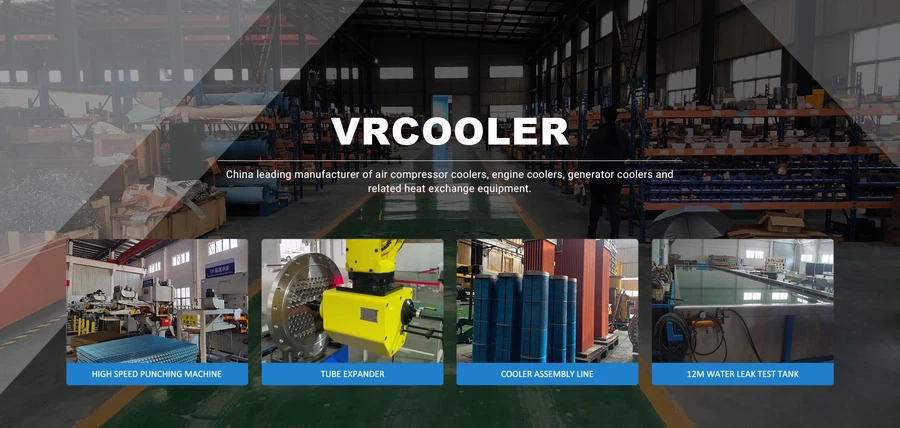
Our factory has complete production equipment, advanced production technology, perfect testing methods,and guaranteed quality.
We have passed the IS09001 international quality system certification.
In the design, development, and production of air compressor cooler / engine cooler / generator cooler, we in nsist on quality as the center and customer satisfaction as the concept.
Our factory has professional engineers who can design and manufacture various products and various non-statandard equipment for customers.
FAQ
Changzhou Vrcooler Refrigeration Co., Ltd. is one of the most professional generator cooler manufacturers and suppliers in China, specialized in providing high quality aftermarket service. Please rest assured to buy high-grade generator cooler for sale here from our factory. For price consultation, contact us.
air to water coolers, air cooling system in generator, air cooled exciter