


Shell And Tube Evaporator
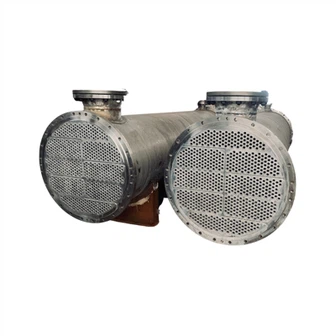
Shell and tube evaporator, also known as tubular heat exchanger. ls closed in the shell of the wall of the tube bundle as the heat transfer surface of the wall-type heat exchanger. This heat exchanger structure is a relatively simple, reliable operation, available in a variety of structural materials (mainly metal materials)manufacturing, can be used at high temperatures and high pressures, is currently the most widely used type. Shell and tube heat exchanger an important equipment for petrochemical, electric power, and other industries.
Product Introduction
Changzhou Vrcooler Refrigeration Co., Ltd. is one of the most reliable manufacturers and suppliers of shell and tube evaporator in China, featured by quality products and good price. Please feel free to buy advanced shell and tube evaporator for sale here from our factory. Also, aftermarket service is available.
Why Choose Us
Professional Design Experiences
For Standard model, we can provide coolers according part number; For custom design, Different design for different needs, we can provide the best solutions for you.
Perfect after-sale service
Whole heartedly provides the consummation for the general customers the after-sale service.
Professional Team
We are a team, we are a family, we are in good faith in exchange for your trust.
Enjoy providing customer-oriented services
Provide customer first service, your satisfaction is our service goal.
What is Shell And Tube Evaporator
Shell and tube evaporator, also known as tubular heat exchanger. ls closed in the shell of the wall of the tube bundle as the heat transfer surface of the wall-type heat exchanger. This heat exchanger structure is a relatively simple, reliable operation, available in a variety of structural materials (mainly metal materials)manufacturing, can be used at high temperatures and high pressures, is currently the most widely used type. Shell and tube heat exchanger an important equipment for petrochemical, electric power, and other industries.
Related Product

Shell and tube condensers have a robust shell containing a series of high performance tubes for excellent heat transfer efficiency. A baffle system optimises the flow of the cooling medium, ensuring optimum heat dissipation even in demanding environments. Designed with versatility in mind, it can accommodate a wide range of process fluids and cooling media, making it a versatile option across industries.
The shell and tube condenser has been carefully designed for a long service life and its durable construction can withstand varying pressure and temperature fluctuations, minimising the need for maintenance.Cleaning and pipework replacement is simple, ensuring consistent performance and extended product life.

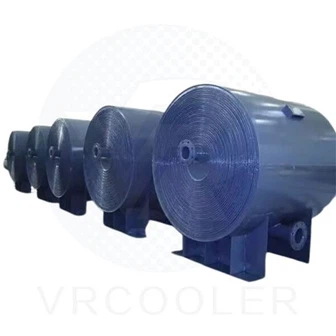
Plate And Shell Heat Exchanger
Plate and shell heat exchanger is a plate sheet group composed of plate beam and shell two parts. The plate group is welded by argon arc welding or plasma welding.
Plate and shell type heat exchanger has high heat transfer efficiency, small temperature difference at the end, high temperature resistance,high pressure resistance, good sealing performance, low-pressure drop, small footprint, safe and reliable,compact structure, both plate heat exchanger and shell and tube heat exchanger advantages, is a new type of high-efficiency heat exchanger.

Shell and tube evaporator, also known as tubular heat exchanger. Is closed in the shell of the wall of the tube bundle as the heat transfer surface of the wall-type heat exchanger. This heat exchanger structure is a relatively simple, reliable operation, available in a variety of structural materials (mainly metal materials) manufacturing, can be used at high temperatures and high pressures, is currently the most widely used type. Shell and tube heat exchanger an important equipment for petrochemical, electric power, and other industries.

Shell & Tube Heat Exchanger is the most widely recognized sort of heat exchanger in oil refineries and other large chemical processes, and it is applicable for
higher-pressure applications.
This kind of heat exchanger consists of a shell (a large pressure vessel) with a bundle of tubes within it. One fluid goes through the tubes, and the other fluid flows over the tubes (through the shell) to transfer heat between the two fluids.
The easy design of a shell and tube heat exchanger makes it the perfect cooling solution for a wide variety of applications. The main application of Stainless Steel Shell and Tube Heat Exchangers is the cooling of hydraulic fluid and oil in engines, transmissions, and hydraulic power packs. By taking the right decision of materials they can also be utilized to cool or heat other mediums, for example, swimming pool water or charge air.
The main benefit of using a shell and tube heat exchanger is that they are often easy to service.
Performance Advantages of Shell And Tube Evaporator
High temperature resistance, good corrosion resistance.
High heat exchange efficiency, stable performance, long service life.
Smooth inner wall, poor adhesion, not easy to scale.
Reasonable structure, easy to clean and maintain.
The Working Principle of Shell and Tube Evaporator
Heat transfer method
Shell and tube evaporator adopts the three heat transfer methods of convection heat transfer, conduction heat transfer and evaporation heat transfer. In the process of heat transfer, the medium in the shell and the medium in the pipe exchange heat. The medium in the shell is usually cooling water or other operating medium, and the medium in the pipe is usually the solution to be evaporated.
Convective heat transfer: Convective heat transfer mainly refers to the mixing of fluid heat transfer, is the most common type of heat transfer, its efficiency is high, but need to strengthen the design and management.
Conduction heat transfer: Conduction heat transfer is the process of heat transfer between two objects in contact, this way is generally used for high temperature, high pressure or low flow rate of heat transfer.
Evaporation heat transfer: When the evaporated medium flows in the tube, it will contact with the steam-filled chamber in the shell with steam and non-steam areas, that is to say, the heat of the solution will be transferred to the steam through the shell to complete the heat transfer process.
Fluid flow mode
The heat medium and heat transfer medium in the shell and tube evaporator flow through different pipes. The fluid in the shell can be the heat transfer medium, and the fluid in the pipe can be the solution to be evaporated. Typically, the shell fluid is a liquid, while the fluid in the pipe is a high boiling point liquid or gas.
According to the different ways of fluid flow, shell and tube evaporator can be divided into the following three types:
Countercurrent flow: In this type of flow, the fluids in the shell and tube flow in opposite directions. This way is usually used in high temperature, high pressure or high viscosity medium heat transfer, can make full use of heat transfer area and maximize heat transfer efficiency.
Cocurrent flow: In this type of flow, the fluid in the shell and pipe flows in the same direction, the evaporated liquid enters from the top of the deflector plate, and the steam enters from the bottom of the deflector plate. This type of flow is suitable for low concentration, low heat load medium evaporation or high pollutant concentration.
Mixed-flow flow: In this kind of flow mode, the fluid in the shell and tube is presented at a certain angle, which can overcome the shortcomings of the other two flow modes, and it is a kind of heat exchange mode with good flexibility.
Classification of Shell and Tube Evaporator
Simple shell and tube evaporator
Simple shell and tube evaporator is the most commonly used type of shell and tube evaporator, which is mainly composed of shell, tube bundle and tube plate. This type of evaporator runs reliably, has simple structure and low manufacturing cost. It is applicable to evaporator, condenser and vaporizer and other devices in various industries.
Petrochemical special shell and tube evaporator
Petrochemical special shell and tube evaporator usually refers to polymer evaporator, high viscosity material evaporator and horizontal liquid ammonia evaporator and other types. This type of shell and tube evaporator plays an important role in the complex petrochemical production process.
Commutator shell-and-tube evaporator
The commutator shell-and-tube evaporator is a complex evaporator with forced circulating efficacy, which realizes various heat exchange work through the alternate flow of steam and liquid in the tube bundle. This type of shell-and-tube evaporator fluid flows in such a way as to greatly increase the degree of heat exchange and accelerate the rate of heat transfer. Therefore, it is suitable for the place which needs high thermal efficiency, large flow rate and high pressure difference.
Multi-stage shell and tube evaporator
Multi-stage shell and tube evaporator mainly includes two types of double-stage and three-stage, absorbing the advantages of multi-stage fractionation tower, can be in the same equipment for multi-stage evaporation. The product of this type of evaporator can reach higher concentration and higher purity, which can be used in chemical industry, food and other industries.
Shell and Tube Evaporator Maintenance and Cleaning Methods
The normal operation of shell and tube evaporator requires regular maintenance and cleaning. Some common cleaning methods are as follows:

Chemical cleaning
After cutting off the supply line, use various strong acids, alkalis or dissolving solutions to clean to remove the dirt in the pipeline.
Water flushing
Use high pressure water or natural flowing water to flush the dirt in the pipeline.
Mechanical scraping
In some occasions where it is necessary to keep the inner wall of the pipe clean and smooth, it is usually necessary to use mechanical methods, such as rotating brushes or fluid nozzles, to clean the inside of the pipe.
The characteristics of shell and tube evaporator mainly include good heat transfer performance, compact structure, small footprint and low metal consumption.
Good heat transfer performance: Shell and tube evaporator has excellent heat transfer performance, because its design makes the coolant flow outside the tube, while the liquid to be evaporated flows inside the tube, and this kind of flow channel design is conducive to enhancing the heat transfer effect. In addition, the use of closed systems, such as the use of brine as a refrigerant, the brine is isolated from contact with the air, further reducing the corrosion of brine on the piping, thereby improving the heat transfer efficiency.
Compact structure, small footprint: Shell and tube evaporator structure design is compact, can effectively reduce the space required. This compact design is not only suitable for a variety of installation environments, but also helps to realize efficient heat exchange in a limited space.
Low metal consumption: Due to the structural characteristics of shell and tube evaporators, relatively few metal materials are used in the manufacturing process, which has certain advantages in terms of cost control and resource optimization.
Easier fabrication and installation: Shell and tube evaporators are relatively easy to fabricate and install, which contributes to shorter project cycle times and lower installation costs. In addition, their design allows for pre-assembly and commissioning in the factory, further simplifying the complexity of on-site installation.
Shell and Tube Evaporator Internal Structure
Shell and tube evaporator shell and tube structure
The shell and tube evaporator shell is generally made of steel, which mainly plays the role of supporting and protecting the tube bundle. According to different use occasions and requirements, the shape and size of the shell are also different, generally round, square, rectangular and other shapes. Inside the shell is equipped with inlet and outlet ports to facilitate the connection of cooling medium and refrigerant.
Tube bundle structure
Tube bundle is the core part of shell and tube evaporator, which is composed of several spiral or parallel shaped refrigerant tubes arranged by bending, twisting and layering. The number and length of tube bundles depend on different working conditions and applications, and the usual specifications are Φ7, Φ9.52, Φ12 and so on. There should be enough clearance between the tube bundles to ensure unobstructed passage of the cooling medium.
Evaporator head
Evaporator head is an important part of shell and tube evaporator, which usually consists of inlet and outlet pipes, distributor and nozzle and other parts. The role of the evaporator head is to distribute the refrigerant evenly to each refrigerant tube in the tube bundle, to ensure that the refrigerant in the tube bundle flow and pressure equalization.
Channel structure
The channel structure inside the shell and tube evaporator is mainly composed of the shell side channel and the tube side channel. Shell side channel is located on the outside of the tube bundle, usually with a certain coil gap between the shell to ensure that the cooling medium in the channel fully circulating flow. Tube side channel is located inside the tube bundle, usually using the design of bending, around and so on, in order to ensure that the refrigerant in the tube bundle fully vaporized and heat absorption.
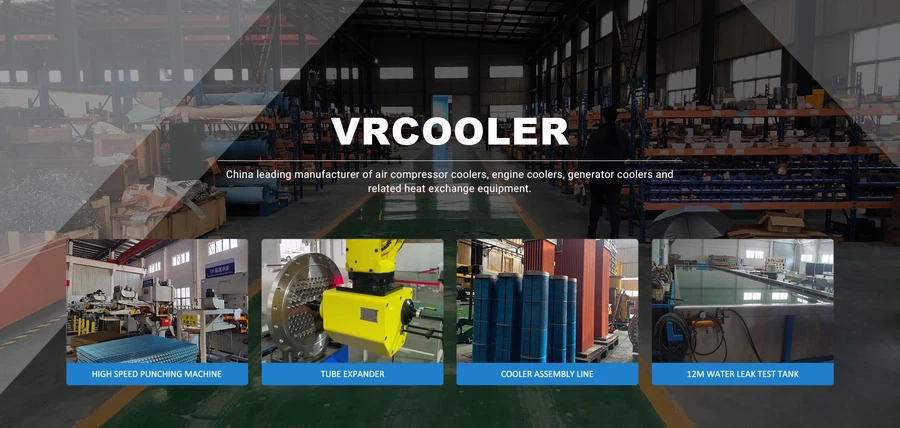
Our factory
Our factory has complete production equipment, advanced production technology, perfect testing methods,and guaranteed quality.
We have passed the IS09001 international quality system certification.
In the design, development, and production of air compressor cooler / engine cooler / generator cooler, we in nsist on quality as the center and customer satisfaction as the concept.
Our factory has professional engineers who can design and manufacture various products and various non-statandard equipment for customers.
FAQ
Hot Tags: shell and tube evaporator, China, suppliers, manufacturers, buy, price, replacement, for sale, aftermarket service
You Might Also Like
Send Inquiry
