


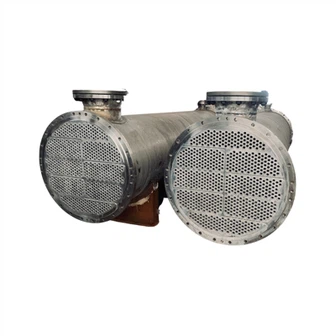
Shell And Tube Condenser
Shell and tube condensers have a robust shell containing a series of high performance tubes for excellent heat transfer efficiency. A baffle system optimises the flow of the cooling medium, ensuring optimum heat dissipation even in demanding environments. Designed with versatility in mind, it can accommodate a wide range of process fluids and cooling media, making it a versatile option across industries.
Product Introduction
Changzhou Vrcooler Refrigeration Co., Ltd. is one of the most reliable manufacturers and suppliers of shell and tube condenser in China, featured by quality products and good price. Please feel free to buy advanced shell and tube condenser for sale here from our factory. Also, aftermarket service is available.
Why Choose Us
Professional Design Experiences
For Standard model, we can provide coolers according part number; For custom design, Different design for different needs, we can provide the best solutions for you.
Perfect after-sale service
Whole heartedly provides the consummation for the general customers the after-sale service.
Professional Team
We are a team, we are a family, we are in good faith in exchange for your trust.
Enjoy providing customer-oriented services
Provide customer first service, your satisfaction is our service goal.
What is Shell And Tube Condenser
Shell and tube condensers have a robust shell containing a series of high performance tubes for excellent heat transfer efficiency. A baffle system optimises the flow of the cooling medium, ensuring optimum heat dissipation even in demanding environments. Designed with versatility in mind, it can accommodate a wide range of process fluids and cooling media, making it a versatile option across industries.
The shell and tube condenser has been carefully designed for a long service life and its durable construction can withstand varying pressure and temperature fluctuations, minimising the need for maintenance.Cleaning and pipework replacement is simple, ensuring consistent performance and extended product life.
Related Product

Shell and tube evaporator, also known as tubular heat exchanger. Is closed in the shell of the wall of the tube bundle as the heat transfer surface of the wall-type heat exchanger. This heat exchanger structure is a relatively simple, reliable operation, available in a variety of structural materials (mainly metal materials) manufacturing, can be used at high temperatures and high pressures, is currently the most widely used type. Shell and tube heat exchanger an important equipment for petrochemical, electric power, and other industries.

Plate And Shell Heat Exchanger
Plate and shell heat exchanger is a plate sheet group composed of plate beam and shell two parts. The plate group is welded by argon arc welding or plasma welding.
Plate and shell type heat exchanger has high heat transfer efficiency, small temperature difference at the end, high temperature resistance,high pressure resistance, good sealing performance, low-pressure drop, small footprint, safe and reliable,compact structure, both plate heat exchanger and shell and tube heat exchanger advantages, is a new type of high-efficiency heat exchanger.

Shell & Tube Condensers - High efficiency heat exchange technology designed to deliver superior performance in a wide range of applications. Vrcooler shell and tube condensers have a robust shell containing a series of high performance tubes for excellent heat transfer efficiency.

Shell & Tube Heat Exchanger is the most widely recognized sort of heat exchanger in oil refineries and other large chemical processes, and it is applicable for
higher-pressure applications.
This kind of heat exchanger consists of a shell (a large pressure vessel) with a bundle of tubes within it. One fluid goes through the tubes, and the other fluid flows over the tubes (through the shell) to transfer heat between the two fluids.
The easy design of a shell and tube heat exchanger makes it the perfect cooling solution for a wide variety of applications. The main application of Stainless Steel Shell and Tube Heat Exchangers is the cooling of hydraulic fluid and oil in engines, transmissions, and hydraulic power packs. By taking the right decision of materials they can also be utilized to cool or heat other mediums, for example, swimming pool water or charge air.
The main benefit of using a shell and tube heat exchanger is that they are often easy to service.
Advantages of Shell And Tube Condenser
Good heat transfer: Due to the use of thin-walled steel shell, heat transfer effect is good, while the use of water as a cooling medium, can greatly reduce the temperature of the condenser. This type of heat exchanger is small in size and light in weight, which makes it easy to install and dismantle.
Vertical installation, small footprint: Shell and tube condenser can be installed vertically, small footprint, and can be installed outdoors, does not take up indoor floor space.
Strong corrosion resistance: The use of stainless steel material manufacturing shell, and in the welding process using argon arc welding welding molding, so the corrosion resistance is strong. Simple and compact structure, good sealing performance and other features also make it suitable for chemical production in a variety of corrosive media heating or cooling occasions.
Cooling water flows straight through from top to bottom: It is easy to remove rust and dirt, and it is not necessary to stop the operation of the equipment when cleaning, and the water quality of the cooling water does not require high.
Horizontal placement, water flow multi-way flow: High flow rate, the temperature difference between the import and export of water, can reduce the amount of cooling water. Cooling water temperature in 4-6 ℃, heat transfer coefficient is higher than vertical. Compact structure, small footprint.
Simple structure, easy to manufacture: Shell and tube condenser with high thermal conductivity, simple structure, easy to manufacture. The heat transfer coefficient can reach 800kcal/(m²-h-°C) when the water flow rate is 1~2m/s.
Shell And Tube Condenser of Operational Considerations
Flow arrangements
In a condenser shell and tube, there are two main types of flow arrangements: parallel flow and counterflow. Parallel flow is when the refrigerant and cooling water both flow in the same direction, while counterflow is when they flow in opposite directions.
Parallel flow is typically used in situations where the cooling water is significantly colder than the refrigerant, as it allows for more efficient heat transfer. However, it can result in a higher pressure drop and may not be suitable for all applications.
Counterflow, on the other hand, is better suited for situations where the cooling water is only slightly cooler than the refrigerant. It results in a lower pressure drop, but may not be as efficient at transferring heat.
Pressure drop
Pressure drop is an important consideration in the operation of a condenser shell and tube. It refers to the decrease in pressure that occurs as the refrigerant and cooling water flow through the system.
A high pressure drop can result in decreased efficiency and increased energy consumption. It can also cause damage to the system over time. Therefore, it is important to ensure that the pressure drop is kept within acceptable limits.
There are several factors that can contribute to pressure drop, including the flow rate of the refrigerant and cooling water, the diameter of the tubes, and the length of the tubes. By carefully considering these factors and designing the system accordingly, it is possible to minimize pressure drop and ensure optimal performance.
Shell And Tube Condenser of Heat Transfer Principles

Condensation heat transfer
In a shell and tube condenser, the vapor condenses on the outer surface of the tubes, releasing heat to the cooling water flowing inside the tubes. The heat transfer during condensation is a complex process that involves the transfer of latent heat and sensible heat. The latent heat transfer occurs when the vapor changes phase into a liquid, while sensible heat transfer occurs due to the temperature difference between the vapor and the cooling water.
The rate of condensation heat transfer depends on several factors, including the physical properties of the vapor and the cooling water, the geometry of the condenser, and the flow rates of the vapor and the cooling water. The heat transfer coefficient, which is a measure of the efficiency of the heat transfer process, is also influenced by these factors.
Overall heat transfer coefficient
The overall heat transfer coefficient (U) is a measure of the overall efficiency of the heat transfer process in a shell and tube condenser. It takes into account the resistances to heat transfer on both the vapor and cooling water sides of the condenser. The overall heat transfer coefficient is calculated using the following equation:
U = 1 / ((1 / h_i) + (t_i / k) + (t_o / k) + (1 / h_o))
Where h_i and h_o are the heat transfer coefficients on the vapor and cooling water sides, respectively, t_i and t_o are the thicknesses of the tube and shell walls, and k is the thermal conductivity of the tube material.
In general, a higher overall heat transfer coefficient indicates a more efficient heat transfer process, which results in a smaller condenser size and lower energy consumption. Therefore, it is important to optimize the design of the condenser to achieve the highest possible overall heat transfer coefficient.
Shell And Tube Condenser of Maintenance and Cleaning
Fouling and scaling
Fouling and scaling are common issues that can occur in condenser shell and tube systems, which can lead to reduced efficiency, increased energy costs, and potential equipment damage. Fouling refers to the accumulation of dirt, debris, and other substances on the surface of the tubes, while scaling is the buildup of mineral deposits on the tube walls.
To prevent fouling and scaling, regular maintenance and cleaning are essential. This may involve inspecting the system for signs of fouling or scaling, and implementing a cleaning schedule based on the severity of the buildup. In some cases, chemical treatments may be necessary to remove stubborn deposits.
Cleaning techniques
There are several cleaning techniques that can be used to remove fouling and scaling from condenser shell and tube systems. These include mechanical cleaning, chemical cleaning, and high-pressure water cleaning.
Mechanical cleaning involves the use of brushes, scrapers, or other tools to physically remove fouling and scaling from the tube surface. Chemical cleaning uses a specific chemical solution to dissolve the buildup, while high-pressure water cleaning involves the use of high-pressure water jets to blast away the deposits.
It is important to note that the cleaning technique used will depend on the type and severity of the fouling or scaling. It is recommended to consult with a professional technician or manufacturer for guidance on the most appropriate cleaning method for a specific system.
Regular maintenance and cleaning of condenser shell and tube systems can help to prevent fouling and scaling, ensuring optimal performance and energy efficiency.
Testing methods
Performance evaluation of condenser shell and tube is crucial to ensure the efficient operation of the system. The testing methods used to evaluate the performance of the condenser shell and tube include:
• Heat transfer coefficient measurement
• Pressure drop measurement
• Fouling factor measurement
Heat transfer coefficient measurement involves determining the rate of heat transfer from the hot fluid to the cold fluid. Pressure drop measurement involves determining the pressure drop across the condenser. Fouling factor measurement involves determining the fouling resistance of the condenser.
Performance metrics
The performance of the condenser shell and tube can be evaluated using various performance metrics, including:
• Overall heat transfer coefficient (U).
• Heat transfer rate (Q).
• Effectiveness (ε).
• Coefficient of performance (COP).
The overall heat transfer coefficient (U) is a measure of the overall heat transfer rate between the hot and cold fluids. The heat transfer rate (Q) is a measure of the amount of heat transferred between the hot and cold fluids. The effectiveness (ε) is a measure of the ratio of the actual heat transfer rate to the maximum possible heat transfer rate. The coefficient of performance (COP) is a measure of the efficiency of the system.
Design and Construction of Shell and Tube Condensers

Main components
Shell and tube condensers are widely used in industrial applications to condense vapor into a liquid. The main components of a shell and tube condenser include a shell, tubes, tube sheets, baffles, and a bundle support plate. The shell is a cylindrical vessel that contains the tubes and serves as a housing for the condenser. The tubes are typically made of copper, brass, or stainless steel and are arranged in a bundle within the shell. The tube sheets are located at each end of the shell and serve to support and seal the tubes. Baffles are used to direct the flow of the fluid and increase heat transfer efficiency. The bundle support plate is located at the bottom of the shell and supports the weight of the tube bundle.
Materials of construction
The materials of construction for shell and tube condensers depend on the application and the fluids being handled. The shell and tube sheets are usually made of carbon steel, stainless steel, or a combination of both. The tubes are typically made of copper, brass, or stainless steel. The choice of materials depends on factors such as the corrosiveness of the fluids, the operating temperature and pressure, and the cost of the materials.
Types of Shell and Tube Condensers
Shell and tube condensers can be designed with either a horizontal or vertical orientation. The choice of orientation depends on the available space, the type of fluid being used, and the flow rate. Horizontal condensers are typically used for low to medium flow rates, while vertical condensers are used for high flow rates. Vertical condensers are also preferred when space is limited.
Fixed tube sheet
In a fixed tube sheet condenser, the tubes are fixed to the tube sheet, which is then welded to the shell. This type of condenser is simple and cost-effective, but it has limited flexibility. The tube sheet can only expand or contract within certain limits, which can cause thermal stresses and reduce the lifespan of the condenser.
U-tube design
In a U-tube condenser, the tubes are bent in a U-shape and fixed to the tube sheet. This design allows for thermal expansion and contraction, which reduces stress on the tube sheet and increases the lifespan of the condenser. U-tube condensers are commonly used in applications where thermal cycling is frequent.
Floating head type
In a floating head condenser, the tube sheet is not fixed to the shell, and the tube bundle can move freely within the shell. This design allows for easy maintenance and cleaning, but it is more expensive than fixed tube sheet condensers. Floating head condensers are commonly used in applications where frequent cleaning is required.
Thermal and Hydraulic Design of Shell and Tube Condensers
The heat duty of a shell and tube condenser is calculated based on the mass flow rate of the process fluid and the temperature difference between the inlet and outlet of the fluid. The heat transfer coefficient, which is dependent on the physical properties of the fluids, is also taken into consideration. The heat duty can be calculated using the following equation:
Q = m * Cp * ΔT
Where Q is the heat duty, m is the mass flow rate of the process fluid, Cp is the specific heat capacity of the fluid, and ΔT is the temperature difference between the inlet and outlet of the fluid.
The pressure drop across a shell and tube condenser is an important factor to consider in the design process. The pressure drop is caused by the frictional resistance of the fluid as it flows through the tubes and the shell. The pressure drop can be calculated using the following equation:
ΔP = f * (L/D) * (ρ/2) * (V^2)
Where ΔP is the pressure drop, f is the friction factor, L is the length of the tube, D is the diameter of the tube, ρ is the density of the fluid, and V is the velocity of the fluid.
The cooling water flow rate is an important parameter in the design of a shell and tube condenser. The cooling water flow rate is dependent on the heat duty of the process fluid and the temperature difference between the inlet and outlet of the cooling water. The cooling water flow rate can be calculated using the following equation:
m = Q / (Cp * ΔT)
Where m is the mass flow rate of the cooling water, Cp is the specific heat capacity of the cooling water, and ΔT is the temperature difference between the inlet and outlet of the cooling water.
In order to ensure proper cooling of the process fluid, the cooling water flow rate should be sufficient to remove the heat generated by the process fluid.
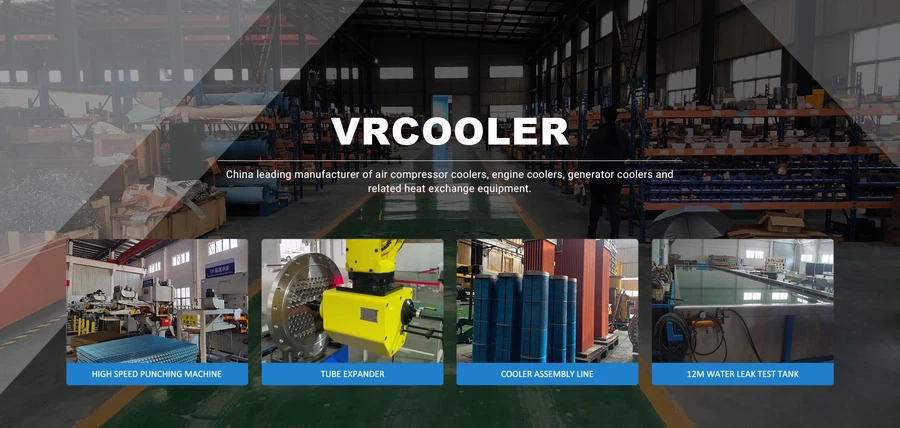
Our factory
Our factory has complete production equipment, advanced production technology, perfect testing methods,and guaranteed quality.
We have passed the IS09001 international quality system certification.
In the design, development, and production of air compressor cooler / engine cooler / generator cooler, we in nsist on quality as the center and customer satisfaction as the concept.
Our factory has professional engineers who can design and manufacture various products and various non-statandard equipment for customers.
FAQ
Hot Tags: shell and tube condenser, China, suppliers, manufacturers, buy, price, replacement, for sale, aftermarket service
You Might Also Like


Send Inquiry
