What Is A Generator Cooling Skid? A Complete Genset Cooling Guide
What is a generator cooling skid?
A generator cooling skid is a pre-engineered, skid-mounted cooling package for a diesel or gas generator set. It is assembled on a steel base frame and may combine a radiator or heat exchanger, fan, pump, expansion tank, valves, piping, instruments, and controls.
The skid does not cool the alternator itself. It removes heat generated by the engine's jacket-water circuit, charge-air circuit, lube-oil circuit, or other approved engine systems. Heat can be rejected to ambient air through a radiator or dry cooler, or transferred to an external water circuit through a heat exchanger.
The word skid describes the integrated delivery format. Instead of receiving separate components that must be engineered and assembled on site, the buyer can receive a coordinated package with defined interfaces for water, oil, power, air, controls, foundation, and maintenance.
What equipment can a generator cooling skid include?
The exact package depends on engine model, heat load, site conditions, and cooling architecture. Common items include:
Radiator or remote radiator core
Axial fans and fan guards
Electric motors or engine-driven fan interface
Jacket-water circulation connections
Low-temperature and high-temperature circuits
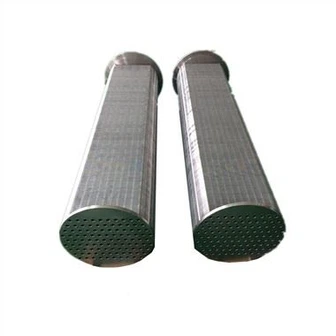
Plate or shell-and-tube heat exchanger
Dry cooler or air-cooled fluid cooler
Expansion tank
Pumps and valves
Temperature, pressure, and flow instruments
Control panel or remote signal interface
Steel base frame and lifting points
Drain, vent, and service connections
A quotation should clearly identify which components are included and which are supplied by the engine or plant contractor.
How does a generator cooling skid work?
A typical closed cooling cycle follows these steps:
The engine produces heat during operation.
A coolant circuit carries heat away from the engine.
A pump moves hot coolant to the radiator or heat exchanger.
The cooling package transfers heat to ambient air or an external water circuit.
Cooled fluid returns to the engine.
Controls adjust fan speed, valve position, pump operation, or circuit staging as required.
For a diesel genset with an integral radiator, the radiator is normally mounted close to the engine. For a remote radiator skid, the cooler is installed outside the engine room, on a roof, beside a building, or at another approved location. The connecting pipework then becomes part of the thermal and hydraulic design.

Which cooling format should be selected?
|
Cooling format |
Best suited to |
Main design issue |
|---|---|---|
|
Integral radiator |
Standard genset packages with suitable airflow |
Engine-room ventilation and hot-air discharge |
|
Remote radiator skid |
Space-limited, containerized, or retrofit installations |
Pipe length, static head, airflow, and controls |
|
Heat exchanger skid |
External cooling-water loop, marine, dirty-water, or shared-cooling projects |
Water quality, pressure, leakage, and external circuit |
|
Dry cooler package |
Closed external loop and water-saving projects |
Ambient temperature, fan power, and heat-rejection capacity |
|
Dual-circuit skid |
Gas engines or large engines with HT/LT requirements |
Separate circuit sizing and control logic |
The right answer depends on the complete installation, not only the engine power rating.
When is a remote generator cooling skid useful?
A remote cooling skid may be considered when:
The engine room has limited ventilation space.
A containerized genset needs better airflow management.
The site requires the radiator to be mounted on a roof or outside wall.
Hot air must be discharged away from occupied or sensitive areas.
A retrofit cannot accommodate a machine-mounted radiator.
Several generator sets share a planned cooling area.
Noise, footprint, or maintenance access must be managed separately.
The distance between the engine and the cooler should be provided during design. Long pipe runs add pressure drop, fluid volume, thermal expansion, air-removal requirements, and installation cost.
What information is needed for a generator cooling skid quotation?
Provide:
Engine brand and model
Genset electrical rating and duty: standby or prime
Engine heat rejection to coolant
Jacket-water flow and temperatures
Charge-air or low-temperature circuit data
Design ambient temperature and altitude
Installation location and available space
Pipe distance and allowable pressure drop
Fan power supply and control requirements
Noise limit
Expansion tank and pump requirements
Material and corrosion requirements
Quantity, destination, packaging, and certification needs
Engine power alone is not enough for accurate thermal sizing.
FAQ
Is a generator cooling skid the same as a generator radiator?
No. A radiator is a heat-transfer component. A cooling skid may include the radiator plus fans, frame, piping, tank, instruments, valves, and controls.
Can a cooling skid be used for gas generators?
Yes. Gas engines may require separate high-temperature and low-temperature circuits. Confirm the engine manufacturer's heat rejection, flow, temperatures, and control requirements.
Can VRCOOLER customize a cooling skid?
VRCOOLER can review generator cooler, radiator, remote radiator, and heat-exchanger requirements around the engine model, heat load, installation space, and operating conditions.
Does a cooling skid include the engine pump?
Not always. The quotation should identify whether the engine-mounted pump, external pump, valves, tank, electrical controls, and instruments are included.
Is a skid-mounted radiator always installed outdoors?
No. It may be installed indoors, outside, on a roof, beside a container, or in another location that meets airflow, service, structural, and environmental requirements.
A generator cooling skid is a coordinated package that removes engine heat through a radiator, remote radiator, heat exchanger, dry cooler, or combined circuit. Defining the engine data, heat rejection, environment, pipework, control signals, and installation constraints early will produce a more accurate and serviceable design.