Boiler Atmospheric Steam Condensers | VRCOOLER
For thermal power plants, industrial manufacturing facilities, chemical complexes, paper mills, and district heating plants, VRCOOLER custom-engineers and manufactures heavy-duty Boiler Atmospheric Steam Condensers (Atmospheric Dump Condensers). Operating at or near atmospheric pressure (0 to 0.5 barg / 0 to 7.2 psig), VRCOOLER atmospheric steam condensers capture and condense low-pressure excess steam from boiler continuous/intermittent blowdown tanks, deaerator vents, steam turbine bypass lines, flash steam vessels, and safety relief valve vents. Available in both Air-Cooled Finned-Tube (ACC) and Water-Cooled Shell-and-Tube (STHE) architectures, our systems transform wasted high-enthalpy vent steam into high-purity, demineralized hot condensate (+70°C to +90°C) for boiler feedwater reuse. Utilizing premium SS304L, SS316L, Duplex 2205, or carbon steel with stainless steel tube bundles, ASME Section VIII Div. 1 standards, and advanced non-condensable gas venting, VRCOOLER eliminates atmospheric steam plumes, prevents thermal noise pollution, and recovers millions of BTUs of thermal energy annually.

Why Industrial Plants Install Boiler Atmospheric Steam Condensers
In standard industrial boiler rooms, significant volumes of low-pressure steam are routinely vented to the atmosphere from deaerator heads, boiler blowdown flash tanks, steam trap manifolds, and autoclave exhausts. Direct atmospheric venting introduces critical economic, environmental, and structural problems:
Serious Consequences of Direct Steam Venting:
Massive Enthalpy & Fuel Waste: Vented atmospheric steam carries enormous latent heat (hfg≈2,257 kJ/k). Venting just 1,000 kg/h of flash steam wastes hundreds of tons of fuel (natural gas, coal, or biomass) each year.
Treated Water & Chemical Treatment Loss: Boiler steam is high-value demineralized, softened, and chemically treated water. Venting it forces plants to purchase additional raw makeup water and costly water treatment chemicals.
Visible White Plumes & Neighborhood Environmental Concerns: Massive white steam plumes from roof vents create moisture fogging, icing hazards in winter, and local environmental complaints.
Severe Acoustic Noise Pollution: High-velocity steam discharge through atmospheric vent stacks creates piercing low- and high-frequency noise levels that often violate OSHA workplace safety regulations.
Corrosive Moisture Damage to Infrastructure: Uncondensed steam condensate raining onto factory roofs accelerates corrosion of structural steel, HVAC equipment, and roof decking.
VRCOOLER Engineering Configurations for Atmospheric Steam Condensation
At VRCOOLER, we provide two primary condensing architectures optimized for plant utility availability:
1. Air-Cooled Atmospheric Steam Condensers (Direct Dry Condensation)
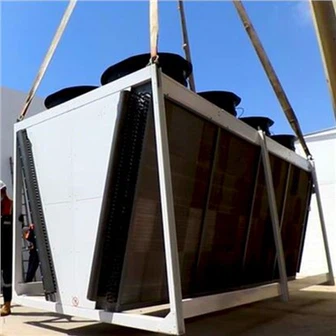
Zero Cooling Water Consumption: Ideal for arid areas or plants with limited cooling tower capacity; uses outdoor ambient air driven by high-efficiency axial fans across finned-tube bundles.
Heavy-Duty Finned Cores: Seamless stainless steel (SS304L/SS316L) or carbon steel tubes with extruded aluminum high-fins, G-fin embedded, or L-foot wrap fins for maximum heat dissipation.
Top-Down Gravity Condensate Drainage: Inclined tube bundles ensure rapid, laminar drainage of condensate without droplet hold-up, preventing water hammer and hydraulic slugging.
VFD / EC Variable Speed Fans: Modulates fan speed automatically based on steam header pressure and ambient temperature, minimizing auxiliary electrical consumption.
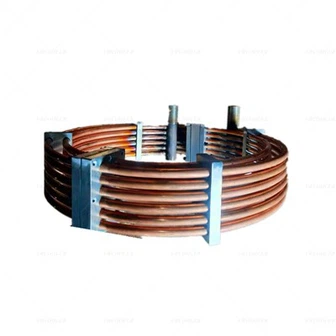
2. Water-Cooled Shell-and-Tube Atmospheric Condensers (Liquid-to-Liquid / Makeup Water Preheating)
Maximum Energy Integration: Utilizes incoming cold boiler makeup water (+15°C→+25°C) or cooling tower water as the cooling medium inside the tubes, preheating boiler feedwater directly to +60°C→+85°C before entering the deaerator.
TEMA E, F, or X Shell Configurations: Specially enlarged steam inlet nozzles equipped with internal stainless steel impingement baffles to handle high specific steam volumes (vg≈1.67 m3/kg at 1 atm) without causing tube erosion or high pressure drop.
Removable U-Tube or Floating-Head Bundles: Accommodates thermal expansion between hot steam inlet and cooler condensate zones without stress cracking.
Major Industrial Applications for Atmospheric Condensers
VRCOOLER boiler atmospheric steam condensers are widely installed across energy-intensive industries:
Boiler Continuous & Intermittent Blowdown Heat Recovery: Condenses flash steam generated when high-pressure boiler blowdown water enters flash tanks, recovering pure water and heat for incoming makeup water.
Deaerator Vent Condensation: Captures the continuous steam plume emitted from thermal deaerators while allowing non-condensable O2 and CO2 gases to vent safely.
Steam Turbine Bypass & Dump Stations: Safely condenses low-pressure steam bypass during turbine start-up, load tripping, or emergency relief without venting to atmosphere.
Food, Beverage & Brewery Steam Kettles: Recovers flash steam from brew kettles, wort boiling, pasteurizers, and rendering vessels.
Textile, Paper & Corrugated Board Mills: Condenses exhaust flash steam from paper dryer cylinder condensate tanks and corrugator steam traps.
Financial ROI & Environmental Benefits of VRCOOLER Condensers
Installing a VRCOOLER atmospheric steam condenser delivers one of the shortest payback periods in industrial utility management:
Typical Payback Within 3 to 9 Months: Recovering 2,000 kg/h of flash steam at an average natural gas cost saves tens of thousands of dollars each month in boiler fuel and demineralized makeup water.
100% Elimination of Steam Plumes: Improves plant aesthetics, neighborhood relations, and avoids winter roof icing hazards.
Reduced Boiler Chemical Consumption: Returning pure condensate reduces blowdown requirements, scaling tendencies, and boiler chemical treatment dosages.
Significant Carbon Footprint Reduction (CO2e): Every ton of recovered steam directly reduces boiler fuel combustion, supporting corporate sustainability and ESG targets.
Frequently Asked Questions (FAQ)
Q1: What is the difference between a vacuum steam condenser and an atmospheric steam condenser?
A: A vacuum steam condenser (such as a power plant surface condenser) operates at deep sub-atmospheric pressures (e.g., 0.05−0.1 bar absolute) to maximize steam turbine enthalpy drop and electrical power generation. An atmospheric steam condenser operates at or slightly above barometric pressure (0 to 0.5 barg / 1.0 to 1.5 bar absolute), specifically engineered to condense vent steam, blowdown flash steam, and bypass steam without requiring complex vacuum ejector sets.
Q2: Why is stainless steel (SS304L/SS316L) recommended over carbon steel for vent steam tubes?
A: Vent steam from deaerators and blowdown flash vessels contains high concentrations of stripped non-condensable gases, specifically oxygen (O2) and carbon dioxide (CO). When dissolved in condensing moisture, CO2 forms aggressive carbonic acid, rapidly corroding standard carbon steel tubes. SS304L and SS316L stainless steels are completely immune to carbonic acid attack and oxygen pitting.
Q3: How do VRCOOLER condensers prevent dangerous vacuum collapse during steam shutoff?
A: When steam supply to an atmospheric condenser suddenly stops, the condensing of remaining vapor can create an internal vacuum. VRCOOLER equips every atmospheric condenser with counter-weighted or spring-loaded vacuum breaker valves and gravity-assisted drainage loops, ensuring smooth atmospheric equalization without structural implosion risks.
Q4: What information is needed to size a boiler atmospheric steam condenser?
A: Please provide the steam mass flow rate (kg/h or lb/h), steam operating pressure and temperature, cooling source available (ambient air design temperature or cooling water flow and inlet temperature), preferred tube material, and site installation footprint constraints.
Request a Boiler Atmospheric Steam Condenser Proposal
Eliminate wasteful steam plumes, recover high-purity condensate, and optimize your boiler plant thermal efficiency with VRCOOLER.
Explore Industrial Steam Solutions: Visit www.vrcooler.com
Submit Your Steam Condenser RFQ: Send your boiler vent specifications, steam flow rates, and site layout requirements directly to our thermal engineering team at [email protected] for a rapid technical assessment and quotation.