Industrial & Marine EGR Coolers | VRCOOLER
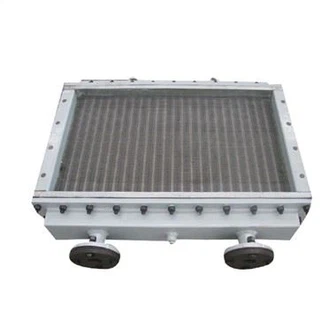
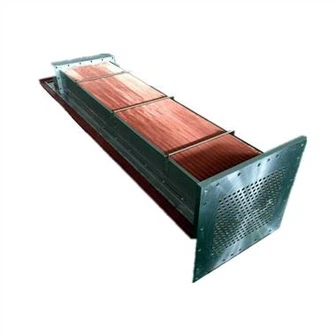
For heavy-duty commercial marine propulsion, distributed power generation, locomotives, mining equipment, and large stationary gas/diesel engines, VRCOOLER custom-engineers and manufactures heavy-duty Industrial and Marine EGR Coolers (Exhaust Gas Recirculation Coolers). Designed to meet stringent international emissions regulations (such as IMO Tier III, EPA Tier 4 Final, and EU Stage V), VRCOOLER EGR coolers reduce engine peak combustion temperatures to suppress harmful Nitrogen Oxide (NOx) formation by up to 80%. Built to withstand raw exhaust gas temperatures exceeding +650°C to +750°C, extreme thermal shock, and aggressive acid condensate (sulfuric and nitric acids), our EGR coolers feature high-grade austenitic and duplex stainless steels (SS316L, SS316Ti, 254SMO, and Inconel 625), laser-welded corrugated dimple tubes, automated orbital TIG seal welding, and integrated mechanical expansion relief. VRCOOLER provides 100% 1:1 drop-in replacement units and custom OEM engineering ensuring thermal balance, soot-clogging resistance, and long-term mechanical integrity.

Operating Environment & Extreme Challenges of Heavy-Duty EGR Coolers
Exhaust Gas Recirculation is one of the most mechanically and thermally punishing heat transfer applications on modern internal combustion engines. An EGR cooler routes a portion of high-temperature exhaust gas back into the engine intake air charge, subjecting the heat exchanger to extreme degradation mechanisms:
Critical Operational Challenges:
Extreme Thermal Shock & Thermal Fatigue: Exhaust gas enters the cooler at +450°C to +750°C while engine coolant circulates on the shell/jacket side at +80°C to +90°C+. Rapid engine load acceleration and deceleration create severe temperature gradients and mechanical stress cycles on tube-to-tubesheet weld joints.
Sulfuric & Nitric Acid Condensation (Low-Temperature Dew Point Corrosion): When exhaust gas containing sulfur oxides (SOx) and moisture cools below its acid dew point (typically +120°C to +150°C), highly aggressive concentrated sulfuric acid (H2SO4) condenses, rapidly eating through standard stainless steels.
Diesel Soot & Hydrocarbon Fouling (Clogging): Carbon particulate matter, unburned hydrocarbons, and oil mist in the exhaust gas readily deposit on cold heat exchanger inner walls, forming an insulating soot layer that degrades heat transfer efficiency and increases exhaust backpressure.
Coolant Boiling & Cavitation Pitting: Localized hotspots inside the cooling jacket can cause localized coolant flashing/boiling, inducing micro-cavitation and accelerated metal erosion on the outer tube walls.
VRCOOLER Advanced Metallurgy & Manufacturing Architecture
At VRCOOLER, we engineer EGR coolers using cutting-edge materials and precision automated manufacturing to prevent thermal cracking and acid corrosion:
1. Acid-Resistant High-Alloy Metallurgy
Stainless Steel 316Ti (1.4571) / SS316L: Titanium-stabilized austenitic stainless steel providing exceptional resistance to intergranular corrosion and carbide precipitation at elevated temperatures.
Super Austenitic 254SMO (UNS S31254) & Duplex 2205: Formulated with high molybdenum and chromium content for maximum resistance to acidic condensation, chloride stress cracking, and pitting corrosion.
Inconel 625 / Alloy 600 (Extreme Temperature Series): Nickel-chromium-molybdenum superalloys engineered for continuous gas temperatures exceeding +700°C, virtually immune to thermal fatigue and oxidation.
2. High-Turbulence, Soot-Resistant Tube Designs
Corrugated Dimpled Tubes: Engineered internal wall profiles induce controlled gas turbulence at low velocities, breaking the laminar boundary layer to increase heat transfer rates while preventing soot particles from sticking to tube walls.
Micro-Fin & Extruded Gas Channels: Optimized gas passage hydraulic diameters minimize exhaust backpressure, ensuring full turbocharger efficiency and engine response.
Straight-Through Flow Geometry: Avoids sharp turns and dead zones where diesel soot and particulate matter can accumulate.
3. Thermal Stress Absorption & Zero-Leakage Sealing
Integrated Stainless Steel Expansion Bellows: Multi-ply hydroformed expansion joints built into the outer casing absorb differential axial thermal growth between hot gas tubes and the cooler shell, eliminating thermal fatigue fractures.
Automated Orbital TIG & Laser Welding: Fully automated, filler-free robotic fusion welding of tube-to-tubesheet joints guarantees 100% penetration, void-free seams, and helium mass spectrometer leak-tightness.
Cast or Machined Stainless Steel Headers: Precision investment-cast SS316L gas inlet/outlet plenums designed with aerodynamic diffusers for uniform exhaust gas distribution across all tubes.
1:1 Replacement & Upgraded Aftermarket Engineering
When factory-original EGR coolers fail prematurely due to thermal stress cracking, acid corrosion, or clogging, replacing them with standard OEM parts often repeats the same failure cycle. VRCOOLER provides re-engineered 1:1 upgraded replacement EGR coolers:
Elimination of OEM Design Weaknesses: We reinforce critical stress concentration points, upgrade core materials from standard 304/316 to titanium-stabilized 316Ti or Inconel, and add robust expansion bellows.
Direct Bolt-On Compatibility: Exact matching of gas inlet/outlet flange standards (V-band, bolted 4-bolt/8-bolt flange), coolant port connections, bracket mountings, and temperature sensor ports.
Rapid Turnaround for Fleet Maintenance: Fast-track manufacturing protocols designed to minimize downtime for ship drydocks, power plant overhauls, and mobile heavy equipment fleets.
Why Engine Manufacturers & Fleet Operators Choose VRCOOLER
Guaranteed Zero Coolant Ingress: Robotic precision orbital TIG welding and 100% helium mass spectrometer leak testing ensure that coolant can never leak into the exhaust or intake stream, preventing hydraulic lock and turbocharger destruction.
Superior Resistance to Acid Dew Point Corrosion: Premium alloys (316Ti, 254SMO, Inconel) protect the heat exchanger during engine start-up and low-load idling when acid condensation is highest.
Low Gas Backpressure & High Thermal Efficiency: CFD-optimized gas plenums and internal corrugated profiles maximize NOx reduction while preserving engine fuel economy.
Full Certification & Traceability: Complete material test certificates (EN 10204 Type 3.1), weld radiography (RT), dye penetrant inspections (PT), and marine class certifications.
Frequently Asked Questions (FAQ)
Q1: What causes most standard EGR coolers to fail prematurely?
A: The two most common causes of EGR cooler failure are thermal stress cracking and acid dew point corrosion. Rapid temperature fluctuations between hot exhaust gas (+650°C) and cool water (+80°C) fatigue rigid tube-to-tubesheet welds. Additionally, operating at low loads causes exhaust gas to drop below its acid dew point, forming sulfuric acid that corrodes standard stainless steel. VRCOOLER solves this with integrated expansion bellows and acid-resistant alloys (316Ti, 254SMO).
Q2: How does VRCOOLER prevent diesel soot and particulate clogging inside the EGR cooler?
A: VRCOOLER utilizes precision-corrugated dimple tubes that create high local gas turbulence at the tube inner wall. This continuous micro-vortex shedding prevents particulate matter and soot from settling, keeping heat transfer surfaces clean and maintaining low exhaust backpressure.
Q3: Can VRCOOLER manufacture custom EGR coolers from physical samples or drawings?
A: Yes. We regularly engineer and manufacture 1:1 direct replacement and upgraded EGR coolers based on customer drawings, CAD files, or physical sample units sent to our facility for 3D laser scanning and metallurgical evaluation.
Q4: What information is needed to size or quote a replacement EGR cooler?
A: Please provide the engine make and model, engine rated power (kW or HP), exhaust gas mass flow rate and inlet temperature, desired gas outlet temperature, cooling water flow rate and inlet temperature, maximum allowable gas backpressure drop (kPa or mbar), and envelope dimensions.
Request an Industrial or Marine EGR Cooler Proposal
Achieve reliable emissions compliance, eliminate thermal fatigue failures, and protect your heavy engines with precision-engineered EGR coolers from VRCOOLER.
Explore Heavy Engine Cooling Solutions: Visit www.vrcooler.com
Submit Your EGR Cooler RFQ: Contact our heavy engine heat transfer team directly at [email protected] with your engine specifications, drawings, and operating conditions for an immediate engineering evaluation and quotation.