How Does A Marine Box Cooler Work? Thermal Siphoning Explained
How does a marine box cooler work?
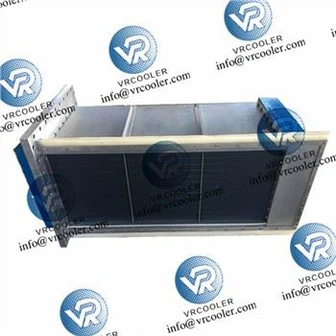
A marine box cooler works by circulating a hot process fluid through a U-tube bundle installed inside a sea chest. Heat passes through the tube walls into seawater outside the tubes. The process fluid remains in a closed circuit, while seawater moves through the sea chest around the external surface of the bundle.
During navigation, vessel movement creates forced seawater flow through the sea-chest grids. When the vessel is stopped, warmed seawater becomes less dense and rises, while cooler seawater moves into the lower part of the sea chest. This temperature-driven circulation is commonly described as thermal siphoning or natural convection.
The cooling cycle in five steps
1. The engine or equipment creates heat
A diesel engine, generator, bow thruster, gearbox, lube-oil circuit, air-conditioning system, or hydraulic system produces heat during operation. The heat is absorbed by freshwater, glycol, or oil in the relevant closed circuit.
2. A pump sends hot fluid to the bundle
The process-fluid pump moves the heated fluid through the inlet connection and into the U-tube bundle. The required flow rate and pressure drop depend on the heat load, fluid properties, tube arrangement, and equipment manufacturer's requirements.
3. Heat crosses the tube wall
The hot fluid transfers heat through the tube wall. Tube material, wall condition, flow velocity, fouling, temperature difference, and available surface area all influence heat transfer.
4. Seawater flows across the outside
Seawater enters through the lower or designated sea-chest grid and passes around the tube bundle. The outlet grid guides warmer water out of the sea chest. The exact flow path depends on the hull arrangement and grid design.
5. Cooled process fluid returns
After releasing heat, the process fluid leaves the bundle and returns to the engine or onboard equipment. The cycle repeats while the system operates.
What is thermal siphoning?
Thermal siphoning is circulation created by a density difference. Water that absorbs heat becomes less dense and tends to rise. Cooler, denser water moves downward and replaces it. In a box-cooler sea chest, this can create a natural upward seawater flow across the heat-transfer bundle when the vessel is stationary.
Thermal siphoning should not be treated as a guaranteed substitute for all seawater flow equipment. Its effectiveness depends on the vertical arrangement, grid openings, temperature difference, sea-chest dimensions, vessel draft, marine growth, and operating state. A thermal design review is needed for each vessel.

Why do inlet and outlet grids matter?
Sea-chest grids guide seawater into and out of the cooling zone. They also help protect the tube bundle from large underwater objects and help distribute flow around the heat-transfer surface.
The grid design should be reviewed for:
Free-flow area
Location relative to the tube bundle
Protection against debris and underwater hazards
Access for inspection and cleaning
Marine-growth accumulation
Hull and sea-chest structural requirements
A grid that is too restricted, damaged, or fouled can reduce seawater flow and lower cooling performance.
Does a box cooler require a raw-water pump?
One reason owners consider a box cooler is that it can avoid a separate raw-water pump, strainer, filter, and long seawater piping arrangement for the box-cooler side. The process-fluid circuit still normally requires its own circulation pump, unless the equipment uses another approved circulation arrangement.
The decision should consider the entire cooling system. Removing raw-water equipment may simplify the seawater side, but the sea chest, grids, tube bundle, process-fluid pump, valves, sensors, coatings, and anti-fouling strategy still need engineering attention.
Which operating conditions affect performance?
| Condition | Why it matters |
|---|---|
| Heat load | Determines required transfer duty |
| Process-fluid flow | Affects internal heat-transfer coefficient and pressure drop |
| Seawater temperature | Warmer seawater reduces available temperature difference |
| Vessel speed | Can increase forced seawater flow |
| At-anchor operation | Relies more on natural circulation where designed |
| Marine growth | Reduces flow and heat-transfer surface |
| Silt or ice | Can restrict grids or change seawater flow |
| Tube material and coating | Affects corrosion resistance and service life |
| Sea-chest geometry | Controls flow path and available surface area |
FAQ
Does a box cooler use seawater inside the tubes?
Normally, the process fluid flows inside the tubes and seawater flows around the external tube surface in the sea chest. Confirm the flow arrangement from the approved drawing.
What is the difference between forced circulation and natural convection?
Forced circulation is driven by vessel movement or another flow source. Natural convection is driven by density differences caused by seawater temperature changes.
Can a box cooler work while the vessel is not moving?
It may continue to transfer heat through natural convection if the sea-chest geometry and operating conditions support it. The design should be checked for both navigation and stationary conditions.
Why can the engine overheat if the cooler is correctly sized?
Possible causes include fouled grids, marine growth, restricted flow, air in the process-fluid circuit, pump problems, incorrect valves, wrong operating conditions, or a change in heat load. Troubleshooting must follow the equipment and vessel procedures.
Does vessel speed always improve cooling?
Movement can increase seawater flow, but performance also depends on draft, hull geometry, sea-chest position, seawater temperature, fouling, and the tube bundle condition.
A marine box cooler combines closed-loop process-fluid circulation with seawater flow through a sea chest. Its working principle includes tube-wall heat transfer, vessel-motion flow, and thermal siphoning. Good performance depends on the complete vessel design, not the tube bundle alone.