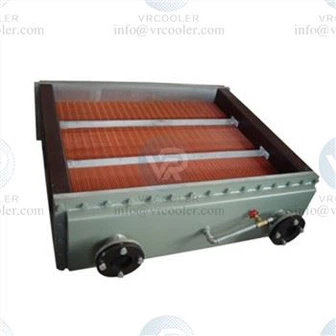
Generator Heat Recovery Vs. Generator Cooling
Are generator heat recovery and generator cooling the same?
No. Generator heat recovery usually means recovering useful thermal energy from the engine that drives a generator set. Generator cooling means removing unwanted heat so the engine or alternator can operate safely. The two systems may share heat exchangers, radiators, pumps, or dry coolers, but they have different objectives.
The distinction is important because a buyer searching for "generator heat recovery" may need a CHP hot-water system, exhaust heat exchanger, or jacket-water heat-recovery package. A buyer searching for "generator cooling" may need a radiator, remote radiator, dry cooler, alternator air cooler, or engine cooling package.

What is recovered in a genset heat-recovery system?
A diesel or gas genset produces electrical power and rejects heat through several paths:
Engine exhaust gas
Jacket water or high-temperature coolant
Lubricating oil
Charge-air or low-temperature circuits
Radiated and surface heat
A heat-recovery system transfers part of this thermal energy to hot water, process water, steam, space heating, digester heating, or absorption cooling. The heat source is the engine, not the alternator itself.
What does a generator cooling system do?
A cooling system keeps engine and generator components within their approved temperature range. It may use:
Integral radiator
Remote radiator
Dry cooler
Plate heat exchanger
Shell-and-tube heat exchanger
Sea chest or box cooler
Fan, pump, valve, and expansion tank
A cooling system may reject heat to ambient air or an external water circuit. It does not necessarily convert the heat into a useful heating or cooling product.
What is alternator cooling?
An alternator produces heat from electrical and mechanical losses, including winding losses, core losses, and friction or ventilation losses. Large alternators may use open air cooling, closed-loop air cooling, air-to-water coolers, hydrogen cooling, or stator-water cooling.
Alternator cooling is adjacent to, but different from, engine waste heat recovery. It generally removes low-grade heat for safe operation rather than recovering it for process use.
Comparison table
| Topic | Engine heat recovery | Engine/genset cooling | Alternator cooling |
|---|---|---|---|
| Main purpose | Convert waste heat into useful energy | Prevent engine overheating | Prevent alternator overheating |
| Main heat source | Exhaust, jacket water, lube oil | Engine coolant and engine components | Windings, core, bearings, ventilation losses |
| Common equipment | Exhaust heat exchanger, PHE, WHRB, HRSG | Radiator, dry cooler, heat exchanger | Air cooler, water cooler, hydrogen cooler |
| Useful output | Hot water, steam, heating, chilled water | Safe operating temperature | Safe alternator operating temperature |
| Typical project intent | CHP, trigeneration, process heating | Reliability and thermal control | Electrical machine protection |
Why does the distinction matter in an RFQ?
A quotation should state exactly what the customer needs. Include one of these descriptions:
"Engine jacket-water heat-recovery heat exchanger"
"Diesel genset exhaust-gas heat exchanger"
"Gas-engine CHP heat-recovery skid"
"Remote radiator for engine cooling"
"Dry cooler for external genset cooling loop"
"Alternator air-to-water cooler"
Also provide engine model, electrical output, fuel, heat balance, temperatures, flow rates, pressure limits, and the target use of the recovered heat.
FAQ
Does generator cooling recover useful heat?
It can, but only when the cooling circuit is connected to a heat-recovery system and the recovered energy has a defined use. A standard radiator normally rejects heat to ambient air.
Is exhaust heat recovery part of alternator cooling?
No. Exhaust heat recovery is an engine-side thermal process. Alternator cooling protects the electrical machine.
Can one skid combine cooling and heat recovery?
Yes. A skid may combine a heat exchanger, pump, valves, expansion tank, control panel, and dump radiator or dry cooler. The scope must be clearly defined.
What should I send to VRCOOLER?
Send the engine model, fuel, rating, operating duty, heat-balance data, exhaust parameters, jacket-water data, target hot-water or steam output, and installation information.
Use "heat recovery" when the goal is useful thermal output. Use "generator cooling" when the goal is safe operating temperature. Clarifying the difference early helps VRCOOLER select the correct radiator, heat exchanger, dry cooler, or recovery skid.