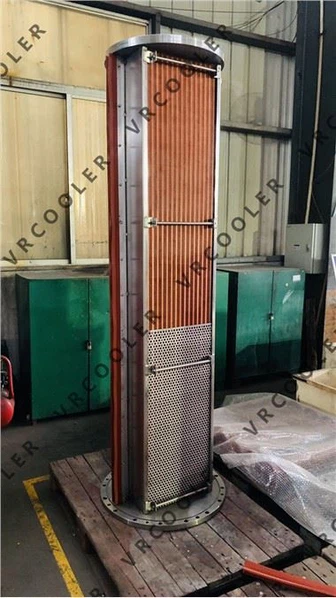
VRCOOLER Atmospheric Condenser For Marine Steam Systems
Marine steam systems need a controlled way to manage excess steam and return usable condensate. At VRCOOLER, we manufacture atmospheric condensers and related shell-and-tube heat exchangers for marine and industrial applications. Our atmospheric condenser changes steam into liquid at atmospheric pressure by transferring heat to a suitable cooling medium, such as cooling water.
For ship operators, the objective is not simply to condense steam. The complete solution must fit the vessel's steam circuit, hotwell arrangement, available installation space, cooling-water conditions, and maintenance plan. That is why we treat every VRCOOLER atmospheric condenser project as an application-specific engineering task.
Why Choose a VRCOOLER Atmospheric Condenser for a Marine Steam System?
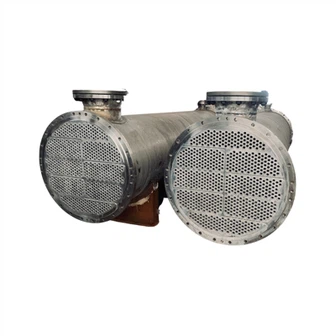
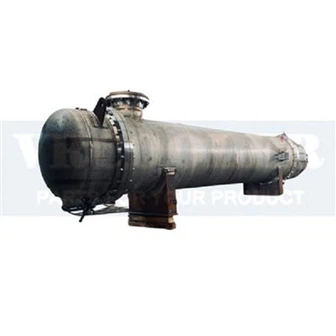
A marine atmospheric condenser can help manage auxiliary steam, excess steam, and condensate from shipboard heating or power systems. In a typical shell-and-tube arrangement, steam enters the shell side while cooling water flows through the tubes. Heat crosses the tube wall, steam condenses, and the resulting liquid is directed to the condensate or hotwell system.
At VRCOOLER, we review the actual operating conditions before recommending a configuration. We consider steam flow, pressure, inlet temperature, condensate outlet conditions, cooling-medium temperature, flow rate, allowable pressure drop, materials, connection sizes, and available space. This approach is more reliable than selecting a condenser only by external dimensions.

How Does Condensate Return to the Hotwell?
After condensation, the liquid must drain steadily and safely. The outlet arrangement, elevation, venting, piping, and hotwell conditions all influence how the system behaves. If condensate is too hot or drainage is poorly arranged, the wider feedwater system may experience unstable operation.
Our engineers therefore look beyond the heat exchanger body. We can review the connection orientation and the relationship between the VRCOOLER atmospheric condenser, condensate line, hotwell, valves, strainers, and pumps. For replacement projects, drawings and photographs of the existing unit are especially useful.
Why Is Shell-and-Tube Construction Suitable for Marine Service?
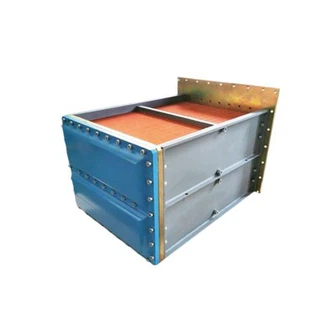
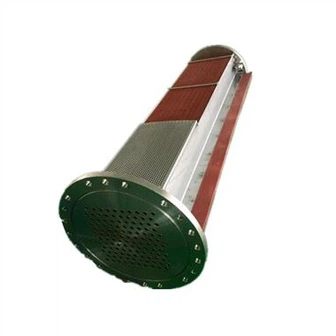
Shell-and-tube construction provides a practical path for separating steam and cooling water while maintaining a compact heat-transfer surface. The shell, tube plates, tubes, and baffles can be selected around the required duty and the service environment. Material selection depends on the media, temperature, pressure, corrosion exposure, and maintenance expectations.
VRCOOLER also supports both standard replacement work and custom designs. When an original unit is unavailable, we can use the nameplate, drawings, part number, photographs, and operating data to develop a replacement proposal. Final materials and performance must always be confirmed for the specific project.
Start Your Marine Atmospheric Condenser Project with VRCOOLER
If you are sourcing a new marine atmospheric condenser, replacing a drain cooler, or reviewing an existing steam circuit, contact VRCOOLER. Send us the vessel application, steam conditions, cooling-medium data, connection dimensions, installation drawings, and any available nameplate information. Our team will use the project data to recommend a practical atmospheric condenser solution for your system.