Generator Cooler: Cooling Systems Guide | VRCOOLER
Generator Cooler: The Complete Guide to Cooling Systems for Generator Sets
A generator set is, in engineering terms, a machine that turns fuel into electricity and heat. The electricity is the product; the heat is the by-product that decides whether the product can be produced continuously. Remove that heat reliably and a genset runs for years; remove it poorly and the engine derates, alarms, shuts down, or wears out early.
At VRCOOLER, we manufacture generator coolers, engine coolers, air compressor coolers and related heat-exchange equipment for industrial power applications, and we support both standard replacement coolers and fully custom-designed units. This guide is written for the people who specify, buy, install and maintain that equipment: OEM engineers, plant engineers, maintenance managers, distributors and industrial buyers. It covers what a generator cooler does, which circuits it serves, the data to prepare, and how to choose between standard replacement and custom design.
Why a Generator Set Needs Dedicated Cooling
Every cooling requirement inside a genset comes from a specific heat source, and each source has a different tolerance for temperature. Treating "the genset" as a single thermal problem is the most common mistake we see in incoming specifications.
The main heat sources are:
The engine jacket - combustion heat absorbed by the coolant that circulates through the block and cylinder head. This is usually the largest single heat load, and it is also the one with the tightest acceptable temperature band.
Lubricating oil - oil picks up heat from bearings, pistons and turbocharger components. Oil has a lower heat capacity than water, so oil coolers often work with smaller temperature differences and larger flow rates.
Charge air - air compressed by the turbocharger becomes hot and less dense. Cooling it before it enters the cylinder improves combustion and reduces thermal stress, so a charge-air cooler is a performance component, not only a durability component.
The alternator and auxiliary loads - bearings, windings and control cabinets generate their own heat, sometimes handled by separate circuits or by room ventilation.

What happens when cooling is undersized
An undersized or fouled cooler shows itself in a predictable sequence. First come high-temperature warnings during peak load or during hot ambient periods. Then the engine control system derates output to protect itself, which quietly reduces the power available to the site. Later, the machine may trip on high jacket-water or high oil temperature. Over a longer horizon, sustained high temperatures accelerate oil oxidation, degrade seals and gaskets, and increase wear on components whose clearances were designed around a specific thermal range.
The Cooling Loops Inside a Generator Set
A "generator cooler" is often a family of heat exchangers rather than one box. Before selecting anything, it helps to map the loops.
1. Jacket water circuit (primary loop)
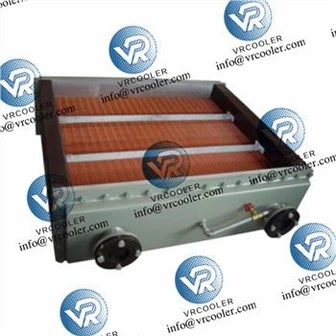
The primary loop carries coolant through the engine and rejects heat to ambient air or to a secondary water supply. In an air-cooled arrangement, the coolant passes through a radiator-like core and a fan moves air across it. In a water-cooled arrangement, heat moves into a raw-water or secondary circuit through a shell-and-tube or plate heat exchanger. The choice between the two is normally decided by site conditions - available water, water quality, ambient temperature, noise limits, and whether the cooling equipment can be located remotely.
2. Lube oil circuit
Oil coolers are frequently integrated into the main cooler package or mounted as a separate heat exchanger. Because oil viscosity changes sharply with temperature, the oil cooler influences both lubrication quality and the mechanical efficiency of the engine. Oil-side pressure drop and flow rate deserve the same attention as coolant-side performance.
3. Charge-air circuit
Charge-air coolers (also called intercoolers or aftercoolers) sit between the turbocharger and the intake manifold. Their job is to increase air density and reduce peak combustion temperatures. In many modern high-output gensets, the charge-air cooler is a dominant part of the total heat rejection, which is why treating it as an afterthought leads to under-sized packages.
4. Auxiliary and combined circuits
Some installations combine jacket water, oil and charge air into one module with multiple cores and a single fan bank. Combined packages save space and piping, but a fault in one circuit then affects the whole module - a trade-off worth discussing during design review.
Cooling Technologies You Will Encounter
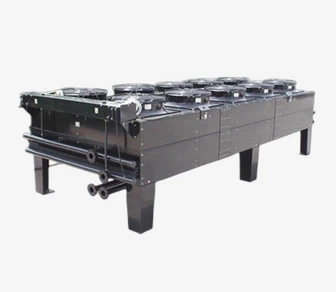
Air-cooled (radiator-type) coolers - the default where air is available and water is not.
Water-cooled heat exchangers - used near a reliable water source, in marine service, or where heat and noise must be kept out of the room.
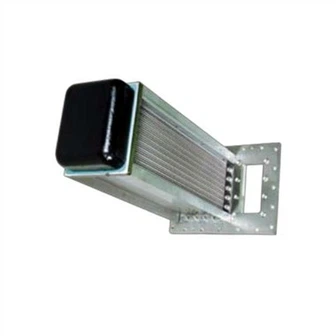
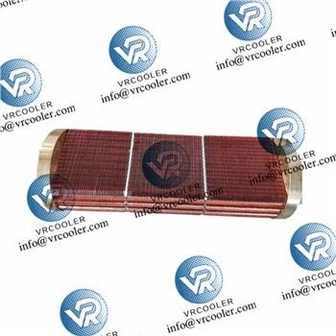
Oil coolers and charge-air coolers - dedicated heat exchangers for the lube-oil and intake-air circuits.
Remote and enclosure-mounted modules - arranged around basements, tunnels, acoustic canopies and container airflow limits.
At VRCOOLER we manufacture across these categories, and we also produce engine coolers and air compressor coolers on the same heat-exchange platform.
What to Prepare Before You Specify a Generator Cooler
Strong specifications come from complete data, not from a single horsepower figure. The checklist below reflects what our engineering team asks for when a project arrives.
Machine and duty
Genset model, rated output, and whether duty is standby, prime or continuous
Expected load profile and typical operating load factor
Fuel type and engine configuration
Thermal data
Heat rejection for each circuit (jacket water, lube oil, charge air, auxiliary)
Design coolant temperatures in and out for each circuit
Coolant type and concentration
Charge-air flow and temperature conditions
Site and environment
Maximum ambient temperature and altitude at the installation site
Installation type: open plant room, canopy, container, basement, rooftop
Available airflow path and any recirculation risk
Noise limits and any acoustic requirements
Water availability and quality, if a water-cooled solution is considered
Mechanical and interface data
Flow rates and allowable pressure drop per circuit
Connection sizes, orientation and pipe routing constraints
Available footprint, weight limits and lifting provisions
Fan drive preference and available electrical supply
Maintenance access requirements, including cleaning and inspection space
Project context
Standard replacement or new design
Quantity, spares strategy and documentation requirements
Applicable project specifications, standards or purchaser preferences
Where any of these values are not yet fixed, projects move fastest when the unknowns are named early. Project-specific thermal data, dimensions, materials, finishes and performance figures should always be confirmed with VRCOOLER engineering before an order is placed - we will not quote a number we cannot support.
Standard Replacement Coolers vs. Custom-Design Coolers
There are two practical routes, and the right one depends on the machine and the constraint.
Standard replacement coolers suit machines that are already in service and need like-for-like replacement, or OEM programmes built around an existing platform. The advantages are familiar fit, known interfaces and a shorter path from inquiry to installation. The essential input is accurate identification of the existing unit - physical envelope, connection positions, circuit arrangement, and operating conditions.
Custom-design coolers suit new genset programmes, upgraded duty, restricted installation space, aggressive ambient conditions, or where the original cooling package has proved marginal. Custom design lets the core geometry, circuit split, fan arrangement and materials be matched to the duty instead of forcing the duty to fit a catalogue item.
A useful decision test:
Is the existing cooler performing adequately, and is the goal only replacement? → Standard replacement.
Has the machine been uprated, relocated, or is the site ambient higher than originally assumed? → Custom design review.
Is installation space, rather than thermal capacity, the binding constraint? → Custom design, with layout driven by the envelope.
Frequently Asked Questions
Can I replace only one circuit, such as the oil cooler? Often yes, provided interfaces and duty are matched. Because the circuits interact thermally, a single-circuit change should be reviewed against the total heat balance first.
How do I know if my cooler is undersized? Persistent high-temperature alarms at rated load, derating during hot periods, and a widening gap between coolant-out temperature and ambient are typical signals. Confirming the cause requires the original heat-rejection data and current operating readings.
Do you supply coolers for engines other than generators? Yes. At VRCOOLER we manufacture engine coolers and air compressor coolers alongside generator coolers, all built on the same heat-exchange engineering approach.
Conclusion: Start With Data, Then Choose the Cooler
Generator cooling is a system problem. The engine, the oil circuit, the charge-air path and the installation environment all contribute heat, and the cooler has to reject that heat under the worst conditions the site will actually see - not the conditions in a brochure. Getting this right starts with complete operating data and an honest review of the installation.
If you are specifying a generator cooler, replacing a failed or marginal unit, or developing a new genset package, bring us the data you have. At VRCOOLER, our team reviews the duty, discusses standard replacement and custom-design options, and confirms the technical details with you before anything is committed. Send your performance requirements, installation constraints and site conditions to VRCOOLER engineering, and let us help you specify cooling that holds up in service.