Remote Radiator For Generator Sets: How VRCOOLER Supports Reliable Remote Cooling
What Is a Remote Radiator for a Generator Set?
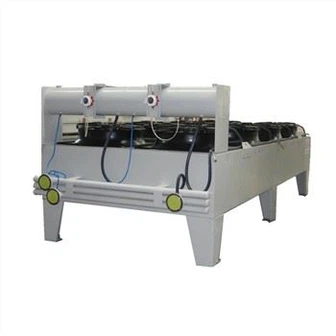
A remote radiator is a heat-rejection unit installed away from the engine or generator enclosure. Instead of rejecting engine heat directly inside the generator room or container, the cooling system transfers heat to a radiator installed in a better location, such as an outdoor platform, roof, or dedicated equipment area.
At VRCOOLER, we develop and manufacture generator coolers, engine coolers, and related heat exchange equipment for customers who need dependable cooling in different installation environments. A remote radiator for a generator can be designed for industrial generator sets, containerized gensets, CHP systems, and other power generation equipment.
When Should a Generator Use Remote Cooling?
A remote radiator may be a practical choice when the generator room has limited ventilation, when the enclosure is compact, or when the heat load must be discharged outside the building. It can also help project teams separate the engine from the heat-rejection equipment and plan the installation more efficiently.
Remote cooling is often considered for:
Containerized generator sets
Indoor emergency power systems
CHP and cogeneration equipment
Gas-powered generator systems
Industrial and power plant installations
Projects that require flexible radiator placement
The final configuration depends on the engine, cooling circuit, ambient conditions, airflow path, and installation layout. We recommend confirming these factors before selecting a remote radiator.

Key Design Considerations for Remote Radiator Installation
A remote radiator system should be selected as part of the complete generator cooling system. Important considerations include the required heat rejection, coolant flow, allowable pressure drop, ambient temperature, altitude, fan arrangement, piping distance, and available service space.
The air path is equally important. The remote radiator needs sufficient intake and discharge space so that hot air does not recirculate into the cooler. If the radiator is installed near walls or other equipment, the layout should allow for cleaning, inspection, and fan maintenance.
For systems with separate high-temperature and low-temperature circuits, the radiator arrangement should match the HT and LT requirements. Incorrect circuit matching can affect system performance and may create unnecessary operating problems.
How VRCOOLER Develops Generator Cooling Solutions
At VRCOOLER, we support both standard replacement cooler projects and customized designs. Our team uses equipment information, part numbers, drawings, operating conditions, and installation requirements to understand the customer's application before recommending a solution.
Our product experience includes air compressor coolers, engine coolers, generator coolers, transformer coolers, and related heat exchange equipment. We serve applications across power generation, industrial processing, petrochemical, marine, automotive, and other industries.
Remote Radiator Applications for Containerized Generator Sets
Containerized generator sets require careful control of space, airflow, noise, and heat rejection. A remote radiator can move the heat-rejection function away from the container and give the project team more flexibility when arranging the engine, control equipment, exhaust system, and service access.
For CHP, biogas, natural gas, and emergency power projects, we can review the generator information and help develop a suitable remote cooling direction. The solution should always be matched to the actual engine and operating conditions rather than selected only by appearance or nominal dimensions.
Request a Remote Radiator Solution from VRCOOLER
If you are sourcing a remote radiator for a generator, send us the generator model, engine information, existing cooler data, operating conditions, and installation requirements. At VRCOOLER, we will review your application and provide a practical direction for a standard replacement or custom generator cooler.
Contact VRCOOLER today to discuss your remote radiator project.
Frequently Asked Questions
What information does VRCOOLER need for a remote radiator quotation?
We normally review the generator model, engine model, cooler dimensions, heat rejection requirements, coolant data, fan information, and installation conditions.
Can VRCOOLER provide a custom remote radiator?
Yes. We provide standard cooler solutions and custom designs according to the customer's equipment and application requirements.
Are remote radiators suitable for containerized gensets?
They can be suitable when the project requires heat rejection outside the container or needs a more flexible installation layout. The complete cooling system must be checked before selection.