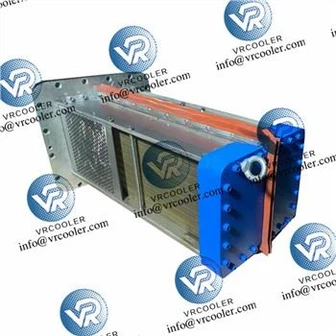
Exhaust Gas Heat Exchanger For Biomass Boilers
Compared with traditional fossil fuel boilers, the fuel characteristics of biomass boilers determine the particularity of their exhaust gas treatment - biomass fuels have high moisture content and ash content, and the exhaust gas produced after combustion contains a large amount of dust, alkali metals, heavy metals, and corrosive components, which puts higher requirements on the corrosion resistance and anti blocking of heat exchange equipment. Traditional heat exchangers often have problems such as low heat transfer efficiency, easy scaling and blockage, and short service life, which cannot adapt to the complex working conditions of biomass boilers. The dedicated biomass boiler exhaust gas heat exchanger has precisely solved the pain points in this industry through targeted structural design and material optimization, achieving the dual goals of efficient recovery of waste heat from exhaust gas and long-term stable operation of equipment, becoming an indispensable core supporting equipment in biomass boiler systems.
The core working principle of biomass boiler exhaust gas heat exchanger is based on gas gas or gas-liquid indirect heat exchange technology, which achieves heat transfer between high-temperature exhaust gas and cold medium (air, water, etc.) without direct contact with the medium, and completes the recovery and reuse of waste heat from exhaust gas. The workflow can be simply summarized as a closed-loop cycle of "waste gas heat exchange → waste heat recovery → secondary utilization": the high-temperature waste gas generated by biomass boiler combustion enters the hot side flow channel of the waste gas heat exchanger through the flue, and transfers heat to the cold medium in the cold side flow channel through the metal heat exchange surface of the heat exchanger (such as cold air entering the boiler, production circulating water, etc.); After completing heat transfer, the temperature of the exhaust gas is significantly reduced to around 150 ℃, and it is discharged after meeting environmental emission requirements; The cold medium that absorbs heat can be used for boiler combustion air preheating, production process heating, heating and other scenarios, realizing the utilization of waste heat resources and forming a virtuous cycle of "energy conservation and consumption reduction → environmental protection and emission reduction".
Based on the operating characteristics of biomass boilers, the commonly used waste gas heat exchangers in the industry are mainly divided into three categories. Each type of product is adapted to biomass boilers of different scales and operating conditions with different structural advantages, meeting diverse waste heat recovery needs.
Plate type waste gas heat exchanger is the preferred solution for small and medium-sized biomass boilers. Its core consists of multiple sets of metal corrugated plates, and the cold and hot media flow on both sides of the plates, achieving efficient heat exchange through thin plates. The special structure of corrugated plates creates forced turbulence in the flow channel, greatly improving the heat transfer coefficient. The heat transfer efficiency is much higher than that of traditional flue type heat exchangers, with a heat transfer coefficient of 30-50W/(m ² · K). The structure is compact, and the volume is smaller under the same heat transfer efficiency. The anti clogging ash structure can be customized according to the working conditions to meet the spatial layout requirements of small and medium-sized biomass boilers. At the same time, the plate heat exchanger adopts a detachable design, which is convenient for daily cleaning and maintenance, and can effectively deal with the problem of high dust content in biomass waste gas, avoiding scaling and blockage that affects operational efficiency.
Tube type waste gas heat exchangers are more suitable for high-temperature flue gas and high air volume scenarios such as large biomass boilers and biomass power plants. They are composed of steel pipe bundles, with high-temperature waste gas flowing outside the tubes and cold medium flowing inside the tubes, achieving heat transfer through metal tube walls. The tube heat exchanger operates reliably, has strong pressure resistance, and can adapt to the high temperature conditions of biomass boiler exhaust gas. The tube bundle structure is easy to equip with a cleaning device, which can effectively treat high dust exhaust gas. To enhance corrosion resistance, the tube bundles of tubular heat exchangers are often made of materials such as 304, 316L stainless steel, heat-resistant steel, etc., which can resist the erosion of corrosive components in biomass waste gas and extend the service life of the equipment.
In recent years, two-phase flow exhaust gas heat exchangers have been widely used as a new type of heat exchange equipment in the field of biomass boilers. It adopts a split structure, consisting of a heat absorbing end and a heat releasing end, connected by a closed pipeline to form a circulation system. A dedicated heat exchange medium is injected inside, and the medium absorbs the heat of exhaust gas at the heat absorbing end and evaporates into saturated steam. After entering the heat releasing end to release heat, it condenses into liquid state, and the cycle repeats to complete heat transfer. Its core advantage lies in the ability to always control the wall temperature of the heat exchanger above the dew point temperature of the exhaust gas, fundamentally avoiding low-temperature corrosion and scaling blockage problems. At the same time, it achieves controllable and adjustable wall temperature, which can adapt to the working conditions of variable biomass fuel varieties and load fluctuations. Its service life is much longer than traditional heat pipe heat exchangers, and the waste heat recovery efficiency is stable at over 80%.
The application of biomass boiler exhaust gas heat exchangers has achieved a triple breakthrough in energy conservation, environmental protection, and economic benefits, becoming an important support for promoting the high-quality development of biomass energy. In terms of energy conservation and consumption reduction, by recovering waste heat from exhaust gas to preheat the combustion air of the boiler, the combustion efficiency of the boiler can be improved by about 2% -3% for every 100 ℃ increase in air temperature. Under the same evaporation capacity, the fuel consumption can be reduced by 5% -15%, and the investment return period is usually between 1-2 years. After installing a stainless steel plate type exhaust gas heat exchanger in conjunction with a sawdust pellet boiler, the exhaust gas temperature decreased from 320 ℃ to 160 ℃, and the inlet air temperature increased to 180 ℃. The boiler's thermal efficiency increased by nearly 6%, and fuel consumption decreased by about 12%, with significant energy-saving effects.

In terms of environmental protection and emission reduction, exhaust gas heat exchangers can reduce the exhaust temperature of biomass boilers from above 300 ℃ to around 150 ℃, which not only reduces the thermal pollution of high-temperature flue gas to the atmosphere, but also reduces the generation of pollutants such as NOx - due to more complete combustion, the emissions of pollutants such as CO and NOx are significantly reduced, helping enterprises meet ultra-low emission standards. At the same time, the decrease in flue gas temperature can reduce the thermal load on the heating surface and dust removal equipment at the tail of the boiler, extend the service life of the boiler and flue system, and reduce equipment maintenance costs. In addition, the concentration of dust and corrosive components in the waste gas after waste heat recovery is further reduced, reducing pollution to the atmospheric environment and aligning with the development positioning of clean and low-carbon biomass energy.
With the continuous development of the biomass energy industry and the increasingly strict environmental policies, the technological iteration speed of biomass boiler exhaust gas heat exchangers continues to accelerate. In the future, the industry will focus on three major directions: material innovation, intelligent upgrading, and system integration. In terms of materials, new materials such as nano coatings and graphene reinforced composite materials will be promoted to reduce fouling thermal resistance, improve equipment corrosion resistance and thermal conductivity, and further extend equipment service life; In terms of intelligent control, integrating digital twin and AI predictive maintenance technology, real-time monitoring of equipment operation status, achieving fault warning and precise maintenance, reducing unplanned downtime, and lowering operation and maintenance costs; In terms of system integration, we will promote the coupling of exhaust gas heat exchangers with ORC power generation, absorption heat pumps and other technologies to achieve waste heat recovery in the full temperature range of 80-600 ℃, maximize the efficiency of waste heat utilization, and integrate with denitrification, desulfurization, dust removal and other systems to achieve integrated treatment of multiple pollutants.
As the "guardian of waste heat recovery" for biomass boilers, waste gas heat exchangers not only solve the industry problems of waste heat energy and pollution emissions from biomass boiler waste gas, but also promote the development of biomass energy towards high efficiency, cleanliness, and intelligence. With the continuous innovation of technology and the continuous expansion of application scenarios, biomass boiler exhaust gas heat exchangers will play a more important role in the utilization of renewable energy and the achievement of "dual carbon" goals, helping enterprises achieve coordinated development of energy conservation, environmental protection, emission reduction, and economic benefits, injecting strong impetus into the high-quality development of China's clean energy industry.