Vertical Hydrogen Cooler For 1 Million Generators in Hydropower Stations
The 1 million generator of a large hydropower station has a large capacity, large size, stable operating load, and long duration, which requires extremely strict cooling system requirements. Traditional cooling methods either have insufficient heat dissipation efficiency and cannot meet the high load heat dissipation requirements of million level units; Either the structure is too large and occupies too much space in the hydropower plant, which contradicts the compact layout planning of the hydropower plant. The emergence of vertical hydrogen coolers has precisely solved the pain points in this industry. Its vertically arranged structural design and efficient hydrogen heat transfer characteristics perfectly adapt to the operating conditions of a 1 million generator in a hydropower station, becoming the preferred solution for cooling systems of large hydroelectric generating units.
The core working logic of a vertical hydrogen cooler is to rely on the excellent heat transfer performance of hydrogen to construct a closed-loop cooling system and achieve efficient heat dissipation from the generator. Compared with traditional methods such as air cooling and water cooling, the thermal conductivity of hydrogen is 7 times that of air, and its density is only 1/14 of air. It can quickly absorb the heat inside the generator, reduce flow resistance, reduce fan driving power, lower the power consumption of the unit, and balance heat dissipation efficiency and energy-saving needs. During the operation of a 1 million generator, the axial fans at both ends of the rotor pressurize the hydrogen gas, which flows through the stator core air duct and rotor winding ventilation holes, fully absorbing the heat generated by the winding and core, forming hot hydrogen gas; The hot hydrogen gas then enters the vertical hydrogen cooler and undergoes indirect heat exchange with the circulating water in the cooling water pipe. After the temperature drops to the set range, it enters the internal circulation of the generator again to continuously complete the heat dissipation operation and ensure that the temperature of each component of the generator is controlled within the safe threshold.
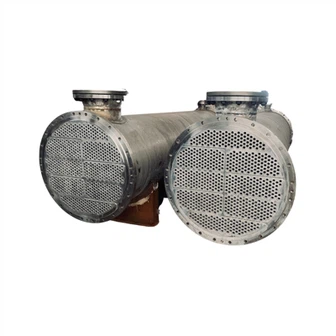
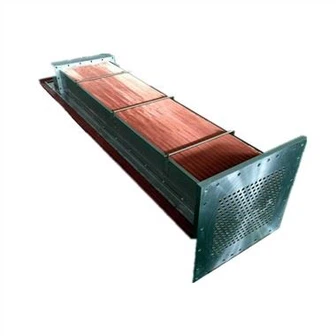
In response to the operational characteristics of a 1 million generator in a hydropower station, the vertical hydrogen cooler has undergone targeted structural optimization and performance upgrades, significantly improving its adaptability and reliability. In terms of structural design, the vertical arrangement greatly saves horizontal space. Compared with the horizontal cooler, the volume can be reduced by 30% -50% under the same heat transfer efficiency, perfectly adapting to the layout requirements of the generator base in the hydropower plant. Whether it is the backpack layout improved by Harbin Electric, the backpack layout of TEPCO, or the special scheme of only arranging at the steam end when powered on, the vertical hydrogen cooler can be flexibly adapted and the installation position can be adjusted according to the base structure, without the need for large-scale renovation of the plant layout. At the same time, it adopts a shell and tube (series) structure, with hundreds of heat exchange tubes arranged vertically to form multiple layers of heat transfer surfaces. The heat transfer coefficient can reach 800-1500W/(m ² · K), and the heat transfer area of a single device is increased by 20% -30% compared to traditional horizontal equipment. It can quickly cope with the peak heat output of a 1 million generator operating at full load.

In terms of safety and stability, the vertical hydrogen cooler fully considers the operating environment of hydropower stations and the characteristics of hydrogen, and constructs a comprehensive safety guarantee system. Hydrogen itself has stable chemical properties, does not support combustion, and does not corrode metal parts, which can reduce the loss of internal equipment in the generator. However, strict control of purity and pressure is required - the monitoring system matched with the vertical hydrogen cooler can monitor the hydrogen purity (not less than 96% in normal operation, preferably 98%), hydrogen pressure (rated working pressure is usually 0.5 MPa), and humidity in real time. When the indicators are abnormal, it will promptly alarm and trigger hydrogen replenishment, discharge and other operations to prevent hydrogen leakage or the formation of combustible explosive mixed gases. In addition, the cooler is made of corrosion-resistant materials, and the 316L stainless steel, titanium alloy and other tube bundles can adapt to the water quality environment of the circulating water in hydropower stations, avoiding scaling and corrosion problems, extending the service life of the equipment. At the same time, the detachable head design is easy to clean and replace the tube bundles, reducing maintenance time by 30% -50% and lowering the operation and maintenance costs of hydropower stations.
In practical applications, the efficient heat dissipation capability of a vertical hydrogen cooler directly determines the operating efficiency and service life of a 1 million generator. Taking the Baihetan Hydropower Station as an example, its million kilowatt hydroelectric generating units face the problem of heat dissipation caused by large capacity and high load. Although magnetic pole winding air cooling technology is used to optimize heat source cooling, the supporting application of vertical hydrogen coolers further improves the stability of the overall heat dissipation system, ensuring that the temperature non-uniformity coefficient of the rotor winding is controlled within a reasonable range when the unit operates at full load, avoiding insulation aging caused by local overheating, and greatly extending the maintenance cycle and service life of the generator. At the same time, the energy-saving advantages of vertical hydrogen coolers are also significant. By optimizing the air path design and heat exchange efficiency, it can reduce the fan driving power, reduce the energy consumption of the unit, and help hydropower stations achieve the dual goals of "efficient power generation, energy conservation and consumption reduction", which is highly compatible with the development positioning of clean and low-carbon hydropower stations.
With the continuous development of China's hydropower industry, the construction scale of million kilowatt hydropower stations continues to expand, and the requirements for generator cooling systems are also constantly increasing. The vertical hydrogen cooler, with its core advantages of compact structure, efficient heat exchange, safety and reliability, and convenient maintenance, is not only suitable for the high load operation needs of 1 million generators, but also for the complex operating environment and layout requirements of hydropower stations, becoming the core equipment of the cooling system for large hydro generator units. Its application not only solves the heat dissipation problem of million level generators, but also promotes the development of hydropower equipment towards high efficiency, energy conservation, and intelligence, providing strong support for the high-quality development of China's clean energy industry.
In the future, with the continuous iteration and upgrading of technology, vertical hydrogen coolers will further optimize their structural design, improve heat transfer efficiency, integrate intelligent monitoring and operation technology, achieve real-time monitoring of operating status, fault warning, and precise maintenance, further reduce operation and maintenance costs, and enhance operational reliability. As the "cooling guardian" of a 1 million generator, the vertical hydrogen cooler will continue to empower the "heart" of hydropower stations, helping large hydropower stations to continuously and stably output clean electricity, injecting strong power into China's energy structure transformation and the achievement of the "dual carbon" goal.