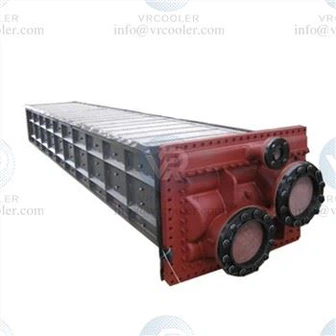
Exhaust Gas Data For Waste Heat Recovery (WHR) Unit For WEICHAI Gas Engines
Exhaust Gas Data for WHR Unit – WEICHAI Gas Engines
For waste‑heat recovery heat‑exchanger / exhaust‑gas boiler design reference, VRCOOLER engineering data sheet excerpt
| Parameter | Typical Working Range | Remarks for WHR Heat Exchanger |
|---|---|---|
| Exhaust gas temperature (engine outlet) | 380 ~ 460 °C | NG4.0 Pro newer generation runs 30‑50 °C lower; old‑platform up to 520 °C |
| Exhaust mass flow | 1.8 ~ 4.2 kg/kWh | Scales with engine output power |
| Allowable exhaust back‑pressure for engine | ≤ 3‑5 kPa | Critical constraint for WHR shell‑tube exhaust heat exchanger; higher backpressure de‑rates engine power |
| Exhaust gas composition | N₂ ~72‑75%, CO₂ ~9‑11%, H₂O ~8‑12%, O₂ ~2‑4%, low NOₓ | Low‑sulfur for pipeline natural gas; biogas case needs corrosion allowance |
| Dew‑point of exhaust gas | ~55‑65 °C | Avoid acid condensation inside heat‑transfer tubes; keep outlet exhaust above dew‑point |
| Typical gas‑side pressure drop across WHR unit | 1.5‑3.0 kPa | Must be added to total exhaust system back‑pressure budget |
Sample reference for large‑bore Weichai 16M33‑NG (1280 kWm gas engine)
- Rated exhaust temp after turbine: 459 °C
- Exhaust volume flow: 292 Nm³/min
- Max permitted exhaust back‑pressure: 5 kPa
Key Design Notes for WHR Shell‑and‑Tube Heat Exchanger
1. Two heat sources available: Exhaust gas (high‑grade heat) + engine jacket cooling water (85‑95 °C low‑grade heat) for combined WHR system.
2. When sizing tube bundle: Reserve margin for fouling; gas‑side fouling factor higher than liquid side.
3. Material selection: For biogas / trace sulfur‑containing fuel, adopt SS304 / SS316L tube instead of carbon steel to resist acid dew‑point corrosion.
4. Part‑load behaviour: At 50 % engine load, exhaust temperature drops to 260‑320 °C, mass flow reduces significantly, recoverable heat falls sharply.