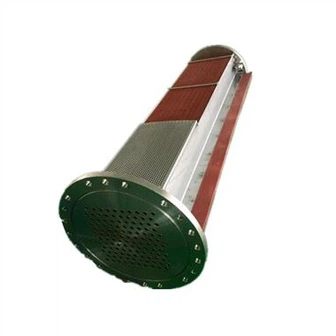
Air Cooler In Marine Water-Cooled Transformer
Air Cooler In Marine Water-Cooled Transformer
The tube-and-plate air cooler inside marine water-cooled transformers is a critical heat dissipation component, primarily used to reduce operating temperatures and ensure normal transformer function.
Structural Features
Tube-and-plate structure: Typically consists of a tube sheet, cooling tubes, and fins. The tube sheet is a metal plate with numerous tube holes. Cooling tubes pass through these holes and are securely fastened to the tube sheet, forming a tube bundle. This configuration effectively supports the cooling tubes while ensuring a clear flow path for cooling water within the tubes.
Fin Design: To enhance heat dissipation, fins are typically mounted on the outer surface of the cooling tubes. These fins increase the contact area between air and the tubes, improving heat exchange efficiency. Fins are generally made of copper or aluminum for their excellent thermal conductivity.
Shell and Air Duct: The cooler is usually housed within a shell featuring an air inlet and outlet, creating a pathway for air circulation. The inlet is typically connected to a fan, drawing hot air from inside the transformer into the cooler. The outlet then returns the cooled air to the transformer interior or expels it externally.
Working Principle
Heat Exchange Process: During operation of a marine water-cooled transformer, heat generated inside the transformer raises the air temperature. The fan draws this hot air into the cooler through the inlet. As the hot air flows through the ductwork, it exchanges heat with the cooling water circulating within the cooling tubes. The cooling water absorbs the heat from the hot air, lowering its temperature. The cooled air is then expelled through the outlet, thereby achieving transformer cooling.
Water Cooling Cycle: Cooling water continuously circulates within the cooling tubes, typically supplied by an external water cooling system. After absorbing heat from the air, the cooling water's temperature rises. It then flows back to the external water cooling system for cooling. The cooled water re-enters the cooler, forming a closed-loop water cooling cycle.
Material Selection
Cooling Tube Material: Considering the corrosive marine environment, cooling tubes are typically made of corrosion-resistant metals such as copper-nickel alloys or stainless steel. These materials offer excellent resistance to seawater corrosion, ensuring long-term stable operation of the cooler.
Tube Sheet Material: Tube sheets are generally fabricated from stainless steel or copper alloys to guarantee both strength and corrosion resistance. Stainless steel offers high strength and excellent corrosion resistance, capable of withstanding the pressure within the cooling tubes and seawater corrosion. Copper alloys, on the other hand, provide superior thermal conductivity, enhancing heat exchange efficiency.