


Vessel Box Cooler
Custom vessel box coolers for new-build and retrofit marine projects. VRCOOLER engineers hull-integrated cooling units around vessel layout, heat duty, seawater conditions and maintenance access.
Product Introduction
Changzhou Vrcooler Refrigeration Co., Ltd. is one of the most reliable manufacturers and suppliers of vessel box cooler in China, featured by quality products and good price. Please feel free to buy advanced vessel box cooler for sale here from our factory. Also, aftermarket service is available.

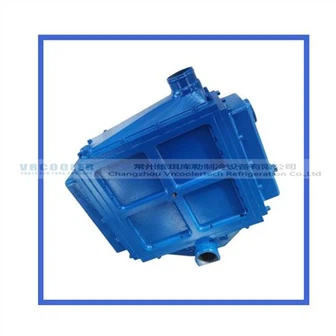
A vessel box cooler is a marine heat exchanger developed for installation within a ship's hull-side cooling arrangement. It transfers heat from a closed process circuit to seawater outside the tube bundle, allowing ship designers and maintenance teams to place the cooling function close to the hull rather than relying only on a remote machinery-space cooler.
VRCOOLER supplies vessel box coolers for commercial vessels, workboats, offshore equipment and marine retrofit projects. Instead of treating the product as a fixed-size catalogue item, our engineering team reviews the vessel layout, cooling duty, sea chest arrangement, seawater environment and access requirements before confirming the configuration.
A ship cooling project involves more than selecting a heat-transfer surface. The unit must fit the available hull opening, connect with the existing process circuit, tolerate the vessel's operating environment and remain serviceable during the planned maintenance cycle.
A VRCOOLER vessel box cooler can be evaluated for:
New-build vessel cooling layouts
Replacement of an installed marine cooler
Retrofit work where engine-room space is restricted
Main propulsion and auxiliary machinery circuits
Generator, thruster and hydraulic equipment
Single-duty or multiple-duty cooling arrangements
Coastal, harbor, offshore and ocean-going service conditions
The vessel box cooler separates the equipment circuit from the seawater side. Process fluid is routed through the cooler's internal passages, while seawater reaches the outside of the heat-transfer surfaces through the vessel's hull-side cooling arrangement.
The overall cooling sequence is:
The ship's equipment sends heated process fluid to the cooler.
Heat passes through the tube wall into the surrounding seawater.
Vessel motion can support seawater movement while underway.
The hull-side flow arrangement may also support heat removal while the vessel is alongside or at anchor, depending on the design.
The cooled process fluid returns to the equipment circuit.
This configuration keeps the primary engine or oil circuit separate from direct seawater contact. The exact flow path, operating mode and auxiliary equipment requirements must be confirmed against the vessel's arrangement and thermal calculation.
The Hull Is Part of the Design Interface
A vessel box cooler is selected around an installation location, not only around a nominal heat-transfer capacity. The sea chest or hull-side compartment, opening dimensions, grid arrangement, mounting frame and available withdrawal clearance all influence the design.
Operating Profile Matters
A tugboat that spends long periods maneuvering in shallow water, a dredger working in sediment-rich conditions and an ocean-going vessel have different thermal and environmental requirements. Seawater temperature, water quality, vessel speed, draft and time at berth should be considered during selection.
Maintenance Must Be Considered Before Production
The cooler should be accessible for inspection, cleaning and eventual removal. A layout that looks suitable on a drawing may become difficult to service if there is not enough clearance above the mounting area or if the removal path is blocked by hull structure and machinery.
Replacement Is a Compatibility Project
For a replacement vessel box cooler, the new unit must work with the existing dimensions, pipe connections, operating parameters and hull arrangement. A direct visual match is not enough; the heat duty and material condition should also be reviewed.
The final configuration depends on the project data, but the following design aspects can be reviewed with VRCOOLER.
Hull and Mounting Compatibility
Overall length, width and height
Tube-bundle orientation
Mounting flange and support details
Inlet and outlet locations
Connection size and orientation
Withdrawal and inspection clearance
Stepped layouts for restricted spaces
Combined configurations for separate cooling duties
Thermal Duty and Circuit Arrangement
Required heat rejection
Process-fluid type
Process-fluid inlet and outlet temperatures
Process-fluid flow rate
Seawater temperature and service conditions
One or more independent circuits
Design pressure and testing requirements
Marine Material and Corrosion Review
Possible material selections may include aluminum brass or 90/10 copper-nickel, subject to the vessel environment and engineering review. The correct selection should account for seawater quality, hull material, galvanic compatibility, coating requirements and the vessel's corrosion-control approach.
Material selection is not a universal "one material fits all" decision. A tube material that is suitable for relatively clean coastal operation may not be the preferred option for silty harbor water, dredging service or long offshore duty.
VRCOOLER vessel box coolers may be considered for the following marine systems:
Propulsion and Machinery
Main engine jacket-water circuits
Auxiliary engine cooling
Marine generator cooling
Gearbox and lube-oil circuits
Bow-thruster cooling
Deck and Service Equipment
Hydraulic power units
Winch and crane systems
Cargo-handling machinery
Dredging equipment
Offshore support equipment
Auxiliary Ship Systems
Marine air-conditioning condenser circuits
Refrigeration equipment
Compressor cooling
Other closed-loop equipment cooling duties subject to technical review
Typical vessel types include tugboats, dredgers, fishing vessels, barges, ferries, cargo ships, container vessels, offshore workboats, supply vessels and specialized marine craft.
For a new ship, the cooler can be considered during the early arrangement stage rather than being forced into a completed machinery layout. Early review allows the project team to coordinate:
Sea chest and hull opening dimensions
Mounting frame and structural interfaces
Cooling circuit routing
Equipment-room connections
Inspection and removal access
Material and corrosion-protection requirements
Drawing and approval documentation
This approach helps reduce late changes caused by an unsuitable footprint, inaccessible mounting location or mismatched connection orientation.
A retrofit project usually starts with incomplete or outdated information. The original cooler may have no readable nameplate, the vessel may have been modified, or the current engine load may differ from the original design.
VRCOOLER can review a replacement inquiry using available project evidence such as:
Existing cooler nameplate
Original or marked-up drawings
Cooler length, width and height
Tube count or tube-bundle information, if available
Process-fluid inlet and outlet data
Connection dimensions and flange details
Sea chest internal dimensions
Vessel type and operating route
Installation and removal photographs
Records of fouling, corrosion or leakage
Where the original model is no longer available, the replacement should be evaluated as an engineered equivalent rather than copied from dimensions alone.
To improve the accuracy of a vessel box cooler quotation, please send as many of the following details as possible:
Vessel Information
Vessel type and principal service
New-build, replacement or retrofit status
Operating area and seawater conditions
Vessel speed or typical time at berth
Hull and sea chest material
Cooling Information
Equipment being cooled
Heat load or required cooling capacity
Process-fluid type
Flow rate
Inlet and outlet temperatures
Allowable pressure drop, if specified
Number of independent circuits
Installation Information
Sea chest or hull-side compartment dimensions
Available clearance around the unit
Mounting and connection drawings
Flange standard and connection direction
Photos of the current installation
Required delivery documentation or inspection procedure
If some information is not available, an initial review can still begin with the vessel type, equipment model, current cooler photographs and basic dimensions. Final design confirmation requires sufficient thermal and installation data.
VRCOOLER can support the project from initial information review through production preparation. The scope may include:
Preliminary configuration review
Thermal sizing support
Installation-dimension confirmation
Tube and tube-sheet material discussion
Connection and mounting adaptation
Drawing review before manufacture
Inspection and pressure-test arrangements
Material certificates and inspection records when required by the project
The exact documentation package, testing method and inspection scope should be agreed before order confirmation.
faq
Frequently Asked Questions
Q:1.What is a vessel box cooler used for?
A: A vessel box cooler is used to transfer heat from closed marine equipment circuits to seawater. Applications may include propulsion engines, auxiliary engines, generators, lube-oil circuits, thrusters and hydraulic equipment.
Q:2.Where is a vessel box cooler installed?
A: It is normally integrated with a hull-side seawater cooling arrangement, commonly inside a vessel's sea chest or a comparable dedicated compartment. The precise mounting position depends on the vessel structure and project design.
Q:3.Can a vessel box cooler be used for both new ships and existing vessels?
A: Yes. The design can be reviewed for new-build integration as well as replacement and retrofit projects. Existing-vessel projects require careful checking of the sea chest, connections, clearance and current cooling duty.
Q:4.How should the tube material be selected?
A: Tube material should be selected using the seawater environment, hull material, corrosion-control method, operating profile and project requirements. Aluminum brass and 90/10 copper-nickel may be considered in suitable applications, but the final selection requires technical review.
Q:5.Does a vessel box cooler always operate without a seawater pump?
A: Not necessarily. The required auxiliary equipment depends on the vessel's sea chest arrangement, operating conditions, flow requirements and cooling duty. A project should not assume a pump-free arrangement without engineering confirmation.
Q:6.Can VRCOOLER manufacture a replacement for an existing unit?
A: VRCOOLER can review replacement requirements using drawings, nameplate information, dimensions, connection details, equipment data and installation photographs. The proposed replacement must be checked for both physical compatibility and thermal suitability.

Send Vessel Box Cooler Requirements
Whether you are planning a new vessel, replacing an existing cooler or adapting a marine cooling system for a retrofit, send VRCOOLER the available vessel and equipment information. Our team will review the installation interface, cooling duty and material requirements before recommending a suitable vessel box cooler configuration.
Hot Tags: vessel box cooler, China, suppliers, manufacturers, buy, price, replacement, for sale, aftermarket service, air cooler for main engine, Charge Air Cooler, charge air coolers in diesel engine, Daihatsu Engine Cooler, engine water cooler, oil cooler for diesel engine
You Might Also Like




Send Inquiry
