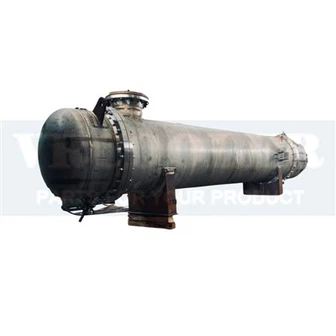
Working Principle Of Bearing Oil Cooler
The working principle of a bearing oil cooler is to maintain the proper temperature of the lubricating oil to ensure the normal operation of the bearing in various industrial systems. In a typical oil cooler system, the lubricating oil absorbs heat from the bearing, causing its temperature to increase. If the oil temperature becomes too high, it can lead to issues such as softening, deformation, or burning of the bearings. To prevent this, the oil needs to be cooled before it is recirculated back to the bearing for lubrication.
The cooling of the lubricating oil is achieved using a heat exchange process. In the case of a bearing oil cooler, water or another suitable medium is used as the cooling medium. The hot oil is passed through a heat exchanger, where it exchanges heat with the circulating water. This heat exchange process helps to regulate the temperature of the oil and prevent it from exceeding the specified limit. Once the oil is sufficiently cooled, it is then circulated back to the bearing for lubrication.
Some of the main design considerations in a bearing oil cooler include the choice of cooling medium, the size and efficiency of the heat exchanger, and the control system to maintain the desired oil temperature.