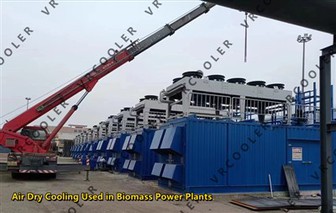
Dry Coolers in Power Stations
Dry Coolers in Power Stations
Dry coolers are often used in power stations to cool vital equipment such as generators and transformers. Their main function is to control the temperature of the equipment and ensure that it operates within the appropriate operating temperature range.
In power stations, equipment such as generators and transformers generate a lot of heat during operation. Without timely and effective cooling, the temperature of the equipment may rise, leading to reduced performance, deterioration of electrical insulation, shorter equipment life, and even equipment damage.
Dry coolers ensure that equipment such as generators and transformers remain within a safe operating temperature range by removing heat from them. Dry coolers are usually installed outside the equipment and transfer heat to the surrounding air by convection and radiation.

Typically, a dry cooler consists of a series of metal fins arranged in parallel, which are connected to the equipment by a heat-conducting material. Convection and radiation come into play when heat from the equipment is transferred to the fins through the heat-conducting material. A fan creates an airflow that blows the surrounding air across the surface of the fins, carrying away the heat.
The design and specification of a dry cooler depend on the specific application requirements and the heat load of the equipment. They typically take into account factors such as the equipment's heat dissipation needs, ambient temperature, fan performance, and airflow to ensure that the equipment can operate in the proper temperature range.
Overall, dry coolers are very important cooling equipment in power stations to ensure the proper operation of critical equipment such as generators and transformers, prolonging their lifespan and improving the reliability and efficiency of the system.