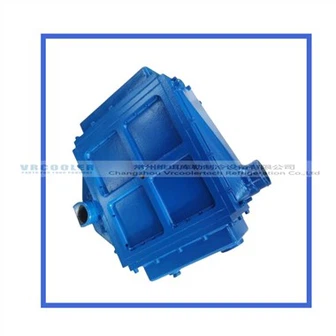
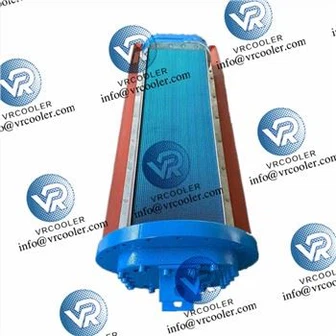
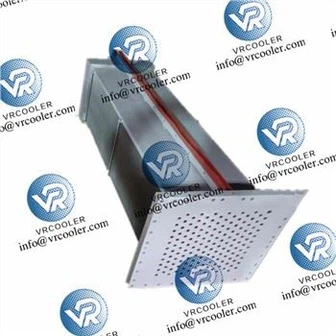
What Types Of Marine Engine Charge Air Coolers Are Available?
There are several types of marine engine coolers, the choice of which depends on the type of vessel, engine power and cooling requirements.
The main types include:
Shell and tube cooler: this is one of the most common marine coolers and is particularly suitable for larger vessels. It consists of a series of elongated tubes in which the coolant flows inside the tubes, while the external cooling medium (e.g. seawater) flows outside the tubes. Heat is transferred through the walls of the tubes, from the coolant to the seawater. Shell and tube coolers have a simple structure and high durability, and are suitable for seawater cooling applications with high flow rates.

Plate cooler: Plate cooler adopts metal plates arranged in parallel as the heat exchange surface, and the coolant and external cooling medium flow between different plates for heat exchange. Plate cooler has compact structure and high heat exchange efficiency, which is suitable for ships with limited space or occasions requiring high efficiency cooling. Its modular design makes it easier to clean and maintain, but it requires higher water quality and is prone to clogging problems.
Air cooler: Some ships, especially inland navigation or small ships, will use air cooler to take away heat by air flow. This type of cooling does not require the use of seawater, and is suitable for occasions where freshwater resources are abundant or the use of seawater is inconvenient. Air coolers usually rely on fans or natural air convection to achieve cooling, and although the heat transfer efficiency is low, they are low maintenance and not affected by seawater corrosion.

Evaporative cooler: This type of cooler achieves cooling by evaporation of the coolant. The coolant carries away a large amount of heat during evaporation, so this type of cooling is more commonly used in engine systems with extremely high heat loads. However, this system usually requires complex equipment management and water treatment systems and is not commonly found in small marine engines.
Different types of coolers have their own advantages and disadvantages, ship designers and engineers will consider the ship's sailing area, the corrosive nature of seawater, ease of maintenance and other factors when choosing to ensure the long-term stability and reliability of the cooling system.