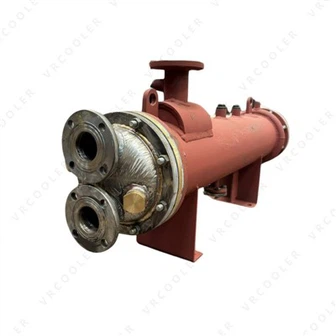
Waste Heat Recovery Of Gas Generator Set (compatible With Cummins/MTU/Jenbacher)
Characteristics and Recovery Potential of Waste Heat from Three Major Brands of Gas Turbine Units
Cummins MTU, As a benchmark in the global gas power generation field, Yanbach's models cover the power range of 200kW to 10MW, with stable waste heat parameters and high quality, providing a high-quality foundation for waste heat recovery.
1. Cummins gas generator set
Power range: 300kW-20MW, mainly using Lean Burn technology, suitable for natural gas, biogas, and coalbed methane.
Waste heat parameters: flue gas temperature of 450-550 ℃, large displacement, stable flow rate; The outlet temperature of the cylinder liner water is about 85-90 ℃, and the flow rate is linearly matched with the power generation.
Recycling advantages: high precision control of the unit, fast load response, easy linkage of the waste heat system with the host, suitable for stable energy supply in industrial parks, commercial buildings, and data centers, and can achieve combined heat and power (CHP) and combined cooling, heating, and power (CCHP).
2. MTU gas generator set
Power range: 500kW-10MW, focusing on high power and high reliability, suitable for harsh industrial environments and backup power scenarios.
Waste heat parameters: flue gas temperature of 500-600 ℃, high residual heat and grade; Clear classification of cylinder liner water and lubricating oil waste heat, suitable for multi-stage cascade utilization.
Recycling advantages: The unit has a compact structure, stable heat load, strong adaptability to waste heat boilers, and can produce high-pressure steam (1.0-2.5MPa) to meet the heat needs of industrial processes such as chemical, textile, and pharmaceutical industries.
3. Jenbacher (INNIO) gas generator set
Power range: 200kW-10MW, known for its strong fuel adaptability, can efficiently utilize unconventional gases such as landfill gas, biogas, coke oven gas, etc.
Waste heat parameters: flue gas temperature of 420-500 ℃, low dust content and weak corrosiveness in exhaust gas; The cylinder liner water waste heat is stable, and the comprehensive waste heat recovery efficiency is industry-leading.
Recycling advantages: The original factory optimizes the matching design of cogeneration, with a comprehensive energy efficiency of up to 92%. It is particularly suitable for scenarios such as biogas engineering, landfill sites, and ecological agriculture, and can achieve the circular utilization of "power generation heating organic fertilizer production".
Core technology path for waste heat recovery (adapted to the three major brands)
Based on the waste heat characteristics of the three major brands of units, mainstream recovery technologies are divided into four paths: flue gas waste heat recovery, cylinder liner water/lubricating oil waste heat recovery, cascade comprehensive utilization, and CCHP (Combined Cycle Power Plant) * *, to achieve "full utilization and efficient conversion" of waste heat.
1. Waste heat from flue gas: High grade thermal energy core recovery
Waste heat boiler (steam type): Suitable for high smoke temperature models such as MTU, it converts 450-600 ℃ flue gas into 0.6-2.5MPa saturated/superheated steam, which is directly used for industrial production, heating, or driving steam turbines for secondary power generation. A 1MW gas turbine can produce approximately 0.8-1.0 tons/hour of steam.
Smoke water heat exchanger (hot water type): Suitable for Cummins and Yanbach medium low smoke temperature models, producing high temperature hot water of 85-95 ℃, used for district heating, greenhouse insulation, and process preheating.
Deep low-temperature recovery: ND steel and fluoroplastic anti-corrosion heat exchangers are used to reduce the exhaust temperature to 30-60 ℃, recover the latent heat of water vapor in the flue gas, and increase energy efficiency by 8% -12%.
2. Cylinder liner water and lubricating oil: efficient utilization of low-grade waste heat
Independent hot water system: recovers 85-90 ℃ cylinder liner water waste heat and produces 60-85 ℃ hot water through plate heat exchangers to meet the insulation needs of domestic hot water, aquaculture, and fermentation tanks.
Preheating coupling: Using the waste heat of cylinder liner water for boiler feedwater preheating and fuel gas preheating, reducing front-end energy consumption and improving overall system efficiency.
Joint flue gas recovery: The combination of flue gas and cylinder liner water waste heat can simultaneously meet the dual needs of steam and hot water, and is suitable for scenarios with alternating seasons and fluctuating temperatures.
3. Combined cooling, heating, and power (CCHP): Full scene energy coverage
On the basis of cogeneration, lithium bromide absorption refrigeration units are added to utilize waste heat to drive refrigeration, achieving "power generation+heating+cooling" with one unit for three purposes.
Summer: The exhaust gas and cylinder liner water waste heat drive the refrigeration machine, producing 5-7 ℃ cold water for air conditioning, cold chain, and process cooling.
Winter: Switch to heating mode and produce hot water/steam.
Transition season: Flexibly adjust the ratio of heat, electricity, and cooling, achieving a comprehensive energy efficiency of over 90% and shortening the investment payback period to 3-5 years.
4. Intelligent control system: collaboration between the host and the waste heat system
Adapt to the original control systems of three major brands (such as Cummins PowerCommand, MTU ControlSystem, and Yanbach GCU) to achieve real-time linkage between waste heat flow rate, temperature, pressure, and host load.
Equipped with load forecasting, fault diagnosis, and remote monitoring functions to ensure stable and safe waste heat recovery under variable operating conditions.

Typical application scenarios and benefits adapted to the three major brands
1. Industrial Enterprise Self-Supplied Power Plant (Chemical, Textile, Food)
Compatible Models: MTU 8MW, Cummins 5MW, Jenbacher J920 9.5MW
Solution: Steam production from flue gas waste heat boiler (1.6MPa) + process hot water supply via cylinder liner
Benefits: Overall energy efficiency increases from 42% to 88%; annual savings of 3000 tons of standard coal per 10,000 kW, and CO₂ emission reduction of 7800 tons per year
2. Biogas/Landfill Gas Project (Agriculture, Environmental Protection)
Compatible Models: Jenbacher J624, Cummins 1MW biogas generator
Solution: Flue gas + cylinder liner water waste heat recovery for fermentation tank insulation, replacing gas boilers
Benefits: Overall energy efficiency 88%; biogas utilization rate increased by 40%, annual revenue increase exceeding 2 million RMB
3. Commercial Buildings/Data Centers (Urban Distributed Energy)
Compatible Models: Cummins 1-2MW, Jenbacher 1.5MW
Solution: Combined Cooling, Heating and Power (CCHP)
Benefits: Energy costs reduced by 35%-45%; power supply reliability 99.99%, air conditioning energy consumption reduced by 50%
District Centralized Heating (Industrial Parks, Towns)
Suitable Units: MTU, Jenbacher high-power unit clusters
Solution: Multi-stage flue gas recovery + low-temperature latent heat recovery, heating radius 3-5km
Benefits: Exhaust gas temperature reduced to 35℃; 30% increase in heating capacity, annual natural gas savings of 80 million Nm³
Key Points for Technology Selection and Implementation
Precise Unit Matching
High-power, high flue gas temperature (MTU): Prioritize steam-type waste heat boilers to meet industrial heating needs.
Medium-power, multi-fuel (Cummins, Jenbacher): Hot water + CCHP combination, suitable for multiple scenarios.
Low-power, decentralized scenarios (200-500kW): Integrated waste heat recovery unit, compact and efficient.
Corrosion Prevention and Lifespan Guarantee: When flue gas contains sulfur/impurities: ND steel and Inconel alloy are used in the high-temperature section, and fluoroplastic heat exchangers are used in the low-temperature section to avoid dew point corrosion.
Original equipment heat exchangers from the three major brands are used, with a lifespan exceeding 10 years and maintenance costs reduced by 40%.
Compliance and Safety: The waste heat system's pressure, temperature, and emissions comply with GB/T 28881 and ASME standards.
It is interlocked with the main unit for safety, featuring over-temperature, over-pressure, and flameout protection, and is compatible with the safety logic of the three major brands.
Conclusion: An Inevitable Choice in the Energy Revolution
Waste heat recovery compatible with Cummins, MTU, and Jenbacher gas generator sets is not an add-on modification, but a core upgrade to the energy system. It transforms a single "power generation device" into a "comprehensive energy station," creating value across four dimensions: cost reduction, efficiency improvement, carbon reduction, and supply security. Overall energy efficiency jumps from 40% to 85%-92%, with a payback period of 3-5 years and annual CO₂ emission reduction exceeding 70%, perfectly aligning with the "dual-carbon" and energy security strategies.
In the future, with the iteration of AI intelligent control, deep waste heat recovery, and carbon capture coupling technologies, the synergy between the three major brands' gas turbine units and waste heat systems will become even more efficient, propelling distributed energy from "high-efficiency power generation" to a new stage of "zero-carbon energy supply and recycling," becoming a core engine for energy transformation in industry, commerce, and cities.