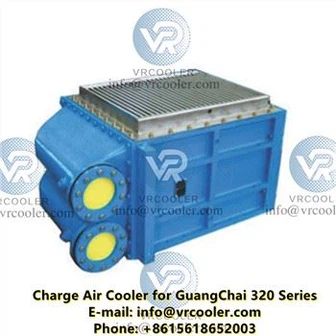
Waste Heat Recovery Heat Exchanger For Generator & Engine
Generator engine waste heat recovery heat exchanger is the key equipment used to recover the residual heat energy produced during the operation of generator engine.
Its significant features cover:
Powerful heat recovery capability: it can effectively capture and utilise the large amount of high-temperature waste heat generated by the engine.
High-temperature and high-pressure resistance: due to the special characteristics of the generator engine working environment, the heat exchanger needs to have the ability to withstand high temperatures and high pressures.
Compact and efficient structure: compact design to save space, while ensuring efficient heat exchange.
The working principle is as follows:
The high temperature exhaust gases generated during engine operation and the hot water in the cooling system carry a large amount of heat energy. The waste heat recovery heat exchanger transfers this thermal energy to the working fluid on the other side, e.g. cold water or other media to be heated, by means of an internal heat transfer medium.

Common types include:
Finned tube heat exchanger: fins are added to the tubes to increase the heat transfer area and improve the heat exchange efficiency. Commonly used for waste heat recovery from small generator engines.
For example, in some small mobile power generators, finned tube heat exchanger can quickly convert waste heat into useful thermal energy.
Plate-fin heat exchanger: It consists of multiple layers of thin plates and fins, and has the advantages of high heat transfer coefficient and compact structure.
It is widely used in medium-sized generator engines.
Waste heat recovery heat exchanger for generator engine brings significant benefits:
Energy efficiency improvement: significantly improve the energy use efficiency of the entire power generation system, reduce energy consumption.
Cost savings: Reduced dependence on external energy sources, lower operating costs.
Environmental protection: Reduce greenhouse gas emissions, reduce the pressure on the environment.