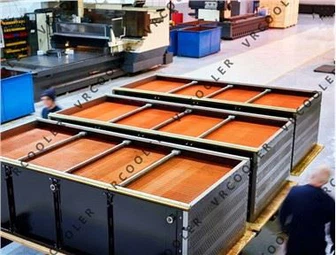
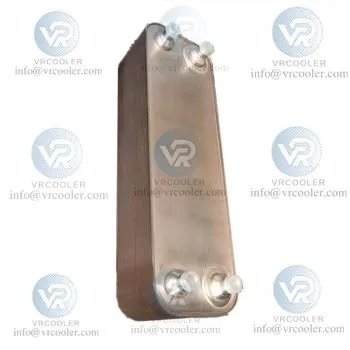
Vrcooler Designs And Manufactures Coolers For Electrical Motors And Generators
Vrcooler designs and manufactures coolers for electrical motors and generators.
Designing and manufacturing coolers for electric motors and generators is a critical task, as efficient cooling ensures optimal performance, extends equipment lifespan, and prevents overheating-related failures.
1. Key Considerations for Cooling Electric Motors and Generators
1.1 Heat Generation
Electric motors and generators generate heat due to:
Copper losses (I²R losses in windings).
Iron losses (hysteresis and eddy current losses in the core).
Friction losses (bearings and windage).
The cooling system must dissipate this heat to maintain safe operating temperatures.
1.2 Cooling Methods
Air Cooling:
Natural convection or forced air cooling using fans.
Suitable for small to medium-sized motors and generators.
Liquid Cooling:
Uses coolant (water or oil) to absorb and transfer heat.
Ideal for large or high-power motors and generators.
Hybrid Cooling:
Combines air and liquid cooling for enhanced efficiency.
1.3 Operating Environment
Ambient temperature, humidity, and dust levels.
Enclosure type (e.g., open, enclosed, or explosion-proof).
2. Types of Coolers for Electric Motors and Generators
2.1 Air Coolers
Axial Fan Coolers:
Fans mounted on the motor shaft or externally.
Simple and cost-effective.
Radial Fan Coolers:
Fans blow air radially across the motor surface.
Provides better airflow distribution.
2.2 Liquid Coolers
Jacket Cooling:
Coolant flows through a jacket surrounding the motor or generator.
Common in large industrial motors.
Heat Exchangers:
Liquid-to-air or liquid-to-liquid heat exchangers.
Compact and efficient for high-power applications.
Cooling Plates:
Coolant flows through plates attached to the motor housing.
2.3 Hybrid Coolers
Combines air and liquid cooling for maximum efficiency.
Example: Liquid-cooled stator with air-cooled rotor.

3. Design and Manufacturing Process
3.1 Thermal Analysis
Calculate heat generation based on motor/generator specifications (power, efficiency, losses).
Use thermal simulation software (e.g., ANSYS, COMSOL) to model heat dissipation.
3.2 Cooler Design
Air Coolers:
Optimize fan size, blade design, and airflow path.
Ensure adequate ventilation in the motor enclosure.
Liquid Coolers:
Design coolant channels for uniform heat transfer.
Select materials resistant to corrosion and high temperatures.
Heat Exchangers:
Use finned tubes or plate heat exchangers for compact designs.
Ensure proper sealing and pressure handling.
3.3 Material Selection
Housing: Aluminum or stainless steel for lightweight and corrosion resistance.
Coolant Channels: Copper or aluminum for high thermal conductivity.
Fins: Aluminum for air coolers to maximize surface area.
3.4 Prototyping and Testing
Build prototypes and test under real operating conditions.
Measure temperature rise, cooling efficiency, and pressure drop (for liquid coolers).
4. Key Features of High-Quality Coolers
Efficient Heat Dissipation: Maintains motor/generator temperature within safe limits.
Compact Design: Fits within motor/generator enclosures without adding excessive weight.
Durability: Resists corrosion, vibration, and thermal cycling.
Low Maintenance: Easy to clean and service.
Energy Efficiency: Minimizes power consumption for cooling.
5. Applications
Industrial Motors: Pumps, compressors, conveyors.
Generators: Power plants, wind turbines, backup generators.
Electric Vehicles (EVs): Traction motors and battery cooling.
Marine and Aerospace: High-performance motors and generators.