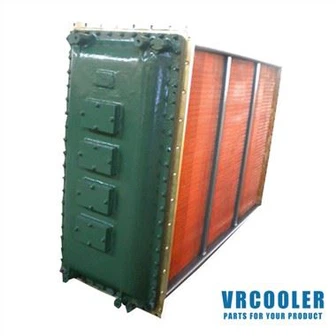
Tube Bundles For Water Cooled Heat Exchangers
Tube bundles are a critical component of water-cooled heat exchangers, which are widely used in various industries to transfer heat between fluids. The tube bundle consists of a series of tubes through which one fluid flows, while the other fluid (usually water) flows around the tubes to facilitate heat exchange.
Key Components of Tube Bundles
Tubes:
Material: Tubes are typically made from materials with high thermal conductivity and corrosion resistance, such as:
Copper
Stainless steel
Titanium
Carbon steel
Nickel alloys
Shape: Tubes are usually cylindrical, but can also be enhanced with fins or other surface modifications to improve heat transfer.
Size: Tube diameters and lengths vary depending on the application, with common sizes ranging from 1/4 inch to 2 inches in diameter.
Tube Sheets:
Tube sheets are thick plates that hold the tubes in place and separate the two fluids.
They are often made from the same material as the tubes or a compatible material to prevent galvanic corrosion.
Baffles:
Baffles are installed inside the shell to direct the flow of the shell-side fluid (usually water) across the tubes, enhancing heat transfer and preventing vibration.

Types of Tube Bundles
Fixed Tube Sheet:
The tube sheet is welded directly to the shell.
Simple and cost-effective but less suitable for applications with large temperature differences.
U-Tube Bundle:
Tubes are bent into a U-shape, allowing for thermal expansion.
Commonly used in applications with high thermal stress.
Floating Head:
One end of the tube bundle is allowed to move freely to accommodate thermal expansion.
Ideal for high-temperature applications.
Pull-Through Floating Head:
Similar to the floating head design but allows for easier maintenance and tube cleaning.
Design Considerations
Heat Transfer Efficiency:
Tube diameter, length, and material impact heat transfer rates.
Enhanced surfaces (e.g., finned tubes) can improve efficiency.
Fluid Compatibility:
Material selection must account for corrosion, fouling, and fluid chemistry.
Pressure Drop:
Tube layout and baffle design affect pressure drop and flow distribution.
Thermal Expansion:
Designs must accommodate thermal expansion to prevent mechanical failure.
Fouling:
Tube spacing and material selection should minimize fouling, especially in water-cooled systems.
Applications
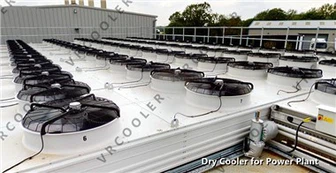
Power Plants: Cooling condensers and other equipment.
Chemical Processing: Heat recovery and process cooling.
Oil and Gas: Cooling hydrocarbons and other fluids.
HVAC Systems: Chillers and cooling towers.
Industrial Processes: Cooling machinery and process fluids.