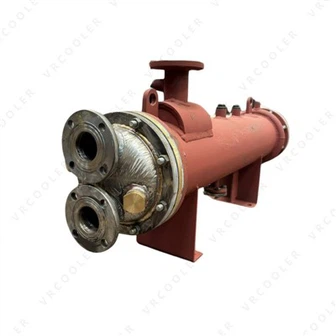
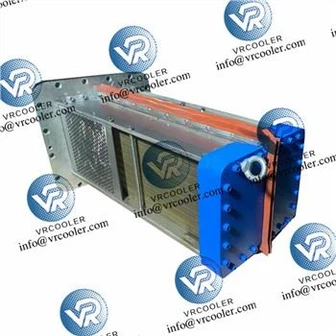
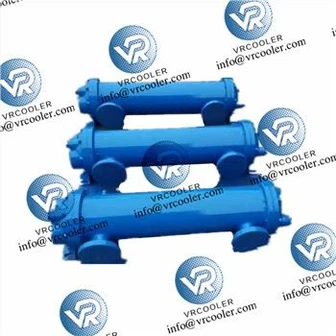
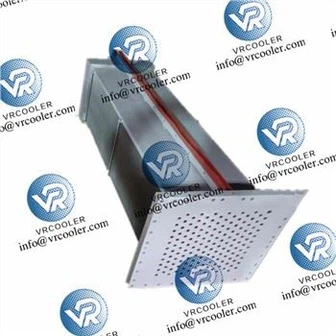
The Core Function And Technical Analysis Of Transformer Oil Cooler
1, The indispensable 'heat dissipation responsibility': the core value of the cooler
During the operation of a transformer, the hysteresis eddy current loss of the iron core and the resistance loss of the winding will continue to generate heat. If these heat cannot be dissipated in a timely manner, it will cause a sharp increase in the temperature of the transformer oil. Once the oil temperature exceeds the safety limit, it will not only accelerate the aging and deterioration of the insulation oil, reduce its insulation performance and thermal conductivity efficiency, but also may cause serious faults such as insulation breakdown and winding burnout, directly affecting the continuity of power supply and causing huge economic losses.
The core mission of transformer oil cooler is to solve this pain point: it uses transformer oil as the heat transfer medium, and transfers the heat absorbed in the oil to the cooling medium (air or water) through heat exchange, so that the cooled transformer oil can flow back to the oil tank, forming a circulating heat dissipation loop. Through this process, the cooler can stably control the oil temperature of the transformer within the specified range (usually the top oil temperature does not exceed 95 ℃, and the average temperature rise does not exceed 55 ℃), which not only extends the service life of the transformer but also ensures the reliability of the insulation system, providing important guarantees for the safe and stable operation of the power grid.
2, Understanding the principle of heat dissipation: Simple yet efficient heat exchange logic
The working principle of transformer oil cooler is based on the basic physical law of "heat conduction+convective heat transfer". The overall process is simple and efficient, and the core can be divided into three steps to form a complete circulating heat dissipation system.
The first step is to collect heat. The heat generated by the operation of the transformer is first absorbed by the transformer oil in the oil tank. As the temperature of the oil increases, its density decreases and it naturally flows upwards (natural circulation mode); If it is a large capacity transformer, it will be forced to flow hot oil through an oil pump (forced circulation mode) to ensure that heat is quickly collected.
The second step is heat exchange and dissipation. The heated hot oil will enter the heat exchange core of the cooler, which is composed of multiple sets of metal tubes with fins, increasing the heat exchange area. At this time, the cooling medium (air or water) will flow outside or inside the core, and indirectly exchange heat with the hot oil - the heat of the hot oil is transferred to the metal tube wall, and then transferred to the cooling medium by the tube wall, and the temperature of the hot oil gradually decreases.
Step three, loop back. After cooling, the density of the transformer oil increases, and it will naturally flow back to the transformer oil tank (natural circulation) or be pressurized by the oil pump (forced circulation) to reabsorb the heat generated by the transformer and start the next round of heat dissipation cycle. The entire process repeats itself, achieving continuous heat dissipation from the transformer and maintaining stable oil temperature.

Selection and maintenance: Ensure long-term and efficient operation of the cooler
(1) Selection points: Adapting to requirements is key
The selection of transformer oil coolers should be comprehensively considered based on factors such as transformer capacity, losses, operating environment, and water source conditions, with the core principles of "capacity matching, environmental adaptation, and safety and reliability".
1. Capacity matching: Based on the rated loss and temperature rise limit of the transformer, calculate the required cooling capacity to ensure that the cooler can meet the heat dissipation needs of the transformer under rated load and overload conditions, and avoid insufficient cooling leading to excessive oil temperature.
2. Environmental adaptation: Air coolers are preferred for water scarce areas and outdoor substations; Water coolers are preferred for transformers with sufficient water sources, large capacity, and ultra-high voltage; Small capacity distribution transformers can use sheet heat sinks.
3. Safety design: The water cooler should adopt an anti leakage structure and be equipped with a leak detection device to ensure that the oil pressure is higher than the water pressure; The strong oil circulation type cooler needs to be equipped with a backup oil pump and fan to avoid the impact of a single equipment failure on heat dissipation.
(2) Daily maintenance: Extend lifespan and ensure performance
The daily maintenance of transformer oil coolers directly affects their heat dissipation performance and service life. The core maintenance content mainly includes the following points:
1. Regular cleaning: The air cooler needs to be regularly cleaned of dust and debris on the fins to avoid blocking the heat dissipation channels and affecting heat transfer efficiency; The water cooler needs to be cleaned regularly to remove scale and oil stains, ensuring smooth water flow.
2. Status monitoring: Regularly monitor the oil temperature, oil pressure, and water pressure of the cooler (water-cooled type), check the operating status of the oil pump and fan, and promptly shut down for any abnormalities (such as abnormal noise, vibration, leakage).
3. Oil quality management: Regularly check the dielectric loss, moisture, breakdown voltage and other indicators of transformer oil, replace aging and deteriorated insulation oil in a timely manner, and avoid the deterioration of oil quality affecting thermal conductivity and insulation performance.
4. Backup switching: The strong oil circulation cooler needs to undergo regular switching tests of the backup oil pump and fan to ensure that the backup equipment can be put into normal operation and respond to sudden failures.
5, Industry development trend: efficient and intelligent,Energy saving
With the development of the power system towards ultra-high voltage, intelligence, and green direction, transformer oil coolers are also constantly upgrading and iterating, presenting three major development trends. One is efficiency, by optimizing the structure of the heat exchange core (such as using high-efficiency finned tubes and microchannel heat exchange technology), improving heat dissipation efficiency, reducing equipment volume, and adapting to the needs of large capacity and compact transformers; The second is intelligence, integrating Internet of Things and big data technology to achieve real-time monitoring, fault warning, intelligent start stop and remote control of the operation status of the cooler, reducing operation and maintenance costs, and improving operation and maintenance efficiency; The third is energy conservation, which adopts variable frequency fans and high-efficiency oil pumps to automatically adjust the operating power according to the transformer load and oil temperature, reducing electricity consumption and in line with the concept of green power development.
Conclusion: Although transformer oil coolers are not the core conductive components of transformers, they are the "behind the scenes heroes" who ensure the safe, stable, and efficient operation of transformers. From the chip radiators of small and medium-sized distribution transformers to the strong oil-water coolers of ultra-high voltage main transformers, every upgrade is accompanied by the development and iteration of the power system. In the future, with the continuous application of efficient, intelligent, and energy-saving technologies, transformer oil coolers will continue to guard the "heart" of the power grid and provide more reliable guarantees for the safety and stability of power transmission.