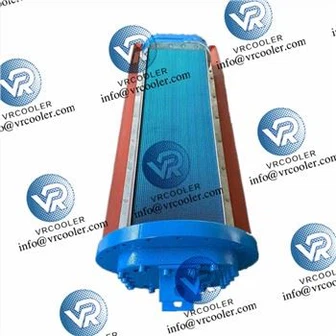
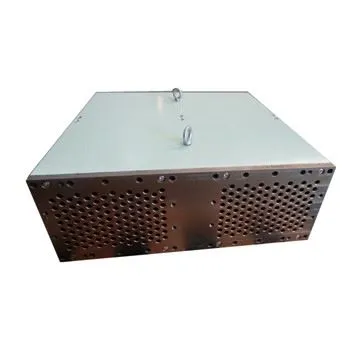
Repair And Maintenance Of Box Type Cooler
1, Daily inspection (daily/shift)
Appearance and operational status
Check for leaks, frost, abnormal vibrations/noises in the box, pipelines, and joints.
Observe whether the fan/water pump operates smoothly, whether there is any jamming or abnormal noise.
Record the temperature, pressure, and flow rate of imports and exports, and compare them with benchmark values.
Electrical and Safety
Check for heating, odor, and looseness in the power supply, wiring terminals, and control box.
Confirm that the protection devices for overheating, overpressure, overload, etc. are functioning properly.
Water quality/medium
Water cooling: Check the clarity, pH value (6.8-7.5), and presence of suspended solids in the circulating water.
Oil cooling: Check the oil level, oil color, and whether there is emulsification/deterioration.
2, Regular maintenance (monthly/quarterly/annual)
1. Monthly maintenance
Tighten all electrical terminals and clean the contacts of contactors/relays.
Lubricate the water pump/fan bearings and check the belt tension (deflection ≤ 10mm).
Clean the water/oil side filter and replace the filter element if necessary.
Check the sealing gasket and sealing ring for aging, damage, and leakage.
2. Quarterly maintenance
Clean the heat exchange surface
Air cooling: Use compressed air to blow the fins in reverse to remove dust and oil stains.
Water cooling: Remove the end cap and clean the inner wall of the heat exchange tube with high-pressure water and a connecting rod to remove scale/sludge.
System parameter verification
Calibrate temperature/pressure sensors and verify the set values.
Detect refrigerant pressure (high pressure 1.5-2.0MPa, low pressure 0.4-0.6MPa).
Check the flexibility of valve opening and closing, and whether there is internal leakage.
3. Annual major overhaul

Comprehensive disassembly and cleaning: chemical cleaning+physical flushing of heat exchange tubes to remove stubborn scaling.
Replace aging seals, dry filters, and vulnerable valve components.
Detect corrosion/wall thickness of heat exchange tubes (ultrasonic testing), repair or replace leaking tube bundles.
Compressor/pump maintenance: replace worn parts and test insulation resistance (≥ 5M Ω).
Verify safety valves and pressure controllers to ensure reliable operation.
System pressure leak detection (water pressure 0.7MPa or air pressure test), maintain pressure without pressure drop.
3, Cleaning standards (key)
Water side cleaning
Physics: High pressure water flushing+strip brush tube, compressed air drying.
Chemistry: Use neutral descaling agents for cyclic cleaning, control pH and temperature to avoid corrosion; Thoroughly rinse and neutralize after cleaning.
Cycle: 3-6 months for poor water quality, 6-12 months for good water quality.
Oil side cleaning
Rinse in reverse circulation with solvents such as trichloroethylene, with a pressure of ≤ 0.6MPa.
Soak for 15-20 minutes, repeatedly change the solvent until clear, then rinse with clean water and blow dry.
After cleaning, conduct a hydraulic/pneumatic test to confirm no leakage before use.