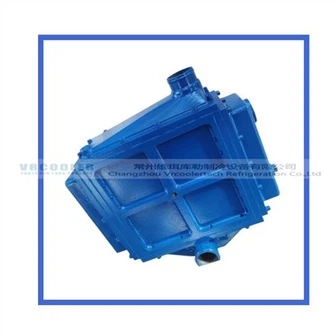
Remote Radiator Vs Standard Radiator On Genset
In a generator set, the key difference between a standard (unit-mounted) and a remote radiator comes down to location and its driving fan, which unlocks solutions for tight spaces, heat, and noise.
Here is a direct comparison to make the distinctions clear.
Standard vs. Remote Radiator Comparison
| Feature | Standard (Unit-Mounted) Radiator | Remote Radiator |
|---|---|---|
| Location | Mounted directly on the generator's base frame or engine. | Installed at a distance from the genset, often on a rooftop or outside the building. |
| Fan Type | Typically engine-driven (belt or direct drive), using the engine's power to turn the fan. | Usually electrically driven, often with Variable Frequency Drives (VFD) for precise control and energy savings. |
| Key Advantage | Simple and cost-effective; the entire system arrives as a pre-assembled unit from the manufacturer. | Installation flexibility; can solve problems when a standard radiator is not feasible due to space, ventilation, or noise constraints. |
| Ventilation Needs | Requires a large amount of cooling airflow to be drawn into and exhausted from the generator room to cool the engine and radiator. | Can reduce the airflow required for the generator room by up to 50%, as the heat is rejected elsewhere. |
| Noise Impact | The engine-driven fan is a significant source of noise at the generator location. | Moves the main fan noise away from the generator, ideal for noise-sensitive areas. |
| Installation | Simple and quick; the unit is installed and ready for service. | Complex; requires on-site engineering, long coolant pipes, and additional pumps to manage coolant flow and pressure. |
| Best Use Case | Smaller gensets, outdoor installations with good airflow, and standby applications where simplicity is key. | Large gensets (>500kW), indoor or enclosed spaces with poor ventilation, rooftop installations, and sites with strict noise limits. |

Key Considerations for Remote Radiators
Designing a remote radiator system is more involved. Here are a few critical points to consider:
Coolant Piping & Pumps: The long pipe runs create friction and can require an additional pump to maintain adequate coolant flow, which is crucial for cooling and to prevent damage from pump cavitation (air bubbles in the coolant).
Expansion Tank: This tank must be placed at the highest point in the entire cooling system. Its location and size are vital for allowing coolant to expand as it heats and for removing air from the coolant, which prevents pump issues.
Split Core Radiators: For larger, turbocharged engines, a remote radiator may have a "split core." This means one section cools the engine coolant, and a separate core cools the coolant for the turbocharger's aftercooler.
Room Ventilation: Even with a remote radiator, the generator room still needs ventilation to remove radiant heat from the engine and to provide air for combustion.