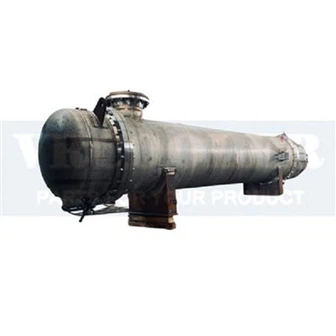
Plate & Shell-and-Tube Heat Exchangers For Compressor Cooling Systems
MSO (Molecular Sieve Oxygen) compressor packages operate under demanding thermodynamic conditions, generating considerable heat during gas compression. To ensure stable operation, extended equipment life, and consistent gas purity levels, a highly reliable cooling system is essential.
1. Shell & Tube Heat Exchanger for Natural Gas Cooling
The Shell & Tube Heat Exchanger plays a critical role in removing heat from compressed natural gas on the tube side, while glycol-water (60% glycol) circulates on the shell side as the cooling medium.
Key Performance (From Datasheet Provided)
Hot Side (Tube Side): Natural Gas
• Inlet Temperature: 37°C
• Outlet Temperature: 27°C
Cold Side (Shell Side): Glycol-Water 60%
• Inlet Temperature: 32°C
• Outlet Temperature: 30°C
Why Shell & Tube for Natural Gas?
High pressure resistance for gas service
Superior thermal performance for high-density fluids
Ideal for handling temperature fluctuations in compressor duty
Strong mechanical structure for vibration-prone installations
This heat exchanger ensures the compressor operates within optimal temperature limits, preventing overheating, safeguarding seals and valves, and improving system reliability.

2. Plate Heat Exchanger for Glycol–Water to Seawater Cooling
The Plate Heat Exchanger (PHE) cools the glycol-water mixture returning from the Shell & Tube exchanger by using seawater as the cooling medium. This step ensures continuous supply of low-temperature coolant to the MSO compressor loop.
Key Performance Parameters
Hot Side: Water Glycol (60% Ethylene Glycol)
• Inlet: 37°C
• Outlet: 32°C
Cold Side: Sea Water
• Inlet: 27°C
• Outlet: 34°C
Why PHE for Glycol–Seawater Cooling?
Exceptionally high heat-transfer coefficient
Compact footprint compared to S&T exchangers
Easy gasket replacement and maintenance
Titanium provides excellent resistance to seawater environments
This PHE ensures the glycol circuit maintains stable cooling performance, especially critical in offshore, coastal, or marine facilities where seawater is the primary cooling medium.
VRCOOLER Supply & Customization Capabilities
We provide both Shell & Tube Heat Exchangers and Plate Heat Exchangers for MSO compressor packages with options including:
Titanium plates for marine cooling
Stainless steel or carbon steel shells
Copper-nickel or stainless steel tube bundles
ASME-certified fabrication
Fully engineered cooling skids with pumps and controls
VRCOOLER is able to design, manufacture, and deliver complete cooling solutions tailored to customer specifications and datasheets-just like the specifications shown above.