Biogas CHP Tube Bundle Heat Exchanger | Coolant To Heating Network | VRCOOLER
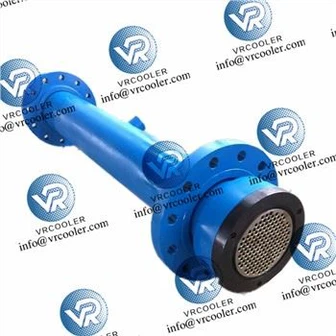
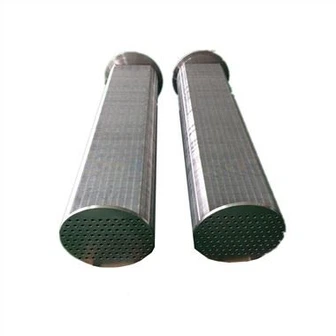
In biogas combined heat and power (CHP) cogeneration plants, VRCOOLER engineers and manufactures custom Tube Bundle Shell & Tube Heat Exchangers for Engine Coolant to Heating Water Heat Transfer. Acting as the critical hydraulic separation barrier between the engine's primary cooling loop (engine jacket water and exhaust gas heat recovery circuit) and the customer's secondary heating network (district heating, digester heating, or greenhouse loops), VRCOOLER CHP tube bundle heat exchangers transfer thermal energy from high-temperature engine coolant (85°C−92°C) to the heating grid (60°C→80°C−85°C). Built in strict compliance with TEMA (Class C, B, and R) and ASME Section VIII Div 1, our exchangers feature heavy-wall seamless or precision-welded tubes in AISI 304L, 316L, and 2205 Duplex Stainless Steel mechanically expanded or seal-welded into precision tubesheets. Unlike gasketed plate heat exchangers that risk catastrophic gasket blowout and cross-contamination under pressure differentials, VRCOOLER welded tube bundle exchangers permanently isolate engine glycol circuits from high-pressure external heating grids up to 25+ bar, ensuring maximum thermal recovery efficiency and zero engine downtime.
Why Hydraulic Separation is Mandatory:
Pressure Differential Isolation: The engine primary coolant loop operates at low pressure (2.0−4.0 bar to protect engine seals), while external district heating networks often run at high static pressures (6.0−25.0 bar). The heat exchanger must prevent high-pressure grid water from blowing into the engine block.
Chemical & Water Quality Protection: The engine loop contains expensive demineralized water, corrosion inhibitors, and ethylene/propylene glycol. The heat exchanger prevents contaminated, scale-forming, or oxygenated municipal heating water from entering and fouling engine cooling jackets.
Thermal Shock Absorption: Wide flow fluctuations and sudden cold return water surges (30°C−50°C) from the heating network are absorbed by the heat exchanger, ensuring the engine always receives steady, controlled return coolant (70°C−75°C) to prevent thermal cracking.
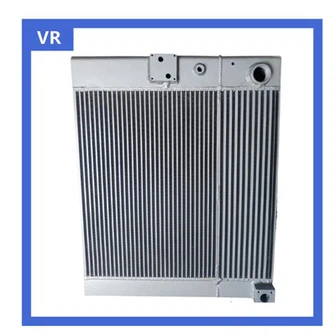
Failure-Proof Isolation vs Gasketed Plate Exchangers: Plate heat exchangers (PHE) rely on elastomer gaskets (NBR/EPDM) that harden and fail over time, causing toxic glycol leakage into district heating or catastrophic engine flooding. VRCOOLER welded tube bundle exchangers eliminate elastomer gaskets, providing a permanent metallic barrier.
VRCOOLER Engineering Innovations for Biogas CHP Heat Exchangers
At VRCOOLER, we design every CHP tube bundle exchanger for continuous base-load operation (8,000+ hours/year):
1. Robust TEMA Construction Configurations
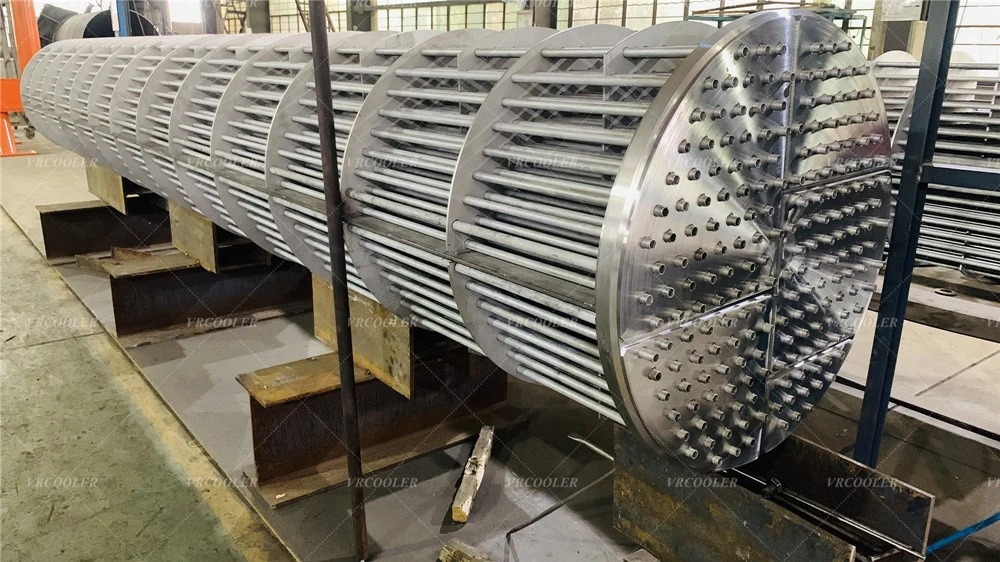
TEMA BEU / AEU (Removable U-Tube Bundle): The U-tube design allows individual tubes to expand and contract freely under large temperature shocks (ΔT>50°C), completely eliminating thermal expansion stress between the bundle and shell. The entire bundle is removable for external inspection and hydro-jetting.
TEMA BEM / NEN (Fixed Tubesheet): Compact, cost-effective welded shell construction engineered for standard district heating installations with clean closed water loops.
TEMA AES (Floating Head with Backing Ring): Premium industrial configuration allowing straight-tube mechanical brush rodding and inspection from both ends without disconnecting piping.
2. High-Grade Metallurgy for Aggressive Waters
Austenitic Stainless Steel 304L (UNS S30403): Standard corrosion-resistant metallurgy for clean treated engine coolant and closed district heating water.
Molybdenum-Alloyed Stainless Steel 316L (UNS S31603): High resistance to chlorides, dissolved oxygen, and acidic trace contaminants commonly found in open agricultural heating grids and well-water makeup.
Duplex Stainless Steel 2205 (UNS S32205): Superior mechanical strength and pitting resistance (PREN≥35) for high-pressure (>20 bar) or high-salinity geothermal/biogas heating circuits.
3. Hydrodynamic Flow & Low Pressure Drop Design
Laser-Cut Segmental & Rod Baffles: Precision-engineered baffle geometry creates uniform cross-flow on the shell side, eliminating dead zones, stagnant fouling deposits, and flow-induced vibration.
Low Parasitic Pumping Loss: Generous nozzle diameters and optimized tube pass arrangements keep pressure drops strictly below ΔP≤0.2−0.4 bar (3−6 psi) on both engine and heating sides, minimizing circulation pump electrical consumption.
4. Precision Tube-to-Tubesheet Joints
Double-Grooved CNC Machined Tubesheets: Tubes are expanded into precision double-grooved tubesheets using computer-monitored torque rolling.
Automated Orbital TIG Seal Welding: Strength seal welds eliminate thermal fatigue leaks, followed by 100% helium mass spectrometer leak testing and hydrostatic pressure testing at 1.5× design rating.
Typical Applications in Biogas Cogeneration Plants
VRCOOLER biogas CHP tube bundle heat exchangers provide mission-critical thermal isolation across key renewable energy facilities:
Anaerobic Digester Heating Loops: Transferring recovered engine heat to maintain mesophilic (38°C) or thermophilic (55°C) digester tank temperatures.
District & Municipal Heating Networks: Exporting CHP thermal energy to local residential district heating grids at 80°C−85°C.
Commercial Greenhouse Heating: Supplying stable hot water for agricultural greenhouse underfloor and overhead heating circuits.
Organic Rankine Cycle (ORC) & Sludge Drying: High-temperature secondary loops for sludge drying and low-temperature power generation.
Exact 1:1 Replacement for Major CHP Gensets: Custom drop-in replacement tube bundles for Jenbacher, MWM / Caterpillar, MTU, MAN, Cummins, and Guascor biogas engine packages.
Why CHP Plant Builders & Operators Choose VRCOOLER
Biogas plant owners, CHP packagers, and district energy operators rely on VRCOOLER for uncompromised thermal reliability:
Zero Cross-Contamination Risk: The all-welded and expanded tube construction eliminates gasket blowouts, permanently protecting the engine cooling circuit from heating grid water intrusion.
High Tolerance to Particulate Matter: Generous tube diameters (ID≥13−20 mm) easily pass rust particles and debris from old district heating pipes without clogging, unlike narrow plate channels.
1:1 Drawing-Based Drop-In Fit: We manufacture replacement tube bundles and complete heat exchangers matching original flange centerlines, nozzle orientations, and saddle mountings.
Guaranteed Heat Balance: Sized with exact thermal margins to recover 100% of rated engine jacket and exhaust heat without causing engine over-temperature alarms.
Frequently Asked Questions (FAQ)
Q1: Why should I choose a tube bundle heat exchanger over a plate heat exchanger for my biogas CHP?
A: Plate heat exchangers (PHE) use thin elastomer gaskets that harden and degrade under continuous 90°C+ temperatures, leading to external leaks or internal cross-contamination between engine glycol and the district heating loop. Furthermore, heating network rust and scale rapidly plug plate channels. VRCOOLER tube bundle exchangers have no elastomer gaskets in contact with hot fluids, handle water particulates without clogging, and deliver a service life exceeding 20+ years.
Q2: Which fluid should go on the tube side versus the shell side?
A: In most CHP installations, the higher-pressure or more fouling-prone fluid (typically the customer's heating network water) is routed through the tube side for easy mechanical cleaning and rodding, while the clean, treated engine coolant circulates on the shell side. However, VRCOOLER can customize the pass arrangement to suit your specific piping layout.
Q3: How does the heat exchanger handle large temperature differences during system startup?
A: During cold startups, heating network return water can be as low as 30°C while engine coolant is at 90°C. VRCOOLER TEMA BEU U-tube bundles allow each tube to expand independently, completely eliminating mechanical stress on tubesheets and shell welds.
Q4: What information is needed to size a replacement CHP tube bundle heat exchanger?
A: Please provide the engine model and electrical/thermal kW ratings, coolant circuit flow rate and inlet/outlet temperatures (e.g., 90°C→72°C), heating network flow rate and desired supply/return temperatures (e.g., 60°C→80°C), allowable pressure drop (ΔP), and operating pressures.
Request a Biogas CHP Tube Bundle Heat Exchanger Proposal
Protect your biogas engines from hydraulic cross-contamination, eliminate gasket failures, and maximize district heating revenue with VRCOOLER.
Explore VRCOOLER CHP Thermal Solutions: Visit www.vrcooler.com
Submit Your Technical RFQ: Contact our cogeneration engineering group directly at [email protected] with your engine datasheets and project heating specifications.