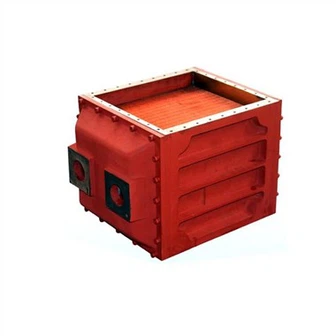
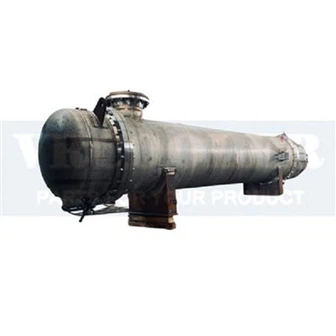
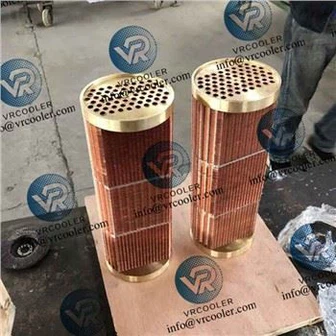
Plate Fin Hydrogen Cooler For Power Station
Plate Fin Hydrogen Cooler for Power Station
Working Principle
Heat Exchange Mechanism:
The cooler operates by transferring heat from hydrogen gas (heated by the generator's stator and rotor windings) to a coolant (typically water). This occurs through corrugated fins and flat plates, which form a compact, high-efficiency heat exchanger. Hydrogen flows through the finned channels, while coolant circulates through the plates, creating a counter-flow arrangement for optimal thermal efficiency .
Enhanced Heat Transfer:
Fins increase the surface area for heat exchange, and their geometry (e.g., serrated or wavy designs) promotes turbulence, reducing thermal resistance. This allows the cooler to handle large heat loads efficiently, even at low hydrogen velocities .

Plate Fin Hydrogen Cooler for Power Station
Applications in Power Stations
Hydrogen-Cooled Generators:
Large power plants (e.g., 300 MW+ units) use hydrogen as a coolant due to its high thermal conductivity (7× better than air). The plate fin cooler maintains hydrogen temperatures within strict limits (e.g., 40–46°C) to optimize generator efficiency and prevent overheating .
Case Study:
A 300 MW power plant replaced aging coil-wound hydrogen coolers with plate-fin designs, achieving a 30% increase in heat transfer capacity and reducing cold hydrogen temperature from 50°C to 42°C, eliminating forced load reductions .
Key Advantages
Compact Design:
Plate fin coolers occupy 60–70% less space than traditional shell-and-tube exchangers, making them ideal for retrofitting existing power plants .
High Efficiency:
Their specific heat transfer area (2,500–4,370 m²/m³) and low pressure drop enable 95%+ effectiveness, ensuring minimal energy loss .
Durability:
Vacuum-brazed aluminum cores resist corrosion and fatigue, with operational lifespans exceeding 25 years under normal conditions .
Material Selection
Hydrogen-Side Components:
Fins: Aluminum alloys (e.g., 3003-H14) for lightweight and high thermal conductivity.
Tubes: Stainless steel (SS 316L) or Cu-Ni alloys (e.g., 90/10 Cu-Ni) for resistance to hydrogen embrittlement and corrosion .
Coolant-Side Components:
Headers: Carbon steel or SS 304, coated with epoxy for corrosion protection .