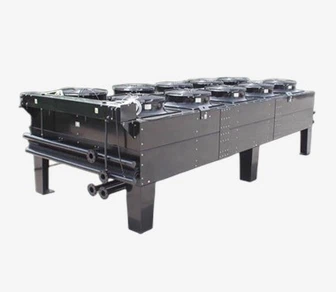
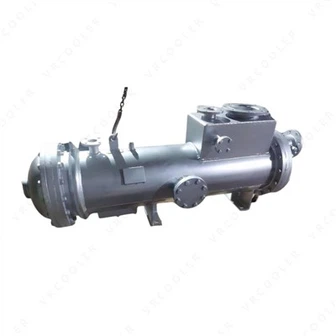
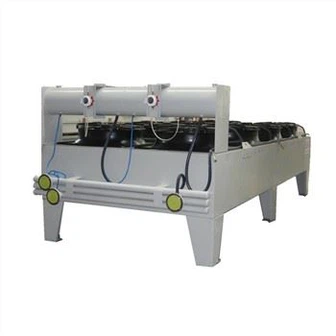
Marine Shell And Tube Condensers For Boat Closed-Circuit Cooling Systems By VRCOOLER
On commercial vessels, workboats, yachts, and fishing trawlers, closed-circuit water systems (including marine HVAC chilled water loops, auxiliary engine cooling, and refrigerated seawater systems) require reliable heat rejection into raw seawater. VRCOOLER designs and manufactures compact, heavy-duty Marine Shell and Tube Condensers and Closed-Circuit Heat Exchangers specifically engineered for onboard marine service. Utilizing seawater-immune metallurgy (including Seamless CuNi 90/10, CuNi 70/30, and Grade 2 Titanium tubes), VRCOOLER marine condensers handle continuous roll, pitch, and engine room vibration, providing high thermal efficiency, low raw-water fouling, and easy in-situ mechanical cleaning for tight marine machinery spaces.

Operating Roles of Shell and Tube Condensers on Marine Vessels
Onboard marine vessels, fresh water circulates in closed circuits to protect sensitive machinery from corrosive raw seawater. VRCOOLER marine shell and tube condensers serve critical thermal transfer roles across several boat systems:
Core Shipboard Applications:
Marine HVAC Chilled Water Plant Condensers: Evacuating condensing heat from marine chillers (R134a, R407C, R410A, R513A) using raw seawater to chill closed-circuit water loops (6°C−12°C) for accommodation air conditioning.
Closed-Circuit Engine & Auxiliary Water Cooling: Operating as a central tubular heat exchanger where hot closed-loop engine jacket fresh water (80°C−90°C) transfers heat to raw seawater without risking salt scaling inside engine blocks.
Fish Hold & Refrigerated Sea Water (RSW) Systems: High-capacity marine refrigeration condensers maintaining sub-zero brine and chilled water tanks on fishing vessels.
Hydraulic & Winch Power Unit Cooling: Maintaining stable hydraulic fluid temperatures for anchor windlasses, steering gear, and deck cranes.
Marine Engineering Challenges in Boat Engine Rooms
Operating thermal equipment in boat engine rooms involves distinct environmental constraints that standard industrial coolers cannot survive:
Aggressive Marine Seawater & Harbor Biofouling: Harbor waters contain barnacles, mussels, sand, and algae that cause micro-pitting in inferior metals. VRCOOLER utilizes Copper-Nickel alloys with natural biological resistance.
Vibration, Shock, and Sea-State Pitch/Roll: Wave impact and engine vibration cause structural fatigue. We engineer reinforced mounting brackets, thick tubesheets, and anti-vibration tube baffle cages.
Extremely Restricted Machinery Spaces: Space in boat bilges and engine rooms is at a premium. VRCOOLER optimizes internal multi-pass tube layouts and high-efficiency finned tubes to maximize heat transfer density in a compact footprint.
Galvanic & Stray Current Corrosion: Contact between dissimilar metals in marine environments accelerates corrosion. VRCOOLER isolates components with sacrificial zinc anodes and dielectric insulating coatings.
VRCOOLER Marine Condenser Construction & Metallurgy
At VRCOOLER, we build marine shell and tube condensers to withstand decades of saltwater service:
1. Seawater-Immune Tube Metallurgy
Seamless CuNi 90/10 (UNS C70600): Industry standard for seawater cooling; naturally releases microscopic copper ions that prevent barnacle and algae adhesion while forming a self-healing protective oxide film (Cu2O).
Seamless CuNi 70/30 (UNS C71500): Higher mechanical strength and erosion resistance for high-velocity raw seawater loops (>2.5 m/s).
Grade 2 Titanium (UNS R50400): 100% immune to chloride attack, crevice corrosion, and stagnant harbor sulfides; engineered for high-performance luxury yachts and commercial vessels.
2. Rugged Mechanical Construction
Removable Cast Bronze / Coated Cast Iron Waterboxes: Bolted channel heads equipped with easily accessible sacrificial zinc anodes allow quick mechanical rodding and tube cleaning without disturbing closed-circuit refrigerant or water piping.
Precision CNC Tubesheet Joints: Heavy Naval Brass (C46400) or CuNi tubesheets with precision-machined serrated grooves, featuring roller-expanded and TIG seal-welded tube joints.
Internal Refrigerant Distribution & Demisters: For marine HVAC/R condenser applications, integrated internal vapor baffles ensure uniform refrigerant condensation with subcooling sections to maximize refrigeration coefficient of performance (COP).
Technical Specifications: VRCOOLER Marine Shell and Tube Condensers
|
Parameter |
Standard Marine Specification |
VRCOOLER Custom Boat Capability |
|---|---|---|
|
Applicable Systems |
Marine HVAC Chillers, RSW Refrigeration, Closed Loops |
Custom sized for tugboats, yachts, fishing vessels, ferries |
|
Refrigerants / Fluids |
R134a, R404A, R407C, R448A, R513A, Glycol/Water |
Compatible with all standard marine refrigerants and fluids |
|
Thermal Capacity |
5 kW to 1,500 kW (1.5 TR−420 TR) |
Modular and multi-compressor dual-circuit shells |
|
Tube Metallurgy |
Seamless CuNi 90/10 (C70600) |
Seamless CuNi 90/10, CuNi 70/30, Titanium Gr. 2 |
|
Shell Material |
Heavy-Wall Carbon Steel / 316L SS |
Epoxy-lined Carbon Steel or Marine Grade 316L SS |
|
Waterbox Material |
Cast Bronze (C83600) / Marine Cast Iron |
Cast Bronze, Gunmetal, or Fabricated 316L Stainless |
|
Design Pressure (Shell) |
20 bar−32 bar (Hydro test 45 bar) |
High-pressure marine R410A/R32 ratings up to 42 bar42 bar |
|
Design Pressure (Tube) |
10 bar−16 bar |
Seawater circuit rated up to 16 bar16 bar |
|
Seawater Design Velocity |
1.2 m/s−2.0 m/s |
Optimized anti-settling, non-erosive velocity control |
|
Cathodic Protection |
Sacrificial Zinc Anodes in each waterbox |
Easily replaceable screw-in zinc pencil anodes |
|
Quality Compliance |
ISO 9001, ASME Section VIII Div. 1 |
Marine Classification compliant (CCS, DNV, BV, ABS, LR) |
Why Boat Builders and Fleet Operators Choose VRCOOLER
Shipyards, marine HVAC contractors, and boat owners trust VRCOOLER for uncompromised marine performance:
Compact & Low-Profile Layouts: Engineered with high-density inner-grooved and low-fin tube geometry, delivering maximum BTU heat rejection in minimal engine room volume.
1:1 Drop-In Replacement for Obsolete Marine Coolers: We manufacture exact replacement units matching existing mounting feet, seawater hose barb/flange connections, and refrigerant ports.
Zero Cross-Contamination Risk: Heavy-wall seamless tubes and double-grooved tubesheet joints prevent seawater from leaking into closed-loop chilled water or refrigerant circuits.
100% Pre-Shipment Quality Testing: Every marine condenser undergoes 100%100% hydrostatic shell and tube pressure tests, pneumatic helium leak checks, and dimensional CMM inspection.
Maintenance Guidelines for Marine Shell and Tube Coolers
To maintain peak cooling efficiency and prevent scale buildup in saltwater environments, VRCOOLER recommends:
Sacrificial Anode Inspection: Inspect zinc pencil anodes in the waterbox covers every 3 to 6 months; replace immediately when consumed beyond 50%50% to preserve tubesheet and tube integrity.
Periodic Seawater Tube Rodding: Remove the bolted waterbox end-covers during annual maintenance. Use nylon or brass brushes to clear marine silt and bio-slimes without scratching internal protective oxide films.
Seasonal Freshwater Flushing: When laying up the boat for winter or extended port stays, flush the seawater tube side with fresh water to prevent stagnant chloride corrosion.
Frequently Asked Questions (FAQ)
Q1: Why is CuNi 90/10 the preferred material for marine boat condensers?
A: CuNi 90/10 provides an optimal balance of high thermal conductivity, mechanical ductility, and superior resistance to marine biofouling. Its natural release of trace copper ions deters barnacle and algae growth, making it far more reliable than stainless steel in marine saltwater.
Q2: Can VRCOOLER manufacture dual-circuit condensers for twin-compressor marine chillers?
A: Yes. VRCOOLER custom-builds dual-refrigerant-circuit marine condensers containing two independent refrigerant compartments within a single shared seawater shell, saving space and piping complexity on multi-stage marine chillers.
Q3: How do I select between a shell-and-tube condenser and a plate heat exchanger on a boat?
A: While plate heat exchangers are compact, they require fine raw water filtration (<1 mm<1 mm) and are vulnerable to clogging from seawater sand and weeds. VRCOOLER shell and tube condensers tolerate debris-laden harbor water and allow quick mechanical rodding maintenance without opening the refrigerant envelope.
Q4: Can VRCOOLER supply replacement condensers matching my boat's existing mounting brackets?
A: Yes. By providing photos of the existing nameplate or key dimensions (shell diameter, overall length, port center-to-center distances, and mounting saddle spacing), our engineering team will produce 1:1 drop-in replacement units that bolt directly onto your vessel's existing foundation.
Partner with VRCOOLER for Marine Closed-Circuit Cooling Excellence
Protect your vessel's machinery, maintain cold accommodation air conditioning, and eliminate saltwater corrosion failures. Partner with VRCOOLER, the global engineering specialist in marine shell and tube condensers, boat heat exchangers, and custom replacement bundles.
Explore VRCOOLER Marine Heat Exchangers: Visit www.vrcooler.com
Request a Custom Marine Condenser Proposal: Contact our marine engineering team at [email protected] with your vessel type, cooling capacity (kW / Tons), refrigerant type, and dimensional constraints.