Box Coolers For Marine-Grade Generators | Keel Cooling | VRCOOLER
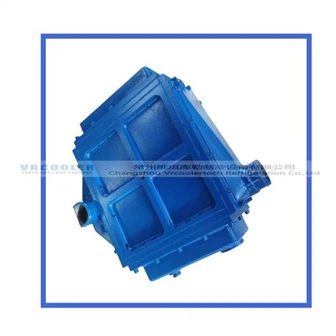
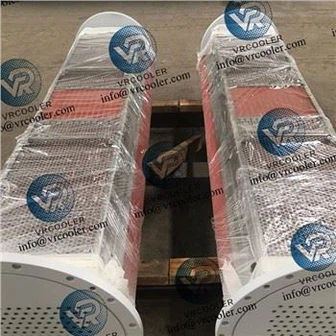
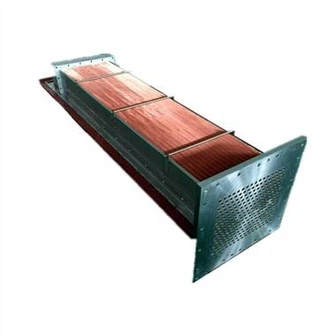
For marine auxiliary generators, emergency gensets, and harbor diesel power units operating on tugboats, dredgers, fishing vessels, and offshore supply vessels (OSVs), conventional raw seawater cooling systems are vulnerable to clogged sea strainers (from jellyfish, seaweed, and harbor plastic), pump impeller failures, and internal hull flooding risks. VRCOOLER designs and manufactures heavy-duty, hull-immersed Box Coolers (Sea Chest Keel Coolers) specifically engineered for marine-grade generator sets (30 kWe to 2,500+ kWe30 kWe to 2,500+ kWe). Utilizing anti-biofouling Seamless CuNi 90/10, CuNi 70/30, and Grade 2 Titanium U-tube bundles, VRCOOLER marine generator box coolers operate on natural thermal convection within the vessel's sea chest, eliminating raw water pumps, sea strainers, and inboard seawater piping while guaranteeing 100% closed-circuit cooling reliability.

Operating Principle of Marine Generator Box Coolers
A box cooler is a specialized closed-circuit heat exchanger where a bundled U-tube matrix is installed directly into a sea chest built into the ship's bottom hull:
How Natural Convection Cooling Works:
Thermosiphon Circulation: Hot closed-loop engine coolant (jacket water and charge air/oil mix at 70°C−90°C70°C−90°C) circulates inside the VRCOOLER U-tubes. As heat transfers through the tube walls, surrounding seawater inside the sea chest warms and rises.
Natural Seawater Draft: The rising warm seawater exits through upper hull louvers, drawing cold seawater inward through bottom inlet grilles via natural buoyancy (thermosiphon effect)-even when the vessel is tied up at the dock with zero forward speed.
Hydrodynamic Scoop Assist: When the vessel is underway, external forward motion creates a continuous forced seawater flow across the submerged tube pack, boosting heat transfer coefficients.
Why Marine Engineers Choose Box Coolers for Auxiliary Gensets
Marine auxiliary and emergency generator sets operate under demanding maritime conditions where uptime is non-negotiable:
Critical Operational Advantages:
Complete Elimination of Inboard Raw Seawater Piping: Raw seawater remains strictly outside the vessel hull within the sea chest. This eliminates internal saltwater pipe corrosion, valve leaks, and catastrophic hull flooding risks.
Zero Clogged Strainers & Pump Failures: In shallow estuaries, dredging channels, and debris-filled ports, conventional raw water pumps frequently ingest plastic bags, river weeds, sand, and jellyfish, triggering emergency generator shutdowns. VRCOOLER box coolers require zero raw water pumps, sea strainers, or overboard discharge valves.
Extended Generator Engine Lifespan: Clean, chemically treated freshwater circulates continuously through the engine block, completely preventing salt scaling, cavitation, and thermal hotspots inside generator cylinder liners.
Low Maintenance & Zero Drydock Service: Smooth U-tube bundles with natural anti-fouling metallurgy require virtually zero routine maintenance compared to plate heat exchangers and raw water strainers.
VRCOOLER Marine Box Cooler Architecture & Metallurgy
At VRCOOLER, we custom-engineer box coolers tailored to the vessel's hull geometry and the generator manufacturer's heat balance sheet:
1. Advanced Marine Metallurgy
Seamless CuNi 90/10 (UNS C70600): The industry benchmark for marine box cooling; continuously releases microscopic copper ions that naturally deter barnacles, mussels, tube worms, and macro-algae from attaching to the tubes.
Seamless CuNi 70/30 (UNS C71500): High-nickel alloy offering superior erosion-corrosion resistance for fast patrol boats, naval vessels, and high-velocity sea chests.
Grade 2 Titanium (UNS R50400): 100% immune to chloride attack and sulfide stress corrosion; ideal for dredging vessels operating in abrasive silt and heavily polluted harbor waters.
2. Dual-Circuit (HT / LT) Integrated Bundles
For modern Tier III / Tier IV marine diesel generators equipped with separate-circuit aftercooling, VRCOOLER provides split-circuit box coolers:
HT Circuit: Dedicated to engine jacket water (80°C−90°C80°C−90°C).
LT Circuit: Dedicated to turbocharger charge air and lube oil cooling (38°C−45°C38°C−45°C).
3. Structural Mounting & Cathodic Protection
Heavy Mounting Flange: Heavy-gauge carbon steel, naval brass, or 316L stainless steel top-mounting flange with precision bolt holes matching the vessel's sea chest coaming.
Dielectric Isolation Gaskets: High-density reinforced rubber gaskets and bolt insulating sleeves prevent galvanic interaction between the copper-nickel tube bundle and the steel ship hull.
Impressed Current (ICAF) & Sacrificial Zinc Anodes: Fitted with replaceable sacrificial zinc anodes or integrated ICAF copper anode systems for multi-year biofouling protection.
Technical Specifications: VRCOOLER Marine Generator Box Coolers
|
Parameter |
Standard Marine Specification |
VRCOOLER Custom Capability |
|---|---|---|
|
Applicable Marine Engines |
Marine Auxiliary & Emergency Diesel/Gas Gensets |
Sized for 30 kWe30 kWe to >2,500 kWe>2,500 kWe Generator Units |
|
Cooling Function |
Jacket Water (HT) & Charge Air / Lube Oil (LT) |
Single-circuit or integrated split-circuit bundles |
|
Thermal Heat Rejection |
30 kW30 kW to 2,000 kW2,000 kW per box cooler bundle |
Sized for continuous 100%100% generator prime load |
|
Cooling Medium (Tube Side) |
Chemically Treated Fresh Water / Glycol Mix |
Clean closed-circuit loop (40%−50%40%−50% glycol) |
|
Cooling Medium (Shell Side) |
Raw Seawater (Submerged in Sea Chest) |
Natural convection + vessel motion water draft |
|
Design Seawater Temp. |
Rated for 32°C32°C Tropical Seawater |
High-ambient tropical / equatorial water design |
|
Tube Metallurgy |
Seamless CuNi 90/10 (C70600) |
Seamless CuNi 90/10, CuNi 70/30, Titanium Gr. 2 |
|
Mounting Flange Material |
Carbon Steel / Naval Brass (C46400) |
Marine Epoxy-Coated Steel / 316L Stainless |
|
Design Pressure (Tube Side) |
6 bar−10 bar6 bar−10 bar (Hydro test 15 bar15 bar) |
Custom high-pressure ratings up to 16 bar16 bar |
|
Design Standards |
ISO 9001, ASME Section VIII Div. 1 |
Marine Classification compliant (CCS, DNV, BV, ABS, LR) |
Typical Marine Applications Powered by VRCOOLER Box Coolers
VRCOOLER marine box coolers are installed across global maritime fleets:
Harbor & Ocean-Going Tugboats: Continuous auxiliary generator cooling during high-load ship escort, docking, and towing operations in shallow, silt-heavy harbors.
Trailing Suction Hopper Dredgers & Workboats: Eliminates abrasive sand and mud ingestion that would destroy conventional plate heat exchangers and raw water pumps.
Inland Barges & River Pushboats: Ideal for muddy, debris-filled inland river waterways (e.g., Mississippi, Rhine, Yangtze, Danube).
Offshore Supply Vessels (OSVs) & Crew Transfer Vessels (CTVs): High-reliability power generation cooling for offshore wind farm support and DP-2 positioning.
Commercial Fishing Trawlers: Reliable auxiliary power cooling for winches, processing refrigeration, and fish hold RSW systems.
Why Shipyards and Marine Fleet Superintendents Choose VRCOOLER
Naval architects, marine superintendents, and shipyard project managers trust VRCOOLER for uncompromised marine reliability:
1:1 Drop-In Replacement for Obsolete Box Coolers: We manufacture exact replacement bundles matching existing sea chest coaming dimensions, mounting bolt PCD, and pipe connections with zero shipyard hull cutting.
Thermal Modeling for Zero-Speed Dock Conditions: Sized with conservative natural convection thermal modeling, ensuring generator engines will not overheat while the vessel is idling in tropical harbors.
100% Quality Proof Testing: Every U-tube bundle undergoes 100%100% hydrostatic pressure testing at 1.5×1.5× design pressure, pneumatic helium testing, and full dimensional inspection.
Fast Emergency Drydock Delivery: Rapid fabrication schedules to meet tight shipyard drydocking time windows.
Frequently Asked Questions (FAQ)
Q1: Does a box cooler provide sufficient cooling when the boat is stationary at the dock?
A: Yes. VRCOOLER box coolers are specifically engineered for natural thermal convection (thermosiphon flow). As hot water circulates through the U-tubes, seawater in the sea chest heats up and rises out of the upper louvers, continuously drawing cold seawater through the bottom hull grilles even with zero vessel movement.
Q2: Why is CuNi 90/10 the standard material for marine generator box coolers?
A: CuNi 90/10 provides high thermal conductivity, excellent resistance to seawater erosion, and natural anti-biofouling properties. It continuously deters marine growth (barnacles and algae) without requiring toxic chemical dosing.
Q3: How do you protect a copper-nickel box cooler from galvanic corrosion against a steel hull?
A: VRCOOLER supplies specialized dielectric isolation mounting kits, including high-durometer neoprene/EPDM gaskets, insulating bolt sleeves, and washer sets that completely isolate the copper-nickel cooler from the steel hull, supported by sacrificial zinc anodes.
Q4: Can VRCOOLER manufacture replacement box coolers based on existing ship drawings or samples?
A: Yes. By providing your existing sea chest drawing, coaming dimensions, or nameplate photograph, VRCOOLER manufactures 1:1 drop-in replacement U-tube bundles that bolt directly into your vessel's existing sea chest.
Partner with VRCOOLER for Marine Generator Thermal Excellence
Eliminate raw water pump failures, protect your vessel from internal flooding risks, and ensure 24/7 auxiliary generator power. Partner with VRCOOLER, the trusted global engineering manufacturer of marine box coolers, keel coolers, and shipboard heat exchangers.
Explore VRCOOLER Marine Heat Exchangers: Visit www.vrcooler.com
Request a Marine Generator Box Cooler Sizing Proposal: Contact our marine thermal engineering team at [email protected] with your generator kW output, engine heat rejection data, and sea chest coaming dimensions.