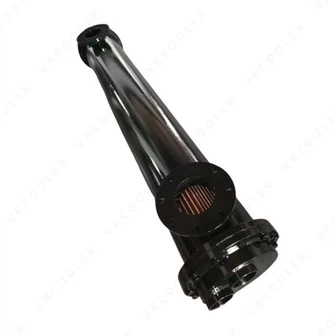
Marine Freshwater Generator Evaporator For Shipboard Fresh Water Production
On a working vessel, fresh water is never a small matter. It is needed every day for crew use, cleaning, cooking, boiler makeup, and in many cases for technical service onboard. Carrying large volumes of fresh water from shore is expensive and impractical, especially for ships operating long routes or staying at sea for extended periods. That is why the freshwater generator has become such an important part of modern marine systems, and at the heart of that system is the evaporator.

A freshwater generator evaporator is designed to turn seawater into usable fresh water through evaporation under vacuum. Instead of relying on high-temperature boiling, the system lowers the pressure inside the chamber so seawater can evaporate at a much lower temperature. This makes it possible to use waste heat from the engine cooling circuit, which improves overall energy efficiency and reduces operating cost. In simple terms, the evaporator allows the ship to make fresh water from the sea by using heat that is already available onboard.
This is one of the reasons freshwater generator evaporators are widely used on cargo ships, container vessels, tankers, fishing boats, passenger ships, offshore platforms, and naval vessels. For ship owners and operators, the benefit is very practical: less dependence on port-supplied water, lower logistics cost, and a more reliable water supply during long voyages. For the crew, it means greater self-sufficiency and more stable onboard operations.
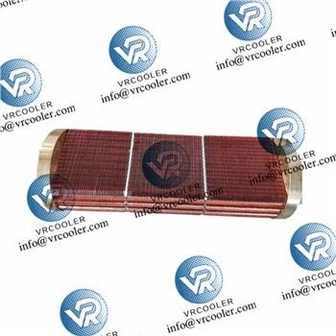
The evaporator section itself is where the main thermal process begins. Seawater enters the unit and is heated by a heat exchanger, often using hot jacket water from the main engine. Because the system operates under vacuum, the heated seawater begins to evaporate at a relatively low temperature. The vapor rises, passes through a demister to remove salt droplets, and then moves to the condenser section, where it is cooled and collected as distilled fresh water. The quality of the evaporator directly affects how efficiently this process works. A well-designed evaporator provides stable heat transfer, consistent evaporation, and dependable output even under changing sea and engine load conditions.
Material selection is especially important in marine freshwater generator evaporators because seawater is naturally corrosive. Components exposed to seawater must be able to resist corrosion, scaling, and long-term fouling. Depending on the design and service conditions, common materials may include titanium, copper nickel, stainless steel, or other corrosion-resistant alloys. The right material choice can significantly extend service life and reduce maintenance frequency. For shipowners, this matters just as much as initial performance, because downtime and repair work at sea are always costly.
Another key advantage of a properly designed freshwater generator evaporator is compactness. Space in an engine room is always limited, so marine equipment needs to deliver strong performance without taking up unnecessary room. A compact evaporator with efficient heat transfer surfaces helps reduce installation constraints while still maintaining good freshwater output. This is particularly valuable for retrofits, vessel upgrades, and replacement projects where the new unit must match existing pipe connections and available space.
In real operating conditions, maintenance also plays a major role. Over time, marine equipment dealing with seawater can develop scale, deposits, and fouling on the heat transfer surfaces. If this buildup is not managed, the evaporation rate drops and energy efficiency suffers. A good freshwater generator evaporator should therefore be designed for easier inspection, cleaning, and servicing. Ship operators generally look for units that combine corrosion resistance, stable production, and maintenance-friendly construction, because those features translate directly into lower lifecycle cost.
Freshwater generator evaporators are also closely tied to the vessel's overall energy strategy. On many ships, using engine waste heat for freshwater production is much more economical than running separate water-making systems with higher power demand. This makes the evaporator not just a water treatment component, but part of a broader efficiency approach in marine engineering. In an industry where fuel cost, operating efficiency, and reliability all matter, that is a major advantage.
For replacement and OEM projects, customization is often necessary. Not every ship has the same operating profile, available heat source, installation footprint, or freshwater demand. Some vessels require compact units for limited machinery spaces, while others need larger evaporation capacity for high crew numbers or offshore duty. In these cases, a customized freshwater generator evaporator can be designed according to required output, seawater conditions, heat source temperature, pressure drop limits, and material preference. This ensures the unit fits the real application rather than forcing the application to fit a standard design.
In the end, a freshwater generator evaporator is more than just a heat exchanger. It is a critical part of onboard self-sufficiency. It allows vessels to produce fresh water from seawater efficiently, economically, and continuously while at sea. For shipowners, marine engineers, and OEM builders, choosing the right evaporator means balancing corrosion resistance, heat transfer performance, service life, and ease of maintenance. When those factors come together in a well-built design, the result is a dependable freshwater supply system that supports the vessel every day it is in operation.