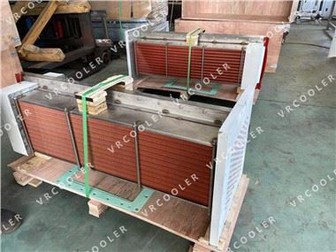
Main Marine Engine Lube Oil Cooler
Main Marine Engine Lube Oil Cooler
Marine main engines generate enormous heat during operation (due to combustion and mechanical friction). The lube oil circulates to lubricate moving parts (e.g., crankshaft bearings, piston pins, camshafts) and absorbs this heat, causing its temperature to rise. If uncooled:
Viscosity drop: Overheated oil becomes too thin, losing its ability to form a protective oil film between moving parts, leading to metal-to-metal contact and severe wear.
Oil degradation: High temperatures accelerate oil oxidation, producing sludge, varnish, and acidic byproducts. These contaminants clog filters, corrode engine components, and shorten the oil's service life.
Component damage: Excessive heat can damage seals, gaskets, and even warp engine parts (e.g., bearing shells).
The lube oil cooler solves this by removing excess heat from the lube oil, maintaining its temperature within the optimal range (typically 40–60°C for most marine main engines, depending on the engine type and oil grade).
The cooler operates on the principle of indirect heat exchange (no direct contact between lube oil and the cooling medium). The typical flow process is:
Hot Lube Oil Inlet: After lubricating the main engine, hot lube oil (60–80°C) is pumped into the inlet header of the cooler.
Tube-Side Flow: The oil is distributed evenly into the tube bundle, flowing through the tubes. As it moves, heat is transferred through the tube walls to the cooling medium on the shell side.
Shell-Side Cooling: Seawater (drawn from the ship's sea chest via a seawater pump) enters the shell and flows across the tube bundle (guided by baffles). The seawater absorbs heat from the tube walls and is then discharged back to the sea (as "warm seawater").
Cooled Oil Outlet: The now-cooled lube oil (40–60°C) exits the outlet header and is pumped back to the main engine to repeat the lubrication cycle.
Temperature Regulation: If the oil temperature is too low (e.g., during engine startup), the thermostatic valve bypasses part or all of the oil around the cooler, ensuring the oil reaches the minimum required temperature for proper lubrication.