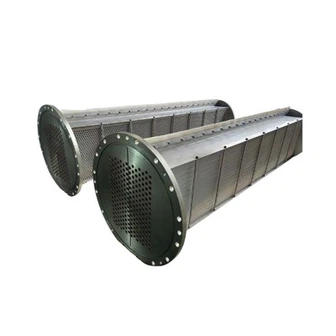
Forced Oil Circulation Air Cooler
Forced Oil Circulation Air Cooler
Many industrial systems generate significant heat during operation, and oil (as a lubricant or heat transfer medium) absorbs this heat to protect components. For example:
In power transformers, insulating oil absorbs heat from the core and windings; overheating degrades insulation and risks fire.
In heavy-duty gearboxes (e.g., in mining trucks or wind turbines), lubricating oil absorbs friction heat; high oil temperatures thin the oil film, causing wear.
In hydraulic systems, hydraulic oil heats up due to pressure drops; overheating reduces system efficiency and damages seals.
FOCAC's core role is to actively remove excess heat from oil by forcing oil through a heat exchanger and using fans to blow cool air over the exchanger surface. This maintains the oil temperature within the optimal range (typically 35–65°C, depending on the application), ensuring:
Stable oil viscosity (critical for lubrication and hydraulic performance).
Minimal oil oxidation and degradation (extending oil service life).
Protection of equipment components from overheating-related damage.
FOCAC operates on the principle of indirect forced convection heat transfer (oil and air do not come into direct contact). The process has 4 key steps:
Hot Oil Inlet: Hot oil (from the equipment) is pumped into the FOCAC's oil inlet port. The oil filter removes debris to prevent tube clogging.
Oil Flow Through Tubes: The oil pump forces the hot oil through the finned tubes of the heat exchange core. As the oil flows through the tubes, heat is conducted through the tube walls to the fins.
Forced Air Cooling: The axial fans start (triggered by the thermostat) and blow ambient air over the finned surface. The fins, with their large surface area, efficiently transfer the heat from the tube walls to the moving air. The air absorbs the heat and is discharged as warm air (either to the atmosphere or ducted away).
Cooled Oil Return: The oil, now cooled by 10–30°C (depending on heat load), exits the cooler through the oil outlet port and is pumped back to the equipment to repeat the lubrication/heat transfer cycle.