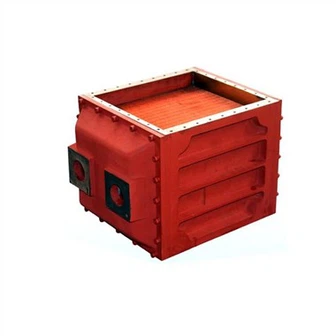
Closed-Loop Liquid Cooling With Heat Exchangers For HVDC Offshore Substations
HVDC (High Voltage Direct Current) offshore substations are critical assets in modern offshore wind and interconnector projects. They house highly sensitive and high-power electrical equipment such as converters, transformers, reactors, and power electronics that generate substantial heat during continuous operation. Due to space constraints, harsh marine conditions, and the need for exceptional reliability, closed-loop liquid cooling systems with dedicated heat exchangers have become the preferred thermal management solution for HVDC offshore substations.

Cooling Challenges in HVDC Offshore Substations
Offshore HVDC substations operate under demanding conditions that impose unique cooling requirements:
High Heat Density: Power electronics and transformers generate concentrated thermal loads.
Harsh Marine Environment: Salt-laden air, high humidity, and corrosive conditions limit the use of open or air-only cooling systems.
Restricted Space and Weight: Compact, high-efficiency cooling systems are essential for offshore platforms.
Reliability and Redundancy: Cooling failure can lead to equipment derating or shutdown, with significant operational and financial impact.
Limited Maintenance Access: Systems must operate reliably with minimal intervention.
These challenges make closed-loop liquid cooling an optimal and proven approach.
Principle of Closed-Loop Liquid Cooling
In a closed-loop liquid cooling system, a controlled coolant-typically treated water or a water-glycol mixture-circulates within a sealed circuit. Heat generated by HVDC equipment is absorbed by the coolant and transferred to a secondary medium via heat exchangers, without direct exposure to the offshore environment.
The system typically consists of:
Liquid-cooled heat sources (valves, converters, transformers)
Circulation pumps with redundancy
Plate or shell-and-tube heat exchangers
Secondary cooling circuit (air-cooled or seawater-cooled)
Expansion tanks, filters, and monitoring instruments
Role of Heat Exchangers in the Cooling System
Heat exchangers are the core components that enable efficient and safe heat rejection while maintaining a fully closed primary loop.
Common heat exchanger configurations include:
Plate Heat Exchangers: Compact design, high heat transfer efficiency, ideal for space-constrained offshore platforms.
Shell and Tube Heat Exchangers: Robust construction suitable for higher pressures and demanding operating conditions.
Liquid-to-Air Heat Exchangers: Used when seawater is not directly employed, often combined with dry or adiabatic coolers.
Liquid-to-Seawater Heat Exchangers: Employed with titanium or corrosion-resistant alloys when seawater cooling is permitted.
These designs isolate sensitive HVDC equipment from corrosive seawater and ambient air.
Advantages of Closed-Loop Cooling for Offshore HVDC
Closed-loop liquid cooling systems with heat exchangers provide multiple operational advantages:
Corrosion Protection: No direct contact between internal cooling circuits and marine air or seawater.
High Thermal Efficiency: Liquid cooling offers superior heat removal compared to air-based systems.
Operational Stability: Precise temperature control ensures stable performance of power electronics.
Redundancy and Safety: N+1 pump and heat exchanger configurations enhance system availability.
Reduced Maintenance: Sealed circuits minimize fouling, contamination, and fluid loss.
Design Considerations for Offshore Applications
When designing closed-loop liquid cooling systems for HVDC offshore substations, several factors are critical:
Material Selection: Stainless steel, titanium, or corrosion-resistant alloys for long-term offshore durability.
Coolant Quality Management: Filtration, corrosion inhibitors, and conductivity control to protect equipment.
Redundancy and Monitoring: Continuous monitoring of flow, temperature, pressure, and leakage.
Compact and Modular Design: Facilitates offshore installation and integration.
Compliance with Offshore Standards: Designed to meet IEC, DNV, and project-specific offshore requirements.
Typical Applications Within HVDC Substations
Closed-loop liquid cooling with heat exchangers is applied to:
HVDC converter valves and valve halls
Power transformers and reactors
Harmonic filters and auxiliary systems
Control rooms and enclosed electrical modules
Each application benefits from stable thermal conditions and reduced environmental exposure.
Energy Efficiency and Lifecycle Benefits
Efficient heat exchanger-based cooling systems contribute to:
Lower auxiliary power consumption
Improved availability of HVDC transmission assets
Extended service life of critical electrical components
Reduced risk of unplanned outages
These benefits are especially valuable for offshore projects where downtime and maintenance costs are exceptionally high.
Conclusion
Closed-loop liquid cooling with heat exchangers is a robust and proven thermal management solution for HVDC offshore substations. By combining high cooling efficiency, corrosion protection, and operational reliability, these systems ensure safe and continuous operation of critical HVDC equipment in challenging offshore environments. For modern offshore wind and transmission projects, closed-loop liquid cooling represents a strategic investment in performance, reliability, and long-term asset protection.