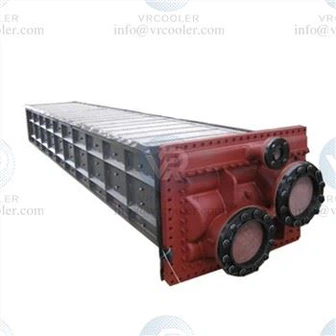
Charge Air Cooler For Shipboard Use
Charge Air Coolers For Shipboard Use, Either For The Main Engine Or For The Diesel Generators
Purpose of Charge Air Coolers
Temperature Management: CACs reduce the temperature of the compressed air before it enters the engine cylinders, enhancing combustion efficiency and reducing the risk of knocking.
Efficiency Improvement: Cooler air is denser, which allows for more oxygen to be packed into the combustion chamber, improving power output and fuel efficiency.
Emissions Control: By optimizing combustion, CACs help reduce emissions of pollutants such as NOx and unburned hydrocarbons.
Types of Charge Air Coolers
Air-to-Air Coolers: Use ambient air to cool the charge air. They are simpler and lighter but depend on environmental conditions.
Air-to-Water Coolers: Utilize seawater or freshwater for cooling. These are more effective in controlling air temperatures but may require more complex piping and maintenance due to potential fouling.

Considerations for Shipboard Use
Space Constraints: Design must optimize space on board, considering the limited area available in engine rooms.
Corrosion Resistance: Materials should be resistant to seawater corrosion, typically using stainless steel or specialized coatings.
Maintenance: Ensure easy access for cleaning and inspection, as fouling can dramatically affect performance.
Integration: CACs must be compatible with the overall engine and exhaust systems, including potential integration with heat recovery systems.
Applications
Main Engines: Larger CACs are often required due to the higher power output and thermal load.
Diesel Generators: Smaller, more compact CACs are typically used, optimized for the specific requirements of auxiliary engines.