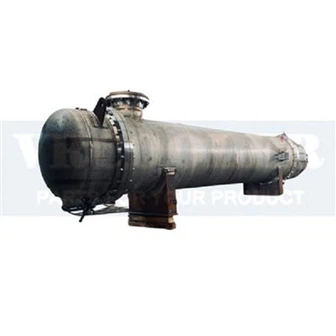
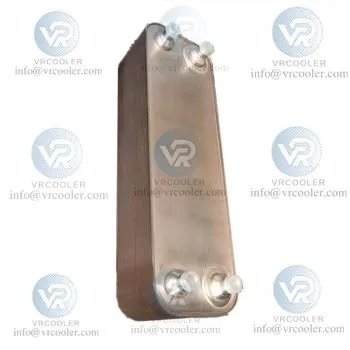
Caterpillar TCG 2020 V12 Biogas Generator Air Cooler Heat Exchanger
Core Positioning: The "Temperature Manager" in Biogas Power Generation Operations
The Caterpillar TCG 2020 V12 biogas generator primarily relies on biogas produced from agricultural waste, industrial organic wastewater, and livestock and poultry breeding waste as fuel to achieve energy recycling and low carbon emissions. During unit operation, the high-temperature flue gas generated by biogas combustion, the heat generated by engine operation, and the high-temperature air after pressurization, if not effectively dissipated in time, will lead to excessively high internal temperatures within the unit, resulting in accelerated wear of components, decreased power generation efficiency, and shutdown malfunctions.
The core function of the air cooler heat exchanger is to efficiently dissipate excess heat generated during unit operation to the outside air, maintaining the engine intake air temperature and engine body temperature within a reasonable operating range (typically 80-95℃), ensuring that key components such as engine cylinders, pistons, and turbochargers are in optimal working condition. Unlike the cooling system of ordinary generators, this heat exchanger is specially designed for the characteristics of biogas power generation, such as "complex fuel composition, large fluctuations in operating conditions, and long continuous operation time". It has advantages such as corrosion resistance, scale resistance, and stable heat exchange efficiency, and is one of the core guarantees for the long-term stable operation of Caterpillar TCG 2020 V12 biogas generator.
Structure and Principle: Precise Fit, Efficient Heat Exchange – The Core Logic
The Caterpillar TCG 2020 V12 biogas generator air cooler heat exchanger adopts an air-to-air aftercooler design. The entire unit consists of key components such as the heat exchange core, shell, inlet and outlet air interfaces, and heat dissipation fins. It strictly adheres to Caterpillar's original equipment manufacturing standards. Some compatible models, such as 12453447/12454130 (cylinder A side) and 12453449/12454128 (cylinder B side), can precisely match the unit's installation dimensions and operating parameters, achieving seamless installation.
Its working principle is based on the fundamental physical laws of heat conduction and convection heat transfer. The core of its efficiency lies in achieving high-efficiency cooling through a closed-loop process of "heat transfer - heat dissipation": During unit operation, pressurized high-temperature air (reaching 150-200℃) enters the heat exchanger's core. The core employs a multi-channel tubular structure, densely packed with heat exchange tubes of excellent thermal conductivity, and surrounded by densely packed heat dissipation fins, significantly increasing the heat transfer area. Simultaneously, outside cold air, driven by a fan, flows rapidly across the surface of the heat dissipation fins, creating forced convection. The heat from the high-temperature air is conducted through the heat exchange tube walls to the fins, and then carried away by the cold air, ultimately cooling the high-temperature air to the intake temperature required by the unit before it is reintroduced into the engine combustion chamber for combustion, completing one heat exchange cycle.
In terms of material selection, the heat exchanger tubes are made of corrosion-resistant and thermally conductive stainless steel or copper-nickel alloy, while the fins are made of high-strength aluminum alloy. This ensures efficient heat transfer and resists the erosion of trace amounts of corrosive gases that may be generated after biogas combustion, thus extending the service life of the components. The shell adopts a sealed design to effectively prevent dust and impurities from entering the core, avoid clogging the heat exchange channels, and ensure long-term stable heat exchange efficiency. This is highly consistent with the design concept of Caterpillar engine radiators, which "achieve heat transfer through tube bundles and fins and maximize airflow heat dissipation through front-mounted installation."

Routine Maintenance and Troubleshooting:
Extending Lifespan and Ensuring Continuous Operation The stable operation of air cooler heat exchangers relies on scientific routine maintenance and timely troubleshooting. Considering the operating characteristics of biogas power generation and referring to industrial heat exchanger maintenance and repair specifications, the following maintenance principles and troubleshooting methods are recommended to ensure long-term, efficient operation of the heat exchanger.
Regarding routine maintenance, firstly, establish a regular inspection system, focusing on monitoring the inlet and outlet temperatures and pressure differences of the heat exchanger. If abnormal temperature increases or pressure differences exceeding the rated range are detected, the cause must be investigated promptly. Secondly, regularly clean the dust and debris from the heat dissipation fins, using high-pressure air blowing or low-pressure water rinsing to prevent fin blockage and ensure effective heat dissipation. Care must be taken to avoid damaging the fins during cleaning. Thirdly, regularly inspect the heat exchanger's seals and interface connections. If leaks or aging seals are found, replace the gaskets or tighten the bolts promptly to prevent cold air leakage and reduced heat exchange efficiency. Finally, depending on operating time and medium characteristics, periodically perform chemical or physical cleaning of the heat exchange core to remove scale buildup and restore heat exchange performance.
Common faults and their solutions mainly include: First, decreased heat exchange efficiency, often caused by fin blockage, scale buildup inside the tubes, or corrosion of the heat exchange tubes. This can be resolved by cleaning the fins, cleaning the core, or replacing the corroded heat exchange tubes. Second, heat exchanger leakage, which may be caused by aging seals, loose connections, or perforation of the heat exchange tubes. This requires replacing the seals and tightening the connections. If the heat exchange tubes are perforated, the core must be replaced or the leaking tubes must be plugged. Third, abnormal operating vibration, often caused by vibration transmitted from external pipelines or fan imbalance. This can be resolved by reinforcing the pipelines and adjusting the fan balance. Fourth, excessive pressure difference, mainly due to blockage of the flow channels. This requires timely cleaning of the core and removal of debris.
Industry Value: Supporting Low-Carbon Cycles and Showcasing Caterpillar Quality
With the advancement of "dual-carbon" goals, biogas power generation, as a clean and renewable energy utilization method, is increasingly widely used in agriculture, industry, and environmental protection. The Caterpillar TCG 2020 V12 biogas generator air cooler heat exchanger, as a core component of the unit, not only ensures the stable and efficient operation of the generator but also facilitates the efficient conversion of biogas energy, promoting energy recycling.
Compared to ordinary heat exchangers, this product, relying on Caterpillar's stringent quality control, excels in corrosion resistance, scaling resistance, and stability. It can adapt to the complex operating conditions of biogas power generation, reducing the number of unit downtimes due to malfunctions, lowering maintenance costs, and creating higher economic benefits for users. Simultaneously, its high-efficiency heat exchange performance helps improve the unit's power generation efficiency, reduce fuel consumption, further reduce carbon emissions, and help users achieve their development goals of "energy saving, environmental protection, and low carbon."
As the "heat dissipation core" of the Caterpillar TCG 2020 V12 biogas generator, the quality of the air cooler heat exchanger directly affects the unit's operating efficiency and service life. In the future, with the continuous upgrading of biogas power generation technology, this heat exchanger will undergo continuous design optimization, integrating more advanced heat exchange technologies and environmentally friendly materials to further improve heat exchange efficiency, reduce energy consumption, provide a more reliable guarantee for clean power production, and contribute to the global energy structure transformation and low-carbon development.