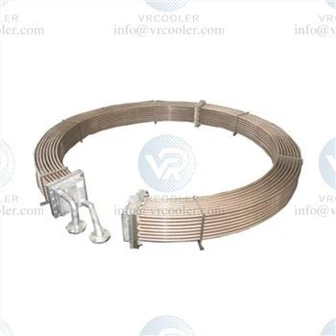
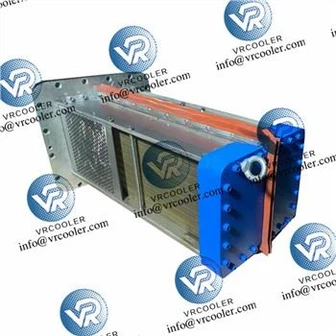
C3/C4 Nuclear Power Main Pump Oil Cooler: The Temperature Control Core For Safe Operation Of Nuclear Power
Core positioning and functional value
The nuclear power main pump is the only high-speed rotating core equipment in the primary circuit, which needs to drive high-temperature and high-pressure (about 15.5MPa), radioactive coolant circulation. Its motor bearings and mechanical seals generate a large amount of heat during high-speed operation. The core function of C3/C4 oil cooler is to provide forced cooling for lubricating oil, maintain a stable range of oil film temperature of 32-40 ℃, and ensure the thermal stability and sealing of the lubricating film.
Key Function Disassembly
Ensure lubrication performance: Control the lubricating oil temperature at the design threshold to avoid a decrease in oil viscosity and oil film rupture caused by high temperatures, prevent dry friction between the bearing and rotor, and extend the service life of the main pump bearings.
Maintaining sealing reliability: Stable oil temperature can avoid thermal deformation and aging of mechanical seal materials, reduce the risk of coolant leakage in the primary circuit, and ensure the integrity of nuclear island radioactive containment.
Adapt to extreme operating conditions: Continuously provide cooling capacity under design basis events (DBE) such as full power, load fluctuations, and thermal transients, and reserve safety redundancy for extreme scenarios such as LOCA (loss of coolant accident).
Linkage system protection: Cooperate with the main pump temperature measuring element, liquid level switch, etc. to monitor the oil temperature and level in real time, provide alarm signals for the control system, and achieve early warning of faults.
Structural principles and mainstream forms
Core structure composition
The C3/C4 oil cooler has a shell and tube structure as its core, mainly including a cylinder, upper and lower end covers, heat exchange tube bundles, baffles, inlet and outlet flanges, and discharge/exhaust ports
Pipeline: Equipment cooling water (RRI) is used to exchange heat with lubricating oil on the shell side through stainless steel heat exchange tubes, with a flow rate controlled at 1.5m/s, to enhance turbulence intensity and strengthen heat transfer;
Shell side: lubricating oil flows through the baffle to change the flow direction, prolong the residence time, and improve heat transfer efficiency;
Auxiliary components: equipped with temperature measurement interface (real-time monitoring of oil temperature), drain outlet (removal of impurities in oil), exhaust outlet (removal of system air), and drainage and oil replenishment pipeline (adapted for system maintenance).
Mainstream structural types
Fixed tube plate: With a simple structure and low cost, the heat exchange tubes are fixedly connected to the tube plate, suitable for conventional working conditions with small temperature differences. However, the tube bundle cannot be disassembled, making cleaning and maintenance difficult;
Floating head type: The tube bundle can be freely extended and withdrawn as a whole, making it easy to thoroughly clean and maintain. It is suitable for the maintenance needs of nuclear islands after long-term operation and is the mainstream selection of C3/C4 oil coolers;
U-shaped tube type: The heat exchange tube is a U-shaped structure that can eliminate the influence of thermal expansion and is suitable for high temperature and temperature difference conditions. However, the cleaning inside the tube is difficult and suitable for special load scenarios.

Key technical characteristics
1. Efficient heat transfer design
Adopting a counterflow layout, the cold and hot fluids flow in opposite directions, maximizing the average temperature difference, and increasing heat transfer efficiency by 20% to 30% compared to downstream. It can achieve a rapid decrease in oil temperature from 80 ℃ to below 40 ℃;
Optimize the spacing between baffles and the arrangement of tube rows to enhance the turbulence intensity of the lubricating oil on the shell side. The total heat transfer coefficient can reach 500-800W/(㎡·℃), meeting the high load heat transfer requirements of nuclear islands;
Reserve 10% heat exchange area redundancy to offset the impact of dirt (oil and water) on heat exchange efficiency during long-term operation, ensuring stable performance throughout the entire lifecycle.
2. Nuclear grade reliability assurance
Material corrosion resistance: The heat exchange tubes are made of 06Cr19Ni10 stainless steel, and the shell is lined with carbon steel and stainless steel, which can withstand corrosion in the nuclear island environment and avoid the risk of oil contamination and leakage;
Sealing and leakage prevention: The end cap is connected with high-strength flanges and equipped with oil resistant and high-temperature resistant fluororubber sealing rings to prevent the interconnection of lubricating oil and cooling water, which meets the requirements of nuclear island radiation protection;
Structural anti vibration: By optimizing the support of the tube bundle and the fixing method of the baffle plate, it adapts to the vibration environment during the operation of the main pump, avoiding the loosening and fatigue damage of the heat exchange tubes;
Safety redundancy design: Some models adopt a dual structure, which can achieve single operation and single backup, with a switching time of ≤ 10 minutes, meeting the requirements of continuous operation of the nuclear island.
3. Adaptability and compatibility
Compatible with mainstream nuclear power main pump models (such as AP1000, Hualong One, CANDU, etc.), the heat exchange area and interface size can be customized according to the main pump bearing load and oil system flow rate;
Adapt the parameters of the cooling water system (RRI) for nuclear island equipment, control the temperature rise of the cooling water within 5 ℃, and avoid thermal shock to the RRI system;
Support linkage with the main pump control system (DCS/PLC) to achieve remote monitoring and automatic adjustment of parameters such as oil temperature, oil pressure, and flow rate.
Application scenarios and operation maintenance
Typical application scenarios
The C3/C4 nuclear power main pump oil cooler is widely used in third-generation/fourth generation pressurized water reactor nuclear power plants, with core scenarios including:
Normal operating conditions: When the main pump is running at full power, continuously cool the motor bearings and mechanical seal lubricating oil to maintain system stability;
Load fluctuation scenario: During the process of nuclear power load rise and fall, start and stop, quickly respond to changes in oil temperature to avoid thermal failure of the oil film;
Thermal transients and accident conditions: In extreme scenarios such as LOCA and sudden temperature rise in the primary circuit, maintain cooling capacity to buy time for emergency response;
Maintenance scenario: When the main pump is shut down for maintenance, cooperate with the system to drain and replenish oil, and achieve independent cleaning and testing of the oil cooler.
Key points of operation and maintenance
Daily inspection: Monitor parameters such as oil temperature, oil pressure, water flow rate, and water temperature difference. If the outlet oil temperature deviation exceeds ± 2 ℃, it should be promptly investigated;
Regular cleaning: Disassemble the tube bundle every 6-12 months and use high-pressure water or chemical cleaning agents to remove scale on the tube side and oil on the shell side. The fouling coefficient should be controlled within 0.0004m ² · K/W;
Sealing inspection: Check the end cap sealing ring and flange sealing surface annually, replace aging components, and conduct a water pressure test at 1.25 to 1.5 times the working pressure to ensure no leakage;
Troubleshooting: When the oil temperature remains consistently high, priority should be given to checking for blockages in the cooling water volume, water temperature, and heat exchange tubes; When the oil is contaminated, it is necessary to replace the oil and clean the system in a timely manner.
The C3/C4 nuclear power plant's main pump oil cooler, as the "temperature control core" of the nuclear island, is a key piece of equipment ensuring the safe operation of the main pump and maintaining the integrity of the reactor coolant system. Its high-efficiency heat transfer, nuclear-grade reliability, and strong adaptability directly support the long-term stable power generation of nuclear power plants. With the large-scale promotion of third-generation nuclear power and the development of fourth-generation nuclear power technology, oil coolers will be upgraded towards higher efficiency, intelligence, and longer lifespan, providing a more solid guarantee for the safe and efficient operation of nuclear power plants.