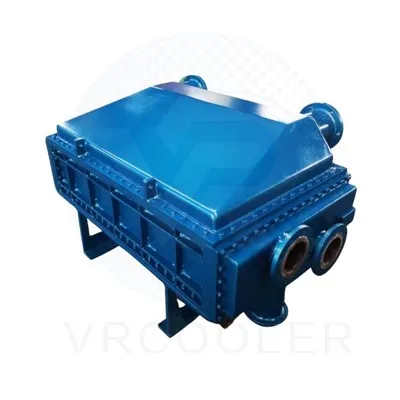
Box Cooler To Cool Boat Diesel Engines | VRCOOLER Marine
Traditional marine engine cooling systems draw raw seawater directly into the engine room through sea chests, strainers, and inboard shell-and-tube coolers. In harsh coastal, shallow-river, and harbor environments, this traditional setup introduces severe operational vulnerabilities:
Operational Vulnerabilities of Inboard Raw Water Cooling:
Silt & Sand Abrasive Blockage: In shallow rivers, dredging zones, and sandy coastal estuaries, inboard seawater pumps suck in sand, mud, and plastic debris, rapidly clogging strainers and destroying pump impellers.
Corrosive Seawater Flooding Hazards: High-pressure raw seawater piping, valves, and heat exchanger gaskets inside the hull are subject to continuous vibration and corrosion, posing severe vessel flooding hazards if a pipe ruptures.
Marine Biofouling & Barnacle Encrustation: Raw seawater stagnant in inboard coolers promotes rapid growth of mussels, barnacles, and algae, causing unexpected thermal overheating and engine emergency shutdowns.
High Maintenance Overhead: Cleaning clogged sea strainers, replacing eroded zinc anodes, and overhauling damaged raw water pumps incur constant drydock and maintenance expenses.

At VRCOOLER, we utilize computational fluid dynamics (CFD) modeling of sea chest waterflow combined with specialized marine non-ferrous metallurgy to build box coolers engineered for decades of maintenance-free service:
1. Superior Cupro-Nickel U-Tube Matrix (CuNi 90/10 & 70/30)
Seamless CuNi 90/10 (UNS C70600): Formulated with 90% copper, 10% nickel, and balanced iron/manganese additives, creating a natural, self-healing cuprous oxide (Cu2O) protective film that resists chloride pitting and stress corrosion in high-salinity seawater.
Natural Biofouling Resistance: The controlled micro-leaching of natural copper ions from the alloy surface prevents marine algae, barnacles, and mollusks from anchoring onto the tube bundle.
Curved U-Tube Geometry: Seamless U-tubes allow unrestricted axial thermal expansion and contraction during engine load swings, completely eliminating mechanical stress on the tubesheet.
2. Impressed Current Anti-Fouling (ICAF) & Specialized Coatings
Integrated ICAF Copper Anode Arrays: Optional copper and aluminum sacrificial anode bars mounted beneath the box cooler release trace copper ions directly into the sea chest flow stream, providing 100%100% biological antifouling protection even when the vessel is moored in warm harbor waters.
Thermally Conductive Anti-Fouling Coatings: High-durability baked polymer or silicone-based anti-adhesion coatings applied to the outer tube surfaces to resist heavy marine fouling without reducing heat transfer rates.
3. Integrated Dual-Circuit (HT / LT) Split-Core Options
High-Temperature (HT) Circuit: Cools cylinder liner jacket water (80°C−90°C).
Low-Temperature (LT) Circuit: Integrates charge air intercooler and transmission gearbox oil cooling (45°C−55°C) into a single stepped box cooler assembly, maximizing hull sea chest space efficiency.
4. Heavy-Duty Steel Mounting Top Plates & Gasket Isolation
Marine-Grade Carbon Steel or Stainless Flanges: Heavy CNC-machined top mounting plates bolt directly to the vessel's hull sea chest coaming.
Galvanic Isolation Gaskets & Sleeves: High-dielectric synthetic gaskets and bolt isolators prevent galvanic interaction between the cupronickel tubesheet and the steel vessel hull.
A VRCOOLER marine box cooler operates through two natural hydrodynamic heat transfer mechanisms:
Forced Convection During Vessel Cruising: As the boat moves through the water, dynamic pressure forces cold seawater into the bottom sea chest inlet scoops, flowing upward through the cupronickel U-tube bundle and exiting through side/top hull louvers.
Thermal Siphon / Natural Convection During Harbor Mooring / Stationary Work: When the vessel is stationary or maneuvering at idle, hot engine coolant inside the U-tubes heats the surrounding seawater in the chest. The warm seawater rises naturally (thermal siphon effect), drawing cold, dense seawater in from the bottom grids to maintain continuous cooling.
VRCOOLER boat diesel box coolers provide mission-critical closed-circuit cooling across diverse vessel types:
Harbor & Ocean-Going Tugboats: Heavy-duty propulsion cooling delivering full bollard pull power in silt-heavy harbor waters without strainer maintenance.
Inland Cargo Barges & Push Boats: Reliable shallow-draft operation over sandbars and muddy riverbeds where open-loop cooling systems fail.
Commercial Fishing Vessels & Trawlers: Continuous, maintenance-free cooling during long offshore fishing voyages without fear of marine life clogging.
Dredgers & Offshore Supply Vessels (OSV): High-reliability cooling in heavy silt, sand slurry, and high-debris marine environments.
Passenger Ferries & Crew Transfer Vessels (CTV): Compact stepped box coolers installed in catamaran hulls providing silent, vibration-free passenger transit.
Shipyards, fleet superintendents, and naval architects partner with VRCOOLER for uncompromised marine reliability:
Elimination of Engine Room Flooding Risks: Keeping raw seawater completely outside the ship's hull eliminates high-pressure raw water piping, vulnerable sea valves, and pump seal ruptures.
1:1 Drawing-Based Replacement Fit: We engineer exact dimensional replacement box coolers matching existing sea chest bolt pitch circles, coaming heights, and piping nozzle connections for drydock refits.
Zero Seawater Pump Power Consumption: By utilizing natural vessel flow dynamics and thermal siphoning, box coolers eliminate the electrical power draw of large auxiliary seawater pumps.
Certified Marine Class Compliance: Full material traceability (MTC 3.1/3.2), weld inspection records, and hydrostatic pressure testing witnessed by ship classification surveyors.
Frequently Asked Questions (FAQ)
Q1: What is the main operational advantage of a box cooler over a keel cooler or shell-and-tube cooler?
A: Unlike external keel coolers mounted outside the hull bottom (which are vulnerable to damage from floating debris, grounding, and drydock blocking), box coolers are protected completely inside the vessel's sea chest behind heavy steel hull grids. Unlike inboard shell-and-tube coolers, box coolers eliminate raw seawater pumps, strainers, and inboard salt water piping.
Q2: How does the box cooler maintain cooling when the boat is stationary or idling?
A: When the vessel is stationary, heat from the U-tubes warms the seawater inside the sea chest. Because warm water is less dense, it rises naturally and exits through the upper sea chest louvers, creating a continuous thermal siphon convection current that draws cool, dense seawater in through the bottom hull grid.
Q3: What is the purpose of the Impressed Current Anti-Fouling (ICAF) system?
A: In warm tropical harbors or during prolonged vessel mooring, marine larvae (barnacles and algae) can settle inside the sea chest. An ICAF system utilizes low-voltage electrical current across sacrificial copper anodes to release trace copper ions into the sea chest, completely preventing marine growth without harming the environment.
Q4: What information is needed to size a replacement box cooler for a boat diesel engine?
A: Please provide the engine model and rated kW/HP output, heat rejection figures (for jacket water and charge air/oil circuits), coolant flow rates and inlet/outlet temperatures, sea chest cavity dimensions (length, width, depth), design seawater temperature, and vessel cruising speed.
Request a Marine Boat Diesel Box Cooler Quotation
Protect your vessel from seawater flooding hazards, eliminate sea strainer maintenance, and achieve continuous propulsion reliability with VRCOOLER.
Explore VRCOOLER Marine Cooling Solutions: Visit www.vrcooler.com
Submit Your Marine Engineering RFQ: Contact our marine heat transfer division directly at [email protected] with your vessel drawings, engine datasheets, and sea chest specifications.