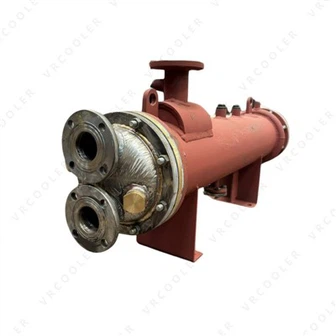
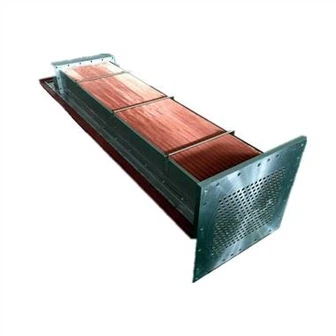
Application Of Dry Cooler in Motor Journal Bearing Oil Station
Dry cooler is intended to ensure heat removal from the oil station used for lubrication of electric motor journal bearings
Application of Dry Cooler in Motor Journal Bearing Oil Station
Dry Cooler is a kind of cooling equipment that does not need cooling water to directly participate in heat exchange, and it mainly realizes heat transfer through air flow, which is suitable for the scenario of limited water source or high cleanliness requirement of cooling medium. In the oil station system for lubricating motor journal bearings, the core role of the dry cooler is to efficiently remove the heat generated by the lubricant due to friction, eddy currents, etc., to maintain a stable oil temperature and ensure the safe operation of the bearings.
Working Principle of Dry Cooler
Heat Exchange Mechanism
In the oil station system, the hot oil returned from the bearings is pumped to the inside of the tube bundle (or plate) of the dry cooler.
The cooler is externally equipped with a fan or blower, which forcibly drives the ambient air to flow through the outside of the tube bundle, transferring the heat from the oil to the air through the thermal conductivity of the metal walls.
The cooled oil is returned to the oil station for recycling, while the warmed air is discharged directly into the environment.
Key Components
Heat exchanger tube bundle / plate: made of copper, stainless steel or aluminum alloy, the surface can be designed with fins to increase the heat exchange area on the air side and enhance the cooling efficiency.
Fans: Axial or centrifugal fans are selected according to cooling requirements to provide directional air flow.
Frame and cover: Support the structure and protect the internal components from dust and debris.
Application Scenario
High-speed motor journal bearings: such as turbine generators, large pump motors, etc. The bearings generate a lot of heat from friction and require continuous heat dissipation.
Closed or semi-closed oil station system: avoiding lubricant contact with the outside world and oxidization, and at the same time maintaining stable oil quality through dry coolers.
Mobile or temporary equipment: such as electric motors of emergency power generation equipment, which can realize heat dissipation without fixed water-cooling facilities.