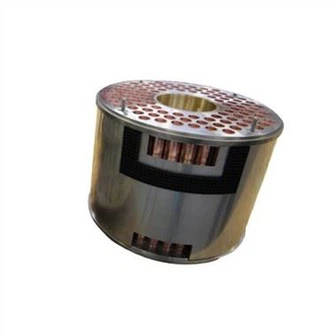
Application Of Box-Type Coolers On Small And Medium-Sized Vessels
Application of Box-Type Coolers on Small and Medium-Sized Vessels
Small and medium-sized vessels (such as fishing boats, yachts, workboats, and short-haul transport ships) feature simple propulsion systems. The application of box-type coolers focuses on the following three key heat dissipation requirements:
Diesel engine lubricating oil cooling: During operation, lubricating oil temperatures in diesel engines rise to 80-120°C. Box-type coolers reduce oil temperatures to 50-70°C through heat exchange between seawater/freshwater circulating inside the tubes and the lubricating oil outside the tubes. This prevents lubricating oil viscosity reduction and lubrication failure, protecting critical engine components like the crankshaft and pistons.
Diesel engine liner water cooling: Engine liners require freshwater circulation for cooling (to prevent seawater corrosion). Acting as a "freshwater-seawater" heat exchanger, the box-type cooler cools the liner-heated freshwater (approx. 90-100°C) to 70-80°C before returning it to the liner circuit, preventing liner overheating and deformation.
Generator Cooling: Generators on small and medium-sized vessels are predominantly diesel-powered. Heat generated by the stator and rotor must be dissipated via air or freshwater. Box-type coolers can directly cool the generator's circulating freshwater or the hot air expelled by the generator's cooling fan, maintaining the generator's operating temperature between 60-85°C.
Compared to shell-and-tube or plate-type coolers commonly used on large vessels, box-type coolers better suit the operational needs of small and medium-sized ships, offering three core advantages:
Compact size and easy installation: The box-type structure features high integration, with heat exchange tubes and fins arranged compactly. It occupies only 60%-70% of the space required by traditional shell-and-tube coolers, allowing flexible installation in tight corners of ship engine rooms without needing large maintenance clearances.
Vibration resistance and impact tolerance: Small and medium-sized vessels experience more frequent pitching and vibration during operation. The box-type cooler's housing features an integral welded structure, with tube sheets and heat exchange tubes connected via "strength expansion + sealing weld." This design provides strong resistance to vibration fatigue and minimizes the risk of tube sheet leakage.
Easy Maintenance: Removable access panels on the housing sides allow direct cleaning of oil residue and marine organisms (such as shellfish and algae) from the heat exchange tubes without disassembling the entire unit. This design aligns with the routine maintenance capabilities of crew members on small and medium-sized vessels.