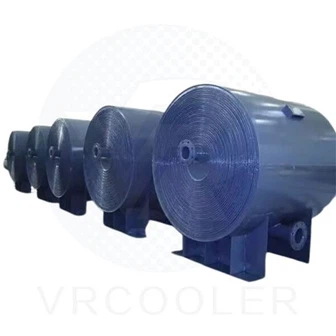
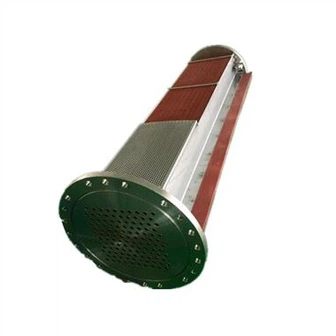
Advantages Of Air Compressor Aftercoolers
Advantages of Air Compressor Aftercoolers
When compressed air is compressed within an air compressor, its temperature rises sharply due to the conversion of mechanical energy into internal energy (typically reaching 80-150°C, or even higher). If this high-temperature air enters downstream systems directly, it can cause severe damage to equipment and processes. The core function of an aftercooler is to address this issue:
Preventing Equipment Damage from High Temperatures
High temperatures accelerate the aging of seals and deformation of rubber components in downstream equipment (such as air receivers, dryers, filters, pneumatic valves, and cylinders), shortening equipment lifespan. Aftercoolers reduce compressed air temperature to below 40°C (close to ambient temperature), minimizing "thermal shock" to equipment at the source and lowering maintenance frequency and replacement costs.
Preventing Process Temperature Exceedance
Certain industries (e.g., food processing, pharmaceutical manufacturing, electronics production) impose strict compressed air temperature limits (e.g., ≤35°C). Excessive heat compromises product quality (e.g., food spoilage, faulty electronic component soldering). Aftercoolers precisely regulate air temperature to ensure process compliance.
Compressed air contains significant water vapor (derived from ambient air), and its "saturated moisture content" decreases sharply with lower temperatures. Hot compressed air holds more moisture; when cooled, excess moisture condenses into liquid water (known as 'condensate'). Aftercoolers achieve "dewatering" through cooling, delivering two core benefits:
Reducing moisture damage to systems
Unseparated condensate entering pipelines and equipment with compressed air causes:
- Corrosion and blockages on pipe walls, reducing airflow efficiency;
- Water accumulation inside pneumatic components (e.g., solenoid valves, cylinders), leading to operational sticking and failures;
- In applications like spraying or pneumatic tools, moisture causes coating blistering and accelerated tool wear.
Aftercoolers are typically paired with "air-water separators," which remove over 80% of condensate from compressed air, mitigating moisture damage at the source.
Reducing Downstream Dryer Load
Dryers (adsorption/refrigeration types) perform "deep dehydration" of compressed air. If air entering the dryer is hot and highly saturated with moisture, it significantly increases the dryer's energy consumption (e.g., adsorption dryers require frequent regeneration, refrigeration dryers need more refrigerant). The aftercooler pre-separates most moisture, reducing the dryer's processing load. This extends the adsorbent life (for desiccant dryers) or lowers refrigeration energy consumption (for refrigeration dryers), indirectly reducing system operating costs.
Although aftercoolers consume a small amount of energy (e.g., circulating water for water-cooled types, fan electricity for air-cooled types), their overall "energy-saving effect" far outweighs their own energy consumption when viewed from a system-wide perspective:
Reducing the "specific power" of compressed air
The "specific power" of compressed air (electricity required to produce 1m³/min) correlates with air density-lower temperatures increase air density (greater mass per volume). After cooling, the same volume of compressed air contains more "effective air volume." This means compressors deliver more usable air at the same energy input, indirectly lowering energy costs per unit of air.
Reducing "Dead Space" in Air Receivers
When hot air enters the receiver without cooling, moisture naturally condenses as the temperature drops. This condensed water occupies the receiver's effective volume (reducing its actual storage capacity). The aftercooler separates moisture early, ensuring the receiver volume is filled with "effective air." This enhances storage efficiency and reduces frequent compressor starts and stops (which consume more energy during the start-stop process).