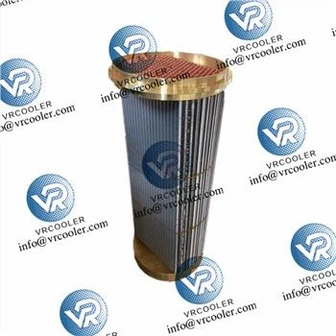
Dry Coolers in Auxiliary Cooling Systems Of Power Plants
The stable operation of power plants relies on numerous auxiliary devices that generate heat during operation (such as friction heat and process dissipation). This heat must be cooled via dry coolers to maintain normal operating conditions. Primary applications include:
Turbine Auxiliary Cooling
Cooling turbine lubrication oil systems: During high-speed turbine operation, friction between bearings and shaft journals elevates lubricant temperature (typically controlled between 35-55°C). Dry coolers use air to cool hot oil, preserving lubricity and viscosity.
Cooling the turbine's hydraulic control system: Turbine speed regulation and valve control rely on high-pressure hydraulic oil. Excessive oil temperatures cause control system response delays. Dry coolers stabilize hydraulic oil temperatures between 40-60°C.
Generator Auxiliary Cooling
Cooling generator air coolers (air-to-air coolers): Some small-to-medium generators employ air cooling. Hot air must first pass through dry coolers for cooling before circulating into the generator to dissipate stator and rotor heat.
Cooling generator seal oil systems: Hydrogen-cooled generators require seal oil to isolate hydrogen from air while absorbing friction heat from sealing points. Dry coolers maintain seal oil temperatures between 30-45°C to prevent oil film failure.
Cooling for Other Auxiliary Systems
Transformer Cooling Oil System: During operation, insulating oil in oil-immersed transformers absorbs heat from the core and windings. Dry coolers can replace the "air cooling" module in traditional Oil-Filled Air-Fired (OFAF) systems, directly cooling the hot oil.
Bearing Lubricant Cooling for Auxiliary Equipment (Pumps, Fans, etc.): Bearing lubricants for circulating water pumps, induced draft fans, and similar equipment require continuous cooling. Dry coolers can be installed locally adjacent to the equipment, simplifying piping design.
Cooling for Desulfurization and Denitrification Auxiliary Systems: Process water in desulfurization systems and ammonia water diluents in denitrification systems, if overheated, can impair desulfurization efficiency (e.g., gypsum crystallization) or denitrification catalyst activity. Dry coolers can cool these fluids to the process-required range of 25-40°C.
The core of dry coolers is the "tube-fin heat exchange structure," which achieves process fluid cooling through indirect heat transfer. The specific process is as follows:
Structural Components: Primarily consists of a heat exchange tube bundle (internal process fluid flow), fins (enhance air-side heat transfer), fans (forced ventilation), frame, and guide hood. The tube bundle is typically made of copper or stainless steel (corrosion-resistant, excellent thermal conductivity), with aluminum fins welded externally (increase air contact area, typically providing 5-10 times greater heat transfer area than bare tubes).
Heat Exchange Process:
High-temperature process fluid (e.g., thermal oil, hot process water) enters through the tube bundle inlet. As it flows within the tubes, heat is transferred through the tube walls to the external fins.
Fans (classified as "suction-type" or "blower-type") forcibly draw ambient air over the fin surfaces. The air absorbs heat from the fins, increases in temperature, and exits the unit.
The process fluid inside the tubes cools down due to heat transfer and exits the tube bundle, returning to the auxiliary system for recirculation.
Temperature Control Logic: Some dry coolers are equipped with temperature sensors and variable-frequency fans. When the outlet fluid temperature exceeds the setpoint, the fan speed automatically increases to enhance cooling capacity. If the temperature is too low (e.g., during winter), the fan speed is reduced or the fan is stopped to prevent excessively low fluid temperatures from affecting system operation (e.g., increased lubricating oil viscosity).
Compared to traditional "water-cooled + cooling tower" auxiliary cooling solutions, dry coolers offer the following distinct advantages in power plant applications:
Significant Water Savings
Relying entirely on air cooling eliminates the need for cooling water consumption (wet cooling systems require periodic replenishment to compensate for evaporation and drift losses). This makes them particularly suitable for power plants in water-scarce regions like Northwest and North China, reducing auxiliary system water consumption by over 90% and aligning with national "water conservation and emission reduction" policies.
Low O&M Costs
Eliminates cooling water circulation systems (e.g., pumps, cooling towers, water treatment equipment), reducing equipment quantity and failure points;
Requires no water treatment chemicals like corrosion inhibitors or scale inhibitors, preventing pipe scaling and corrosion while extending heat exchanger tube bundle lifespan (typically 10-15 years).
Strong Environmental Adaptability
Stable operation from -30°C (requires anti-freeze measures like electric tracing) to 45°C ambient temperatures, with fan speed adjustment accommodating seasonal temperature variations;
Zero wastewater discharge (wet cooling systems require partial discharge of concentrated circulating water), eliminating need for wastewater treatment facilities and reducing environmental pressure.
Flexible Installation
Relatively compact size allows outdoor vertical or horizontal installation (e.g., rooftops, open areas near equipment), minimizing factory space requirements. Particularly suitable for retrofitting auxiliary systems in existing plants (no need to re-dig cooling water pipelines).