Wide Temperature Range Dry Cooler Are Used For MTU 20V4000L64FB Biogas Generator
Core Architecture: Collaborative Empowerment of Dry Cooling and Composite Cooling Systems
MTU 20V4000L64FB adopts a composite cooling architecture of "closed cycle+two-stage high-temperature intercooler+wide temperature dry cooler", completely breaking the limitations of traditional cooling methods in environmental adaptability. Unlike the water chiller used for gas drying in biogas treatment, the dry cooler of this model is specifically designed for the engine's heat dissipation needs, undertaking the final heat dissipation task of cylinder liner water and intermediate cold water. It is the terminal core of the overall thermal management system, and its working principle is based on forced convection heat exchange between closed-loop fluid and ambient air, without relying on water evaporation, fundamentally solving many pain points of traditional water cooling systems.
Among them, the secondary high-temperature intercooler system and the wide temperature dry cooler form an efficient synergy: the primary intercooler first cools the pressurized biogas to increase gas density and optimize combustion efficiency; The secondary intercooler further reduces the intake temperature and engine heat load, while the cooled intercooler water and cylinder liner water enter the wide temperature dry cooler together, and exchange heat with the ambient air through a finned tube heat exchanger to achieve rapid heat dissipation. This layered cooling design not only ensures the intake quality of the engine, but also accurately controls the operating temperature of the entire machine, laying the foundation for full power operation of the unit.
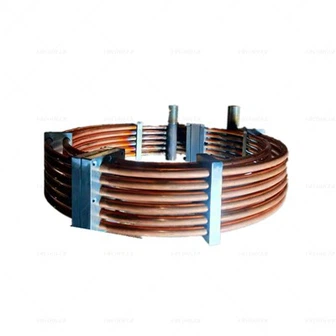
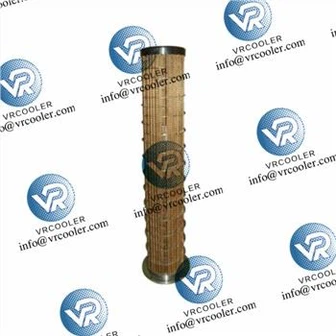
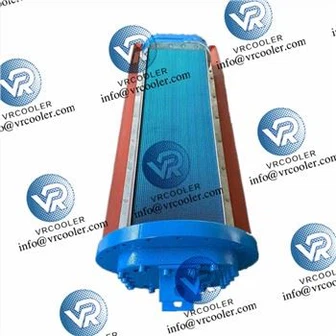
It is worth noting that the wide temperature dry cooler of this model adopts a finned tube heat exchanger composed of copper tubes and aluminum fins, and the shell is made of highly resistant anti-corrosion materials. After salt spray testing, it has been verified that it can resist corrosive media in industrial environments and is suitable for the common complex working conditions of biogas power plants. At the same time, combined with low-noise EC axial flow fans and low-power TEFC motors, it effectively reduces operating noise and energy consumption while improving heat dissipation efficiency, balancing practicality and economy.
Core advantage: Dual breakthrough of wide temperature adaptation and high efficiency and energy saving
The most prominent advantage of this dry cooler is its wide temperature range adaptation. Its design can cover extreme environmental temperature ranges from -20 ℃ to+45 ℃, ensuring that the unit can achieve full power output under different climatic conditions. In the cold northern regions, dry coolers can avoid coolant freezing through intelligent temperature control systems, without the need for additional heating devices, ensuring smooth start-up and stable operation of the unit; In the high temperature and high humidity environment of the south, its efficient heat dissipation capability can effectively suppress engine overheating, avoid power attenuation and component wear caused by high temperature, and greatly improve the operational stability of the unit.
Compared to traditional water cooling systems, the MTU 20V4000L64FB is equipped with a wide temperature dry cooler that has significant energy-saving and water-saving advantages. Dry cooling does not require the consumption of a large amount of cooling water, nor does it require regular replenishment of water sources or replacement of fillers. It not only saves water resource consumption, but also reduces scale cleaning, pipeline maintenance and other operation and maintenance work. According to calculations, it can reduce operation and maintenance costs by more than 25%. At the same time, the closed-loop design avoids equipment damage and environmental pollution risks caused by cooling water leakage, which meets the core requirements of "clean and low-carbon" biogas power generation.
In addition, the dry cooler adopts a modular design, which facilitates quick maintenance and component replacement. Coupled with the 84000 hour overhaul interval of MTU 4000 series units, it further extends the service life of the whole machine and reduces the overall life cycle cost. Its intelligent control function can automatically adjust the fan speed according to changes in environmental temperature and unit load, achieving on-demand heat dissipation while ensuring cooling effectiveness and minimizing energy consumption, making unit operation more economical.

Scenario adaptation: Empowering stable operation of biogas power generation in multiple fields
The scenario of biogas power generation often faces the problems of complex environment and variable working conditions - agricultural biogas stations are mostly located in the suburbs with large temperature fluctuations; Industrial biogas stations may face harsh conditions such as high temperatures and corrosive gases; Municipal sludge biogas treatment requires long-term continuous operation of the unit, with extremely high stability requirements. MTU 20V4000L64FB, with the advantage of a wide temperature dry cooler, has successfully adapted to various biogas power generation scenarios, providing reliable support for energy conversion in different fields.
In the agricultural waste biogas power generation project, this model can adapt to extreme temperature changes in the field. Whether it is severe cold in winter or scorching heat in summer, it can stably process biogas generated from straw, livestock manure, etc., achieving the goal of "turning waste into treasure". It not only solves the problem of agricultural waste treatment, but also provides clean electricity for rural areas. In industrial biogas applications, its anti-corrosion design can resist the corrosive components in industrial waste gas, and the dry cooling system avoids the impact of water quality problems on equipment, ensuring long-term stable operation of the unit and helping industrial enterprises achieve energy self-sufficiency and environmental standards.
At the same time, as an important model of MTU 4000 series, this generator also has the ability of hydrogen co combustion, which can adapt to the future development trend of hydrogen co combustion and further enhance the environmental friendliness of energy utilization. The design of its wide temperature dry cooler also provides a guarantee for heat control after hydrogen mixed combustion, making the unit more flexible and forward-looking in energy transformation, in line with the trend of global energy structure upgrading.
Technical value: leading the upgrade direction of biogas power generation equipment
The application of MTU 20V4000L64FB biogas generator to a wide temperature range dry cooler not only solves the industry pain point of unstable operation of traditional units in extreme environments, but also leads the technological upgrading direction of biogas power generation equipment. Currently, biogas power generation is developing towards high efficiency, stability, and low carbonization. As the "lifeline" of the unit, the performance of the cooling system directly determines the operating efficiency and service life of the unit.
The dry cooling technology of this model integrates the advantages of wide temperature adaptation, energy and water conservation, and easy maintenance, which not only meets the operational needs of different regions and scenarios, but also reduces the operation and maintenance costs and environmental pressure of users. It is highly compatible with the MTU 4000 series' product concept of "efficiency, reliability, and sustainability". Data shows that the electrical efficiency of MTU 4000 series biogas generators can reach over 43%, and the efficient heat dissipation of the wide temperature dry cooler is an important support to ensure the stable performance of this energy efficiency level.
In the context of energy transition, the efficient utilization of clean and renewable energy has become a top priority. The MTU 20V4000L64FB biogas generator, with the core empowerment of a wide temperature range dry cooler, breaks the limitations of environmental conditions on biogas power generation, improves energy conversion efficiency, and injects new impetus into the large-scale development of the biogas power generation industry. In the future, with the continuous iteration of technology, MTU will continue to deeply cultivate the field of renewable energy, and through innovation and upgrading of core technologies, launch more power generation equipment that is suitable for complex working conditions, both efficient and environmentally friendly, to help achieve the global "dual carbon" goal.