Why Do Gas-fired Generators Require Heat Recovery?
Why do gas-fired generators require heat recovery?
Gas-fired generators (such as natural gas generators) operate by using the thermal energy generated from burning natural gas to drive internal combustion engines or gas turbines, which in turn drive generators to produce electricity. However, in this process, only a small portion of the energy released by the fuel is converted into electrical energy, with the majority being wasted as thermal energy:
Low power generation efficiency: The power generation efficiency of small gas-fired generators (such as those used in distributed power plants) typically ranges from 25% to 35%, while larger units (such as combined-cycle power plants) can only achieve 40% to 50%.
Widespread sources of waste heat: The unused energy primarily exists in three forms:
Exhaust heat: High-temperature exhaust gases (temperatures up to 300-600°C) emitted by engines or gas turbines, carrying approximately 30%-40% of the total fuel energy;
Cylinder jacket water heat: Hot water (approximately 80-110°C) in the engine cylinder cooling system, carrying approximately 20%-25% of the energy;
Lubricating oil waste heat: heated engine oil in the lubrication system (temperature approximately 60-90°C), carrying approximately 5%-10% of the energy.
If not recovered, this heat is directly emitted into the environment through chimneys and cooling systems, resulting in significant energy waste.

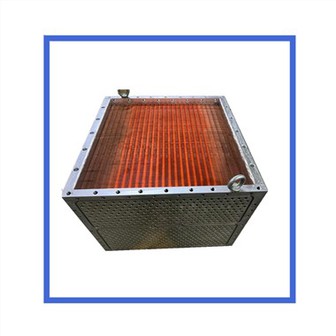
Through heat recovery devices (such as waste heat boilers, heat exchangers, absorption chillers, etc.), the aforementioned waste heat can be converted into usable energy (such as hot water, steam, or cold air), thereby increasing the overall energy utilization rate of gas turbines from 30%-50% to 80%-90%.
The recovered waste heat can be flexibly utilized according to demand to meet diverse energy needs:
Heating: Produce hot water or steam for industrial processes (such as food processing, chemical reaction heating), building heating, and domestic hot water;
Cooling: Convert waste heat into cooling capacity via absorption chillers for workshop air conditioning, cold storage, etc.;
Secondary power generation: Utilizing high-temperature exhaust gas to drive a waste heat boiler to produce steam, which then drives a steam turbine to generate electricity (i.e., "gas-steam combined cycle"), further increasing power generation.
Under the same total energy consumption, heat recovery reduces fuel consumption per unit of output, thereby decreasing emissions of pollutants such as carbon dioxide (CO₂) and nitrogen oxides (NOₓ).