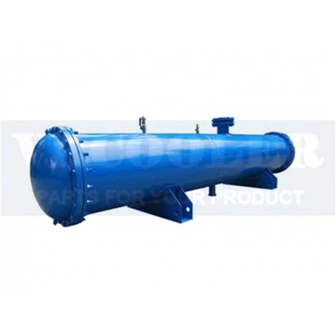
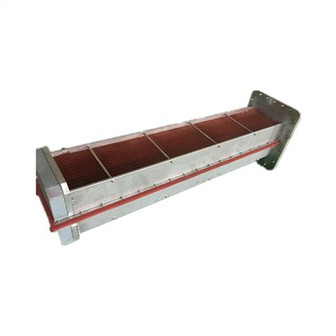
Why Are High And Low Temperature Dry Coolers Commonly Used in The Steel Industry
一, Cooling pain points in the steel industry (why do we have to use dry coolers)
Extreme high temperature and continuous high heat load
Blast furnace, converter, continuous casting, hot rolling and other processes have extremely high temperatures (molten steel 1500-1600 ℃, flue gas 800 ℃+), and equipment and media need to continuously dissipate heat.
Production runs continuously 24/7, and the cooling system must be highly reliable and uninterrupted, otherwise it will directly lead to production stoppage, equipment burnout, or product defects.
Extreme water scarcity
Traditional open cooling towers have high evaporation and discharge losses (about 5-8%/cycle), and steel mills consume a huge amount of water, making it difficult to support water scarce areas.
Environmental protection and water conservation policies are becoming stricter, and it is necessary to significantly reduce the consumption of new water.
High dust and high corrosion environment
Dust, iron filings, and flue gas in the factory area are highly corrosive, and open systems are prone to scaling, blockage, and corrosion, resulting in a sudden drop in heat exchange efficiency, frequent maintenance, and short service life.
Multiple temperature zones and precise temperature control requirements
Different processes have significant differences in cooling temperature requirements:
High temperature side: hydraulic oil, lubricating oil, flue gas, hot blast furnace cooling (60-120 ℃)
Low temperature side: rolling mill roller, electrical cabinet, instruments, hydraulic station (30-45 ℃)
Temperature fluctuations can directly affect the quality of steel (cracks, uneven microstructure) and equipment life.
二, The core advantages of high and low temperature dry coolers (why are steel mills the first choice)
1. Ultimate water-saving (core advantage)
Dry cooling: using air as the cooling medium, without evaporation or discharge, with a water saving rate of over 90%, completely solving the problem of water shortage.
Comparison: Open cooling towers consume thousands to tens of thousands of tons of water annually; The dry cooler consumes almost zero water.

2. Closed loop, anti pollution and anti-corrosion
The cooling medium (water/ethylene glycol/oil) flows in a closed coil, completely isolated from external dust and smoke.
Eliminate scaling, blockage, and corrosion, with a long system life, low maintenance, and stable operation.
Adapt to the harsh environment of high dust and high corrosion in steel mills.
三. Dual working conditions of high and low temperatures, precise adaptation to the entire process
High temperature dry cooler:
Resistant to inlet temperatures of 60-120 ℃, specifically designed for cooling high-temperature media such as hydraulic oil, lubricating oil, flue gas, and hot air stoves.
High temperature resistant alloy/stainless steel coil is used to resist thermal deformation and aging.
Low temperature dry cooler:
Stable output of cooling medium at 30-45 ℃, used for temperature control of precision equipment such as rolling mills, motors, electrical cabinets, and instruments.
High temperature control accuracy ensures product quality and equipment safety.
A system covers the entire process of high and low temperature cooling, simplifying layout and reducing investment.
四. High reliability and continuous operation
Simple structure (coil+fan), no water pump, no spray, no complex water treatment, extremely low failure rate.
Fan frequency conversion+multiple redundant designs, capable of 24/7 uninterrupted operation, meeting the continuous production requirements of steel plants.
In extreme high temperature environment, spray evaporation auxiliary cooling can be added to ensure full load and stable operation in summer.
五. Energy saving and low operation and maintenance costs
Only the fan consumes electricity, which is much lower than the water cooling+cooling tower+water pump system.
No water treatment agents, no sewage charges, no large amount of water replenishment, reducing annual operation and maintenance costs by over 60%.
During low temperatures in winter, natural air cooling can be used to further save energy.
六. Flexible adaptation and small footprint
Modular and open-air layout, no need for water tanks or pump rooms, greatly saving land occupation and infrastructure investment.
Flexible combination according to load, easy expansion.
1, Typical application scenarios (where to use in steel mills)
High temperature side: blast furnace/converter hydraulic oil cooling, rolling mill lubricating oil cooling, hot blast furnace flue gas cooling, gas cooling, transformer oil cooling.
Low temperature side: continuous casting machine crystallizer cooling, rolling mill roller cooling, electrical cabinet/PLC/frequency converter cooling, instrument air pre drying cooling, auxiliary cooling of circulating water system.
2. Summary
The high and low temperature dry cooler, with its characteristics of zero water consumption, enclosed anti pollution, high and low temperature dual adaptation, high reliability, and low operation and maintenance, perfectly solves the core pain points of water shortage, high dust, continuous production, and multi temperature zone cooling in the steel industry. It has become a standard solution for modern steel plant cooling systems and a key equipment for steel plants to achieve green, low-carbon, efficient, and stable production.