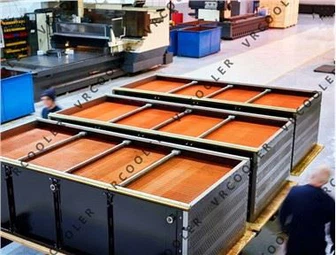
What Parts Of A Steam Turbine System Typically Use A Dry Cooler?
In a steam turbine installation, dry coolers are not used for condensing exhaust steam, but they are widely used for auxiliary cooling circuits. The most common systems that rely on dry coolers include:

1. Turbine Lube Oil Cooling System
Steam turbines require a continuous supply of clean, cool lubricating oil. Dry coolers remove heat from the lube oil circuit, helping maintain proper viscosity and protecting bearings and seals.
2. Generator Cooling (Hydrogen or Air-Cooled Generators)
Generators connected to steam turbines often have a closed-loop cooling water circuit. A dry cooler rejects the heat absorbed from the generator stator and rotor components.
3. Closed-Loop Cooling Water System (CLCW)
Many turbine plants use a closed cooling water loop that supplies cooling to various equipment. A dry cooler is often used as the primary heat rejection device for this loop, replacing or supplementing cooling towers, especially in water-scarce areas.
4. Condensate or Vacuum Pump Cooling
Some condensate pumps or vacuum system components require cooling. When the plant avoids water use, a dry cooler is used to dissipate the heat from these small auxiliary circuits.
5. Gearbox Oil Cooling (if a gearbox is installed)
In turbine-generator systems that use gearboxes, the gearbox lubrication oil often has its own dedicated cooling circuit. A dry cooler provides reliable heat rejection.
6. Control Oil or Hydraulic Oil Cooling
Steam turbines with hydraulic actuators for valves or governors use high-quality control oil. A dry cooler is often used to maintain stable oil temperature.
7. Auxiliary Air Compressors and Instrument Air Dryers
These supporting systems generate heat during operation. In dry-type plants, their cooling loop is often connected to the dry cooler.