What Is The Working Principle Of A Fresh Water Shell And Tube Heat Exchanger?
What is the Working Principle of a Freshwater Shell and Tube Heat Exchanger?
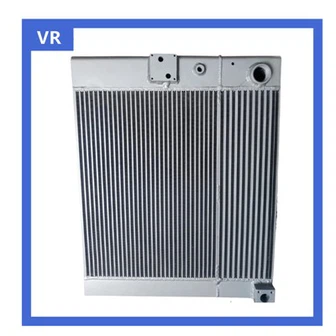
Freshwater shell and tube heat exchanger is a kind of inter-wall heat exchanger with the wall of tube bundle in the closed shell as the heat transfer surface. It is mainly composed of shell, tube bundle, tube plate and head, etc. The shell is mostly round, with parallel tube bundles inside, and the ends of the tube bundles are fixed on the tube plate. In the shell and tube heat exchanger for heat transfer of two kinds of fluid, a flow in the tube, the trip is called the tube course; a flow outside the tube, the trip is called the shell course, the wall of the tube bundle that is the heat transfer surface.
The working principle of freshwater shell-and-tube heat exchanger is to realise heat transfer through the fluid channel inside the heat exchanger tube (tube course) and the fluid channel outside the heat exchanger tube (shell course).

Specifically, the higher temperature fluid transfers heat through the walls of the heat exchanger tubes to the lower temperature fluid, thus achieving the process purpose of two-fluid heat exchange. In this process, the tube bundle is attached to a tube sheet, which is welded to the shell to form an enclosed space.
In order to improve the heat transfer efficiency, a number of baffles are usually installed in the shell to increase the velocity and turbulence of the shell fluid and enhance the heat transfer. In addition, the arrangement of the heat exchanger tube will also affect the performance of the heat exchanger, equilateral triangle arrangement is more compact, the degree of turbulence of the fluid outside the tube is high, the heat transfer coefficient is large; square arrangement of the tube outside the cleaning is convenient for easy scaling of the fluid.